

The Principle of Progress in Evolution: A Nuanced Perspective
The notion of progress is deeply ingrained in human thought, often serving as a guiding star for our aspirations. When we turn this lens toward the grand narrative of evolution, however, the waters become considerably muddier. Is there an inherent Principle of Progress driving life forward, or is evolution simply a story of relentless change, indifferent to our human-centric definitions of advancement? This article delves into the philosophical complexities surrounding the idea of progress within the evolutionary framework, drawing upon insights from the Great Books to challenge and refine our understanding. We will explore how biological transformation, while undeniable, doesn't necessarily adhere to a linear march toward perfection, inviting us to reconsider what we mean by "progress" itself.
Unpacking "Progress" in a World of Constant Change
To speak of a "Principle of Progress" in evolution immediately begs a crucial question: progress toward what? Our human minds, often influenced by teleological thinking – the idea that things move toward a predetermined end or purpose – naturally seek direction and meaning. Yet, the scientific understanding of evolution, largely shaped by Darwin's groundbreaking work, presents a mechanism driven by natural selection, a process blind to future goals or inherent "improvement."
- The Ancient Mirror: Philosophers like Aristotle, whose work profoundly influenced Western thought, conceived of telos – an inherent purpose or end – as central to understanding natural phenomena. A seed's telos is to become a tree, a human's to achieve eudaimonia. This framework, while powerful for understanding individual development, struggles to map neatly onto the sprawling, undirected tapestry of life's evolution. Is there a telos for all of life, or for humanity within it? The Great Books often grapple with this, from Plato's forms to the Stoic pursuit of virtue.
- Darwin's Revolution: Charles Darwin's On the Origin of Species (a seminal text in the Great Books collection) introduced the world to a powerful mechanism of change – natural selection – that operates without foresight or a guiding hand. Organisms best adapted to their current environment are more likely to survive and reproduce, passing on their traits. This leads to profound evolutionary change, but not necessarily a linear ascent up a ladder of "progress." A bacterium is just as "successful" in its niche as a human in theirs.
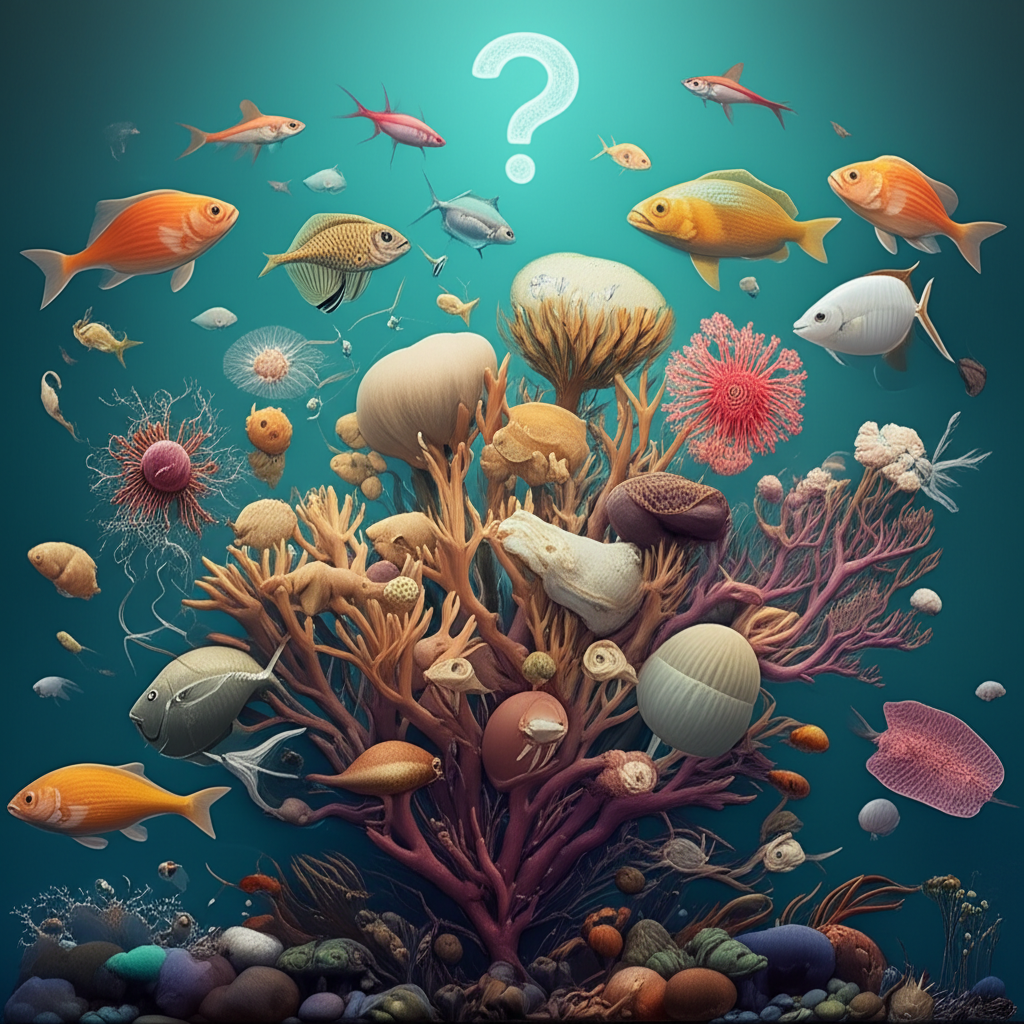
Evolution: A Bush, Not a Ladder
The common misconception of evolution as a ladder, with humans at the top, is a persistent visual metaphor that misrepresents the true nature of biological diversification. If we are to truly grasp the Principle of Evolution, we must discard this linear thinking.
| Misconception (Ladder) | Reality (Bush/Coral) | Implications for "Progress" |
|---|---|---|
| Linear advancement | Branching diversification | No single "highest" form; adaptation is relative. |
| Inherent goal/perfection | Adaptation to local, ever-changing conditions | Survival is the metric, not inherent improvement. |
| Humans as the pinnacle | Humans as one successful branch among many | Challenges anthropocentric views of evolutionary purpose. |
| Older forms are "primitive" | All living forms are products of millions of years of evolution | Simplicity can be a highly adaptive strategy. |
Evolution is a process of constant change, driven by environmental pressures and genetic variation. Species emerge, adapt, thrive, and often go extinct. This dynamic interplay showcases incredible resilience and innovation, but the directionality of "progress" is often imposed by our perspective, not intrinsic to the process itself.
The Philosophical Challenge of Defining Progress
If biological evolution is primarily about adaptation and change, where does the idea of progress truly reside? Perhaps it is less a biological Principle and more a human construct, a projection of our own desires for improvement onto the natural world.
- Human Progress vs. Natural Change: While nature exhibits change, human societies actively strive for progress. We build institutions, develop technologies, refine ethical codes, and accumulate knowledge. This distinct form of progress is a product of our consciousness, our capacity for reflection, and our ability to shape our environment and ourselves. Thinkers from Rousseau to the Enlightenment philosophers envisioned a trajectory of human improvement through reason and social reform.
- The Great Books and Human Aspiration: Many works within the Great Books of the Western World grapple with the definition and possibility of human progress. Is it moral advancement? Technological innovation? Increased knowledge? The very debate reflects our species' unique capacity to not just change, but to aspire to something better, to formulate a Principle by which to judge our own development. This is a crucial distinction: the Principle of human Progress is an ethical and intellectual endeavor, distinct from the blind mechanisms of biological evolution.
Embracing Change, Rethinking Progress
Ultimately, the Principle of Progress in Evolution is not a simple, straightforward narrative. It is a complex interplay of undirected natural change and human-imposed meaning. While biological evolution demonstrates incredible adaptability and diversification, it does not inherently lead to a predetermined "better" state. It simply leads to states that are fit for their current environment.
Our human quest for progress, however, remains a powerful force. By understanding the true nature of evolutionary change – its indifferent dynamism, its branching paths rather than a singular ascent – we can perhaps better contextualize our own efforts. We are not merely passive participants in a grand cosmic march; we are conscious agents capable of defining and pursuing our own forms of progress, albeit within the constraints and opportunities presented by an evolving world. The challenge, then, is to formulate a Principle of Progress that is both ambitious and humble, recognizing the profound change that defines existence while still striving for a better future.
📹 Related Video: What is Philosophy?
Video by: The School of Life
💡 Want different videos? Search YouTube for: ""philosophy of evolutionary progress" or "teleology in evolution debate""
📹 Related Video: ARISTOTLE ON: The Nicomachean Ethics
Video by: The School of Life
💡 Want different videos? Search YouTube for: ""Great Books of the Western World on human nature and progress""