

The Unshakeable Foundation: Exploring the Principle of Non-Contradiction
The Principle of Non-Contradiction stands as one of the most fundamental tenets of Logic and Reasoning, asserting that a statement cannot be both true and false at the same time and in the same respect. It is a bedrock Principle upon which all coherent thought, language, and our understanding of Truth are built, preventing the chaos of meaninglessness and allowing for rational discourse.
The Essence of Non-Contradiction
At its core, the Principle of Non-Contradiction (PNC) is deceptively simple yet profoundly powerful. It states that nothing can both be and not be at the same time and in the same respect. Or, to put it another way, a proposition and its negation cannot both be true simultaneously. For instance, a cat cannot be both entirely black and entirely not-black at the same moment and from the same perspective. This isn't merely a rule of grammar; it's a deep insight into the structure of reality and how we meaningfully engage with it.
Why It's a Universal Principle
This Principle isn't a cultural construct or an arbitrary rule we've decided to follow. It appears to be a necessary condition for any form of intelligible thought or communication. Without it, every statement could be simultaneously true and false, rendering all assertions, distinctions, and arguments utterly meaningless. Imagine trying to discuss anything if "the sky is blue" could also mean "the sky is not blue" without any change in context.
Aristotle's Enduring Legacy: The Great Books and the PNC
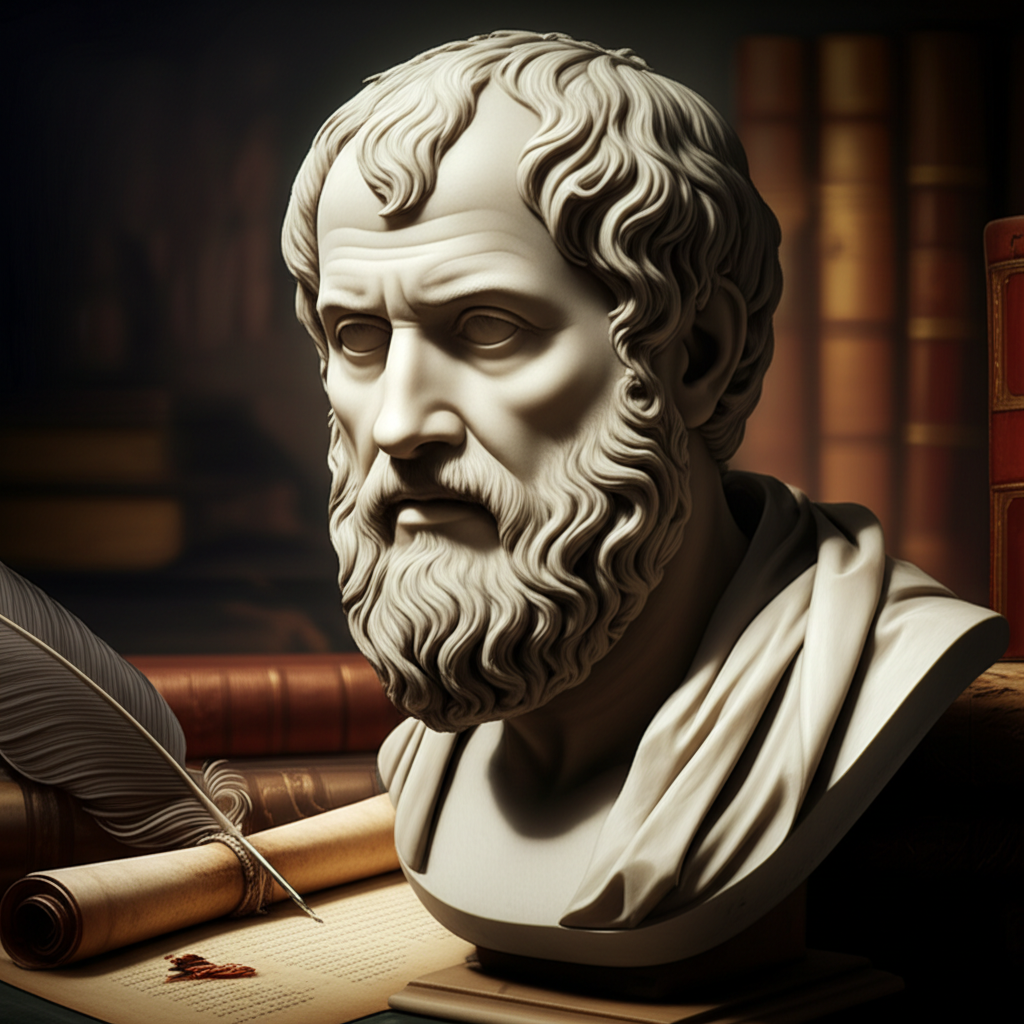
While the intuition behind the Principle of Non-Contradiction might seem self-evident, it was Aristotle who first articulated it with philosophical rigor, most notably in his Metaphysics. Within the pages of the Great Books of the Western World, Aristotle's exploration of this Principle highlights its foundational status. He argued that it is the most certain of all principles, one that cannot be demonstrated but must be assumed for any demonstration to be possible.
Aristotle considered it the ἀρχή (archē), the starting point or fundamental Principle, from which all other logical inferences ultimately derive their validity. His formulation emphasizes that it is impossible for the same thing to belong and not to belong to the same thing at the same time and in the same respect. This insight laid the groundwork for Western Logic and continues to inform our understanding of rational thought.
The Bedrock of Reasoning and Truth
The Principle of Non-Contradiction serves as the ultimate safeguard against absurdity in our Reasoning. It ensures that our mental models of the world are consistent and that our propositions about reality can aspire to Truth.
Implications for Thought and Language:
- Clarity of Definition: For words to have meaning, they must distinguish what they include from what they exclude. "Chair" means something precisely because it is not "table" (in the same respect).
- Coherent Argumentation: Any argument relies on premises that are not self-contradictory. If a premise contradicted itself, any conclusion drawn from it would be suspect, if not entirely baseless.
- Understanding Reality: We perceive the world as having distinct properties. An object is either solid or not solid; it cannot be both at the same instant and in the same manner. This Principle underpins our ability to categorize, analyze, and interact with our environment.
- The Pursuit of Truth: The very concept of Truth hinges on the idea that a statement accurately reflects reality and is not simultaneously false. Without the PNC, the notion of "finding the truth" would dissolve into an endless stream of contradictory assertions.
A Quick Look at Its Role
| Aspect of Philosophy | Role of Non-Contradiction |
|---|---|
| Epistemology | Provides the framework for knowledge acquisition, ensuring that beliefs can be consistent and justified. |
| Metaphysics | Implies a consistent and non-contradictory nature of reality itself, where entities have determinate properties. |
| Ethics | Helps in formulating consistent moral Principles and avoiding contradictory duties or values that would render ethical Reasoning impossible. |
| Logic | The foundational Principle for all formal systems of Logic, enabling valid inferences and the identification of fallacies. |
The Challenge and the Defense
While some philosophical traditions or quantum theories might seem to hint at situations where contradictions could exist, such interpretations often involve shifting contexts, different levels of analysis, or a redefinition of "at the same time and in the same respect." The Principle of Non-Contradiction, as a Principle of Logic and Reasoning, remains robust for intelligible discourse. To deny it is, paradoxically, to affirm something that is not its denial.
Ultimately, the Principle of Non-Contradiction isn't just a rule; it's the very air that rational thought breathes. It allows us to distinguish, to define, to argue, and to ultimately seek Truth in a world that would otherwise be an incomprehensible jumble of everything and nothing all at once. It is the silent guardian of meaning, ensuring our intellectual journeys have a coherent path.
YouTube: "Aristotle Principle of Non-Contradiction Explained"
YouTube: "The Laws of Thought: Identity, Non-Contradiction, Excluded Middle"
📹 Related Video: What is Philosophy?
Video by: The School of Life
💡 Want different videos? Search YouTube for: "The Principle of Non-Contradiction philosophy"