

The Persuasive Core of Self-Governance: Rhetoric's Enduring Role in Democracy
In the grand theatre of human governance, few forces wield as much subtle yet profound influence as rhetoric, particularly within the dynamic framework of a democracy. This article posits that rhetoric is not merely an accessory to democratic processes but its very lifeblood, the essential mechanism through which public opinion is forged, policies are debated, and the collective will is articulated. From the ancient Athenian agora to modern parliamentary chambers, the art of persuasive language remains indispensable, though its power necessitates constant scrutiny and an informed citizenry to navigate its intricate landscape. Understanding rhetoric is, in essence, understanding the pulse of democracy itself.
The Ancient Roots of Persuasion
The foundational texts of Western thought reveal that the power of rhetoric was recognized and debated long before our contemporary democracies took shape. The Greeks, pioneers of self-governance, understood that the ability to speak convincingly was paramount in their assemblies and courts.
From Agora to Parliament: A Timeless Tool
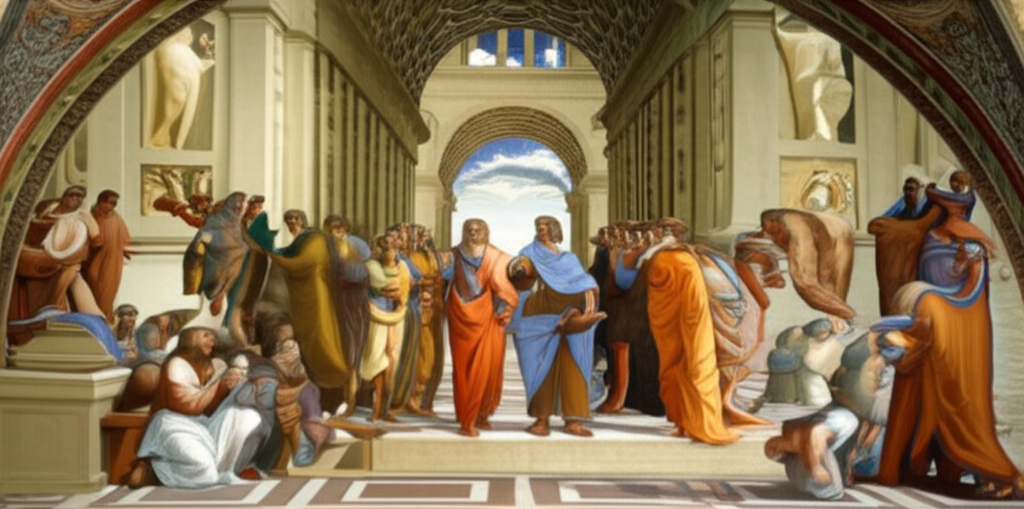
Figures like Protagoras and Gorgias, the Sophists, famously taught the art of persuasion, often emphasizing effectiveness over truth, much to the chagrin of philosophers like Plato. Plato, in works such as Gorgias and Phaedrus from the Great Books of the Western World, grappled with rhetoric's capacity to sway the ignorant masses, fearing its potential for manipulation rather than genuine enlightenment. He saw it as a knack for producing conviction without providing knowledge.
Conversely, Aristotle, in his seminal Rhetoric, offered a more systematic and balanced view, defining it as "the faculty of observing in any given case the available means of persuasion." For Aristotle, rhetoric was an art, a counterpart to dialectic, necessary for public deliberation, justice, and the defense of truth. It was a tool, neutral in itself, whose moral valence depended on its user. This duality—rhetoric as potential enlightenment or dangerous deception—has been a constant companion to democratic thought.
Rhetoric as the Engine of Democratic Discourse
At its core, democracy thrives on discussion, debate, and the free exchange of ideas. It is through language that these ideas are communicated, refined, and ultimately adopted or rejected. Rhetoric is the sophisticated engine driving this discourse.
Shaping Public Opinion through Language
In a democratic society, leaders, activists, and citizens alike employ rhetoric to:
- Articulate Visions: To present compelling narratives about the future of the community or nation.
- Mobilize Support: To rally individuals around shared causes, policies, or candidates.
- Influence Policy: To frame issues in ways that resonate with the public and decision-makers, thereby shaping legislative outcomes.
- Foster Deliberation: To present arguments, counter-arguments, and evidence in a structured manner, encouraging thoughtful consideration.
The careful selection of words, the structuring of arguments, the appeal to emotions (pathos), logic (logos), and credibility (ethos)—all elements of rhetoric—are instrumental in molding public opinion. Without these persuasive tools, the complex process of collective decision-making in a democracy would grind to a halt.
The Dual Nature of Rhetoric: A Double-Edged Sword
While indispensable, the power of rhetoric carries inherent risks. Its capacity to sway can be harnessed for noble ends or twisted for manipulative purposes, making it a true double-edged sword in the hands of a democratic society.
The Ethical Imperative in Democratic Persuasion
Consider the following aspects of rhetoric's duality:
| Positive Aspects of Rhetoric in Democracy | Negative Aspects of Rhetoric in Democracy |
|---|---|
| Enlightens: Clarifies complex issues, informs the electorate. | Manipulates: Distorts facts, appeals solely to emotion, promotes demagoguery. |
| Unifies: Builds consensus, fosters collective identity. | Divides: Exploits prejudice, exacerbates social cleavages. |
| Empowers: Gives voice to the marginalized, enables advocacy. | Disempowers: Silences dissent, promotes uncritical acceptance. |
| Motivates: Inspires action for civic participation and social change. | Deceives: Uses fallacies, misdirection, and sophistry to mislead. |
| Facilitates Deliberation: Encourages rational debate and reasoned argument. | Obfuscates: Confuses issues, prevents clear understanding and critical thought. |
This inherent tension underscores the need for an ethical framework for public discourse and for citizens to develop critical discernment. The Great Books remind us that the orator has a moral responsibility to use language for the common good, not for self-serving ends.
Cultivating a Discerning Electorate
Given the profound influence of rhetoric, the health of a democracy hinges on the ability of its citizens to critically evaluate the persuasive language directed at them. This requires more than just passive listening; it demands active engagement and intellectual rigor.
Navigating the Rhetorical Landscape
To effectively navigate the rhetorical landscape, citizens must:
- Identify Arguments: Distinguish claims from evidence, and understand the structure of an argument.
- Evaluate Sources: Question the credibility (ethos) of the speaker or writer. What are their biases? What is their expertise?
- Analyze Appeals: Recognize appeals to logic (logos), emotion (pathos), and authority. Are emotions being used to clarify or to obscure? Is the logic sound?
- Detect Fallacies: Be aware of common logical fallacies (e.g., ad hominem, straw man, slippery slope) that undermine sound reasoning.
- Seek Diverse Perspectives: Actively expose themselves to a range of viewpoints to avoid echo chambers and confirmational bias.
Ultimately, the power of rhetoric in democracy is a shared responsibility. While speakers bear the burden of ethical persuasion, the audience holds the ultimate power to accept, reject, or critically refine the messages they receive. It is this dynamic interplay that determines whether rhetoric elevates or diminishes the democratic ideal.
In conclusion, rhetoric is an inescapable and vital force in democracy. It is the art by which opinion is shaped, common cause is found, and the complex machinery of self-governance is lubricated. Yet, its immense power necessitates continuous vigilance, critical thinking, and an unwavering commitment to truth from both those who speak and those who listen.
📹 Related Video: PLATO ON: The Allegory of the Cave
Video by: The School of Life
💡 Want different videos? Search YouTube for: ""Plato vs. Aristotle on Rhetoric: A Philosophical Debate Explained""
📹 Related Video: KANT ON: What is Enlightenment?
Video by: The School of Life
💡 Want different videos? Search YouTube for: ""The Art of Persuasion: How Rhetoric Shapes Public Opinion in Democracies""