

The Unseen Architect: How Rhetoric Shapes the Soul of Democracy
In the grand theatre of human governance, few forces wield as much subtle yet profound influence as rhetoric. Far from being mere ornate speech, rhetoric is the fundamental art of persuasion, the very sinew that connects diverse opinion within a functioning democracy. It is the essential medium through which ideas are articulated, debated, and ultimately adopted or rejected by the populace. To understand a democracy, one must first grasp the power of its rhetorical currents, for they are the invisible hands that sculpt public discourse and guide collective action. This article delves into the indispensable, often contentious, role rhetoric plays in the democratic experiment, examining its historical lineage and its contemporary manifestations.
Rhetoric's Ancient Pedigree and Democratic Imperative
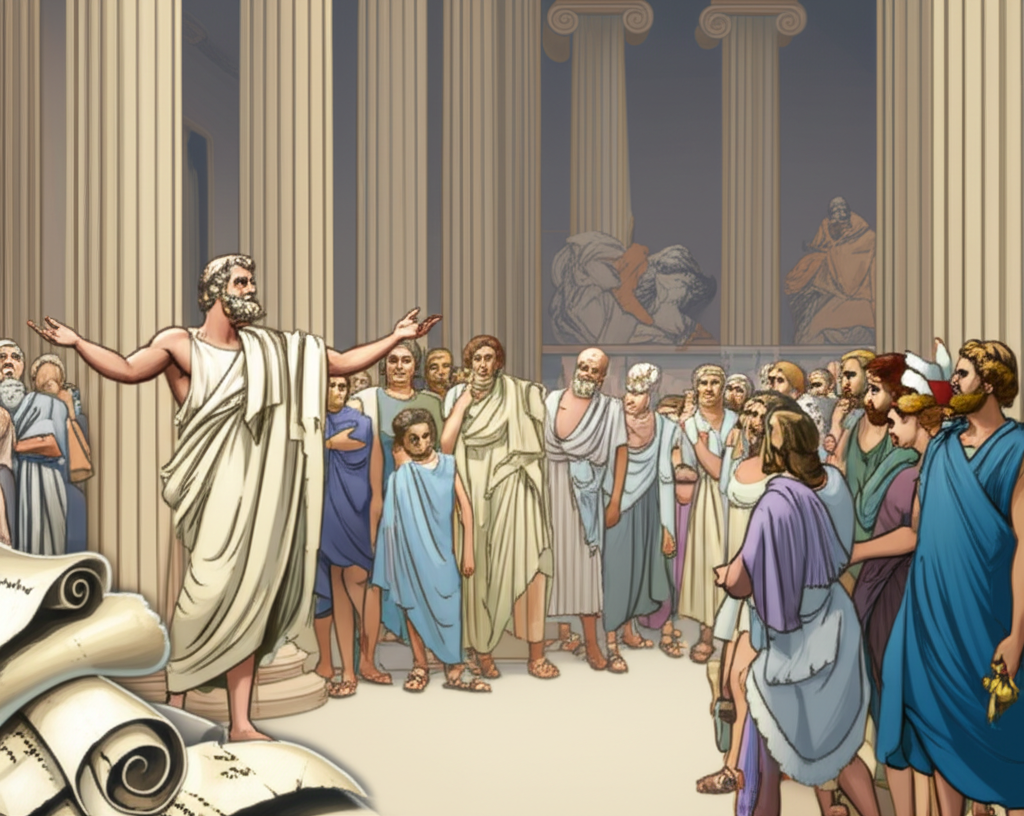
From the Athenian agora to the Roman Senate, the power of persuasive language has been inextricably linked to self-governance. The great minds of antiquity, whose works form the bedrock of the Great Books of the Western World, recognized rhetoric not merely as a skill for lawyers or politicians, but as a civic virtue. Aristotle, in particular, meticulously cataloged its components – logos, pathos, and ethos – demonstrating how logical argument, emotional appeal, and the speaker's credibility combine to sway an audience.
In a democracy, where power ostensibly resides with the people, the ability to articulate, defend, and challenge ideas is paramount. Without effective rhetoric, the free exchange of thoughts would devolve into a cacophony of isolated pronouncements, incapable of forging consensus or inspiring collective will. It is through the sophisticated deployment of language that complex policies are explained, visions for the future are painted, and the very character of a nation is defined.
The Art of Persuasion: Sculpting Public Opinion
Rhetoric’s primary function in a democracy is the shaping of opinion. It is the tool by which leaders communicate their platforms, activists champion their causes, and citizens voice their concerns. This process is not always straightforward or purely rational; it involves a delicate interplay of facts, values, and emotional resonance.
Consider the following functions of rhetoric in shaping public opinion:
- Clarification: Simplifying complex issues into understandable terms.
- Framing: Presenting an issue in a particular light to elicit a desired response.
- Motivation: Inspiring action or civic engagement.
- Legitimation: Building support for policies or leaders.
- Critique: Challenging existing narratives or power structures.
Language as the Vessel of Influence
The efficacy of rhetoric is entirely dependent on the masterful use of language. Words are not inert symbols; they carry connotations, evoke imagery, and possess an inherent power to move. The choice of a metaphor, the rhythm of a sentence, the strategic repetition of a phrase – these are not mere stylistic flourishes but potent instruments of persuasion.
A skilled rhetorician understands that language must be tailored to the audience, the context, and the desired outcome. Whether it's the measured prose of a judicial argument or the impassioned plea of a protest leader, the precise deployment of words is what elevates mere communication to effective persuasion. This is why the study of grammar, syntax, and literary devices remains a vital component of understanding how arguments are constructed and how opinion is swayed.
The Dual Nature of Rhetoric: A Double-Edged Sword
While essential for a healthy democracy, the power of rhetoric is undeniably a double-edged sword. Its capacity to unite and inspire can, in less scrupulous hands, be twisted to manipulate and divide. The same techniques that build consensus can be used to sow discord, inflame prejudices, or obscure truth with sophistry.
History is replete with examples where powerful rhetoric was used for both noble and nefarious ends. From Cicero's impassioned defenses of the Roman Republic to the demagogues who exploited public anxieties for personal gain, the ethical dimension of rhetoric has always been a central philosophical concern. Plato, for instance, harbored deep suspicions about rhetoric, fearing its potential to prioritize appearance over truth, thereby corrupting the public good. This tension between the art of persuasion and the pursuit of truth remains a crucial point of philosophical inquiry.
Navigating the Rhetorical Landscape in Modern Democracy
In our contemporary landscape, saturated with information and competing narratives from myriad sources, the power of rhetoric has perhaps never been more pervasive or complex. Social media, 24-hour news cycles, and the rapid dissemination of information mean that rhetorical battles are fought constantly and across multiple platforms.
For a democracy to thrive, its citizens must cultivate a sophisticated understanding of rhetoric. This involves not just appreciating well-crafted arguments but also critically dissecting manipulative appeals, identifying logical fallacies, and discerning the underlying intentions of speakers. Education in rhetorical analysis becomes a civic duty, empowering individuals to be informed participants rather than passive recipients of persuasive language.
Conclusion
The power of rhetoric in democracy is not merely a historical curiosity but a living, breathing force that continues to shape our collective destiny. It is the engine of public discourse, the forge where opinion is hammered out, and the very essence of how we, as citizens, engage with our shared world. By understanding its mechanisms, appreciating its potential, and guarding against its abuses, we can ensure that the art of persuasive language serves to strengthen, rather than undermine, the democratic ideal.
📹 Related Video: PLATO ON: The Allegory of the Cave
Video by: The School of Life
💡 Want different videos? Search YouTube for: ""Aristotle Rhetoric Summary" "Plato Gorgias Summary""