

The Indispensable Tongue: Unpacking the Power of Rhetoric in Democracy
Summary: In the vibrant, often tumultuous arena of democracy, rhetoric is not merely an optional flourish but its very lifeblood. From the ancient Athenian agora to modern parliamentary chambers, the art of persuasive language shapes public opinion, mobilizes citizens, and ultimately directs the course of nations. This article explores the profound and often ambivalent power of rhetoric in democratic systems, drawing from the philosophical traditions laid out in the Great Books of the Western World to understand its necessity, its perils, and the responsibilities it entails for both speaker and listener. Without a nuanced understanding of rhetoric, our grasp of democracy remains incomplete.
The Ancient Roots: Rhetoric, Persuasion, and the Polis
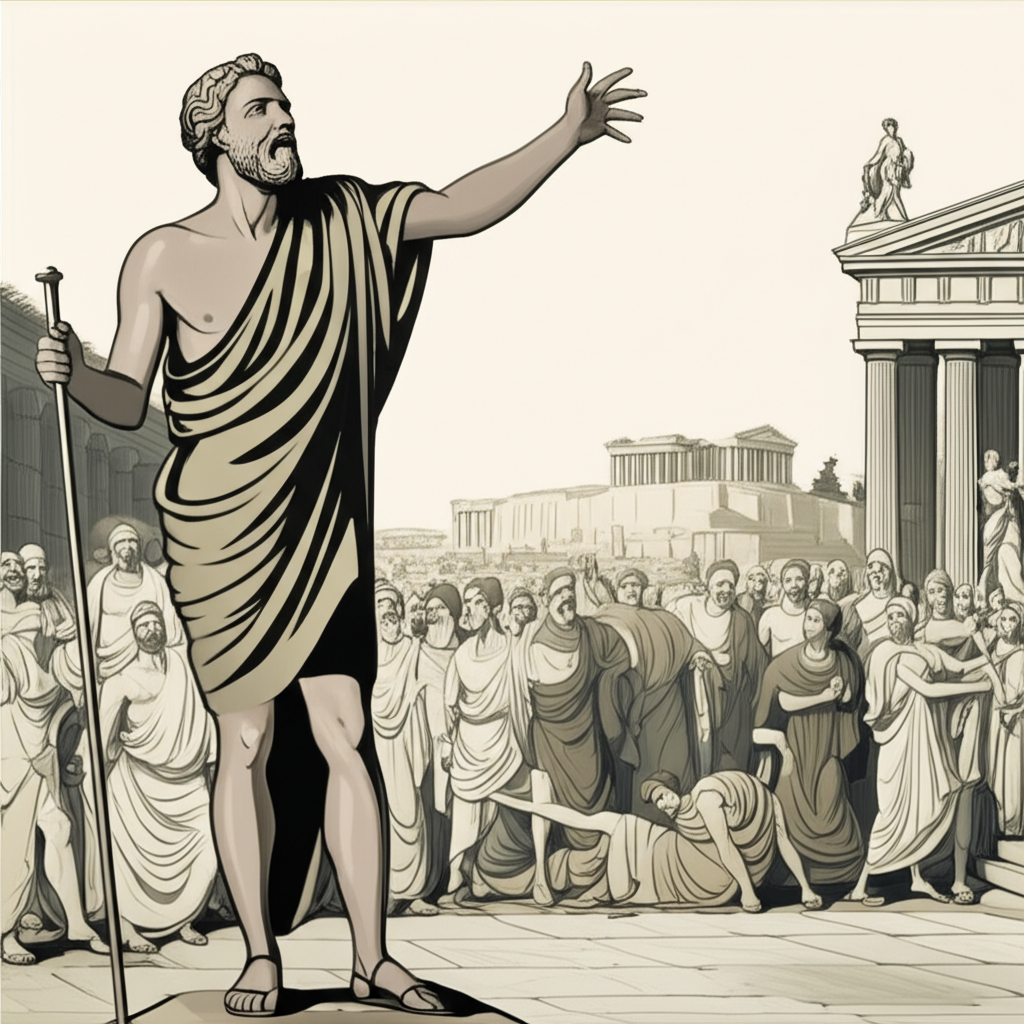
The relationship between rhetoric and democracy is as old as democracy itself. In the nascent democratic city-states of ancient Greece, particularly Athens, the ability to speak effectively and persuade one's fellow citizens was not just an advantage; it was a fundamental requirement for participation in public life. Citizens debated laws, declared wars, and rendered judgments, all through the medium of spoken language.
However, this powerful tool immediately raised philosophical questions about truth, manipulation, and the nature of persuasion.
- Plato's Skepticism: In works like Gorgias and the Republic, Plato famously expressed deep suspicion of rhetoric. He saw it not as a path to truth, but as a form of flattery, a "knack" for producing conviction without knowledge. For Plato, rhetoric was dangerous because it appealed to emotion and popular opinion rather than reason, potentially leading the democracy astray. He feared the demagogue who could sway the masses with eloquent lies, prioritizing popularity over justice.
- Aristotle's Pragmatism: In contrast, Aristotle, in his seminal work Rhetoric, offered a more pragmatic and comprehensive view. He defined rhetoric as "the faculty of observing in any given case the available means of persuasion." For Aristotle, rhetoric was a neutral art, like medicine or wrestling, capable of being used for good or ill. He believed it was indispensable for civic life, allowing citizens to defend themselves, to instruct, and to explore both sides of a question. He meticulously outlined the three modes of persuasion:
- Ethos: The speaker's credibility or character.
- Pathos: Appealing to the audience's emotions.
- Logos: The logical argument itself.
Aristotle's framework highlights that effective rhetoric is not just about emotional appeal but also about establishing trustworthiness and presenting a coherent argument, all of which are vital for a functioning democracy.
Rhetoric as the Engine of Democratic Discourse
In any democracy, the free exchange of ideas and the constant negotiation of diverse opinions are paramount. Rhetoric provides the very mechanism through which this exchange occurs. It is the sophisticated language that allows political actors to:
- Articulate Visions: Leaders use rhetoric to present their policies, philosophies, and visions for the future, inspiring support and galvanizing action.
- Frame Debates: The way an issue is presented – the words chosen, the analogies used – significantly influences how it is perceived by the public. Rhetoric frames the public conversation.
- Build Consensus: Through skillful argumentation and emotional appeal, rhetoric can bridge divides, find common ground, and persuade disparate groups to unite behind a shared purpose.
- Critique and Oppose: The opposition in a democracy relies heavily on rhetoric to challenge existing policies, expose perceived flaws, and offer alternative perspectives.
Consider the great speeches documented by Thucydides in The Peloponnesian War, where generals and statesmen used powerful language to rally troops, justify actions, and shape public morale. These historical instances underscore that without compelling rhetoric, the machinery of public deliberation would grind to a halt.
The Perils of Persuasion: When Rhetoric Undermines Democracy
While essential, the power of rhetoric carries inherent risks. The very tools that can inform and unite can also deceive and divide. The fear expressed by Plato remains acutely relevant:
- Demagoguery and Manipulation: Unscrupulous speakers can exploit rhetorical techniques to inflame passions, spread misinformation, and appeal to prejudice. This demagoguery can bypass rational deliberation, leading to irrational decisions and the erosion of democratic norms. The history of the 20th century, particularly, offers stark warnings about the dangers of charismatic leaders using language to manipulate mass opinion.
- The Erosion of Truth: When rhetoric prioritizes persuasion over truth, facts can become secondary to narrative. This can lead to a public discourse where objective reality is contested or dismissed, making informed decision-making in a democracy exceedingly difficult.
- Polarization and Division: Rhetoric can be used to emphasize differences, demonize opponents, and deepen societal rifts, hindering the cooperation necessary for effective governance.
The challenge for any healthy democracy is to foster a citizenry capable of discerning between ethical, substantive rhetoric and manipulative, fallacious appeals.
Cultivating Virtuous Rhetoric for a Robust Democracy
Given its double-edged nature, the question becomes: how can we harness the power of rhetoric to strengthen, rather than weaken, democracy?
- Emphasize Logos and Critical Thinking: While ethos and pathos are undeniable components of effective persuasion, a healthy democracy demands a strong foundation of logos – logical reasoning and evidence-based arguments. Citizens must be equipped with the critical thinking skills to evaluate claims, identify fallacies, and question assumptions.
- Promote Ethical Ethos: Speakers in a democracy bear a profound responsibility. Their ethos should be built on integrity, honesty, and a genuine commitment to the public good, rather than on superficial charm or manufactured sincerity.
- Encourage Deliberative Language: Instead of purely adversarial rhetoric, a focus on deliberative language that seeks understanding, explores nuances, and aims for constructive solutions can foster a more robust public sphere.
- Education in Rhetorical Analysis: Understanding the mechanics of persuasion – how language is used to shape opinion – is crucial for both speakers and listeners. Education in classical rhetoric and critical thinking can empower citizens to be more discerning consumers of political discourse.
The enduring lesson from the Great Books is that rhetoric is not going anywhere. It is an intrinsic part of human communication and, by extension, of democratic governance. The challenge is not to eliminate it, but to cultivate its virtuous application and to develop a citizenry capable of engaging with it thoughtfully and critically. The health of our democracy depends on our collective ability to wield and interpret the power of the persuasive tongue.
YouTube: "Aristotle Rhetoric summary"
YouTube: "Plato Gorgias analysis"
📹 Related Video: What is Philosophy?
Video by: The School of Life
💡 Want different videos? Search YouTube for: "The Power of Rhetoric in Democracy philosophy"