

The Indispensable Power of Rhetoric in the Democratic Experiment
In the vibrant, often tumultuous arena of democracy, few forces wield as much influence, or provoke as much philosophical scrutiny, as rhetoric. Far from mere ornamentation, rhetoric is the very sinew of public discourse, the engine that translates abstract ideas into actionable policies, and the crucible in which collective opinion is forged. It is through the artful deployment of language that citizens persuade, leaders inspire, and communities deliberate, making rhetoric an utterly indispensable, yet perpetually contested, element of self-governance. This article delves into the profound, often paradoxical, power of rhetoric within democratic systems, drawing upon classical insights to illuminate its enduring relevance.
The Eloquent Foundations of Self-Governance
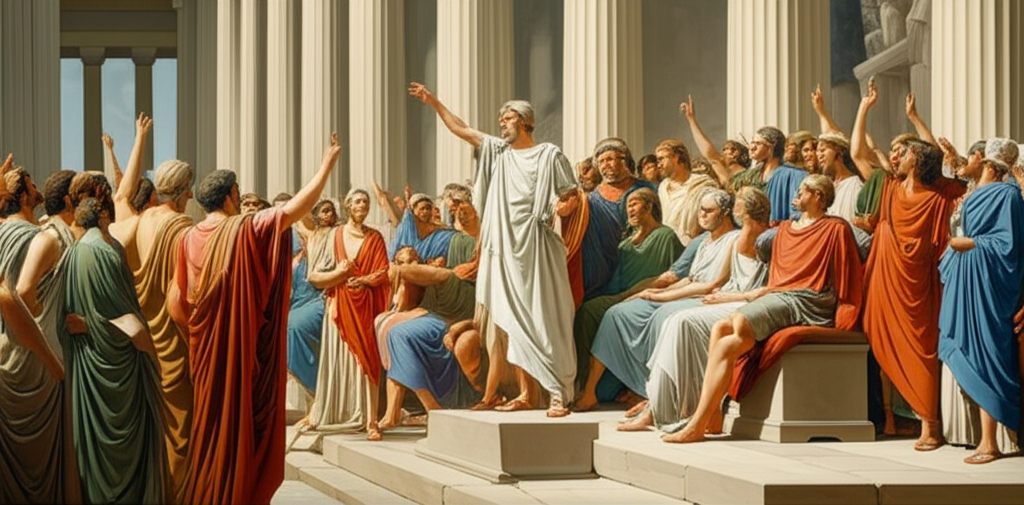
From the bustling agora of ancient Athens to the digital forums of today, democracy has always been a conversation. It is a system predicated on the belief that through open debate and the exchange of ideas, the best course of action can be discerned. Here, rhetoric is not an optional extra but a fundamental necessity. The ability to articulate a position, to defend it against scrutiny, and to sway the hearts and minds of fellow citizens was, and remains, crucial for participation.
The great thinkers of antiquity, whose works form the bedrock of the Great Books of the Western World, grappled extensively with rhetoric's role. Plato, in dialogues like Gorgias, famously expressed deep skepticism, fearing rhetoric's capacity to flatter and deceive, leading the populace away from truth towards mere popular opinion. Yet, even his critiques underscore rhetoric's undeniable power. Aristotle, in his seminal Rhetoric, offered a more pragmatic view, defining it as "the faculty of observing in any given case the available means of persuasion." For him, rhetoric was a tool, neutral in itself, capable of being wielded for noble or ignoble ends.
Key Aspects of Ancient Rhetoric in Democracy:
- Public Debate: Essential for decision-making in assemblies and courts.
- Citizen Participation: Required individuals to speak and persuade.
- Moral Dilemmas: Posed questions about truth, persuasion, and manipulation.
Shaping Public Opinion: The Architecture of Language
At its heart, rhetoric is the art of persuasion, and its primary target in a democracy is public opinion. It is the sophisticated use of language – whether spoken, written, or visual – to frame issues, evoke emotions, establish credibility, and present arguments in a compelling manner. Political discourse is, in essence, a constant rhetorical contest to define reality and guide collective belief.
Consider the various appeals that underpin effective rhetoric, as categorized by Aristotle:
- Logos (Logic): Appeals to reason and rationality, presenting facts, data, and logical arguments. A politician might cite economic statistics to support a policy.
- Pathos (Emotion): Appeals to the audience's emotions, values, and beliefs. A speech might evoke a sense of national pride or shared struggle.
- Ethos (Credibility): Appeals to the speaker's character, authority, or expertise. A leader’s past actions or reputation lend weight to their words.
The skillful interplay of these elements through language can profoundly influence how citizens perceive issues, candidates, and even their own interests. It can mobilize support, quell dissent, and shift the very landscape of public opinion.
The Ethical Crucible: Persuasion vs. Manipulation
The formidable power of rhetoric in democracy inevitably brings forth an acute ethical dilemma. Where does genuine persuasion, aimed at enlightened decision-making, end, and manipulative demagoguery begin? This question has echoed through the ages, from Plato's concerns about sophists to contemporary anxieties about misinformation.
A healthy democracy relies on citizens making informed choices. When rhetoric is used to obscure truth, exploit prejudice, or appeal solely to base emotions, it undermines the very foundations of rational deliberation. The demagogue, adept at using powerful language, can sway the masses not by superior argument, but by artifice and exploitation of existing biases, leading to policies detrimental to the common good.
However, to dismiss rhetoric entirely is to render democracy mute. The challenge lies in fostering a political culture where:
- Arguments are robustly debated: Encouraging critical engagement with claims.
- Evidence is valued: Prioritizing factual accuracy over emotional appeals alone.
- Ethos is earned: Leaders demonstrate integrity and consistency.
Navigating the Modern Rhetorical Landscape
In the contemporary world, the power of rhetoric in democracy has been amplified and complicated by mass media and digital platforms. The speed and reach of language have never been greater. Social media, cable news, and targeted advertising all serve as powerful conduits for rhetorical messages, often tailored to specific audiences. This presents both opportunities for broader participation and significant risks of echo chambers and polarization.
YouTube: "Plato's Gorgias: The Ethics of Rhetoric in Politics"
YouTube: "Aristotle's Rhetoric Explained: Logos, Pathos, Ethos in Modern Political Speech"
The sheer volume of information and the constant barrage of persuasive appeals demand a more discerning citizenry than ever before. Understanding the mechanics of rhetoric – how language is used to construct arguments, evoke feelings, and establish credibility – becomes a vital skill for anyone participating in a democracy.
Cultivating a Discerning Electorate
Ultimately, the health of a democracy is inextricably linked to the capacity of its citizens to critically evaluate rhetoric. It is not enough to simply hear the words; one must analyze their intent, their underlying assumptions, and their potential consequences. This requires:
- Philosophical Literacy: Understanding the historical debates about truth, justice, and persuasion.
- Critical Thinking Skills: The ability to identify logical fallacies, emotional manipulation, and biased framing.
- Media Savvy: Awareness of how different platforms and formats shape rhetorical messages.
The power of rhetoric is undeniable; it is the force that shapes opinion and directs action in a self-governing society. The ongoing task for any democratic society is to harness this power for constructive dialogue and enlightened decision-making, rather than allowing it to devolve into a tool for division and deception. The enduring lessons from the Great Books of the Western World remind us that this struggle for ethical and effective communication is as old as democracy itself.
📹 Related Video: What is Philosophy?
Video by: The School of Life
💡 Want different videos? Search YouTube for: "The Power of Rhetoric in Democracy philosophy"