

The Indispensable Force: Rhetoric's Sway in Democracy
In the delicate balance of democratic governance, where the will of the people is paramount, the art of persuasion — rhetoric — stands as an indispensable, often formidable, force. This article explores how rhetoric, through its masterful deployment of language, shapes public opinion, influences policy, and ultimately defines the character of a democracy. From the ancient Athenian agora to modern digital forums, understanding rhetoric is not merely an academic exercise but a critical necessity for any engaged citizen.
The Ancient Foundations of Persuasion
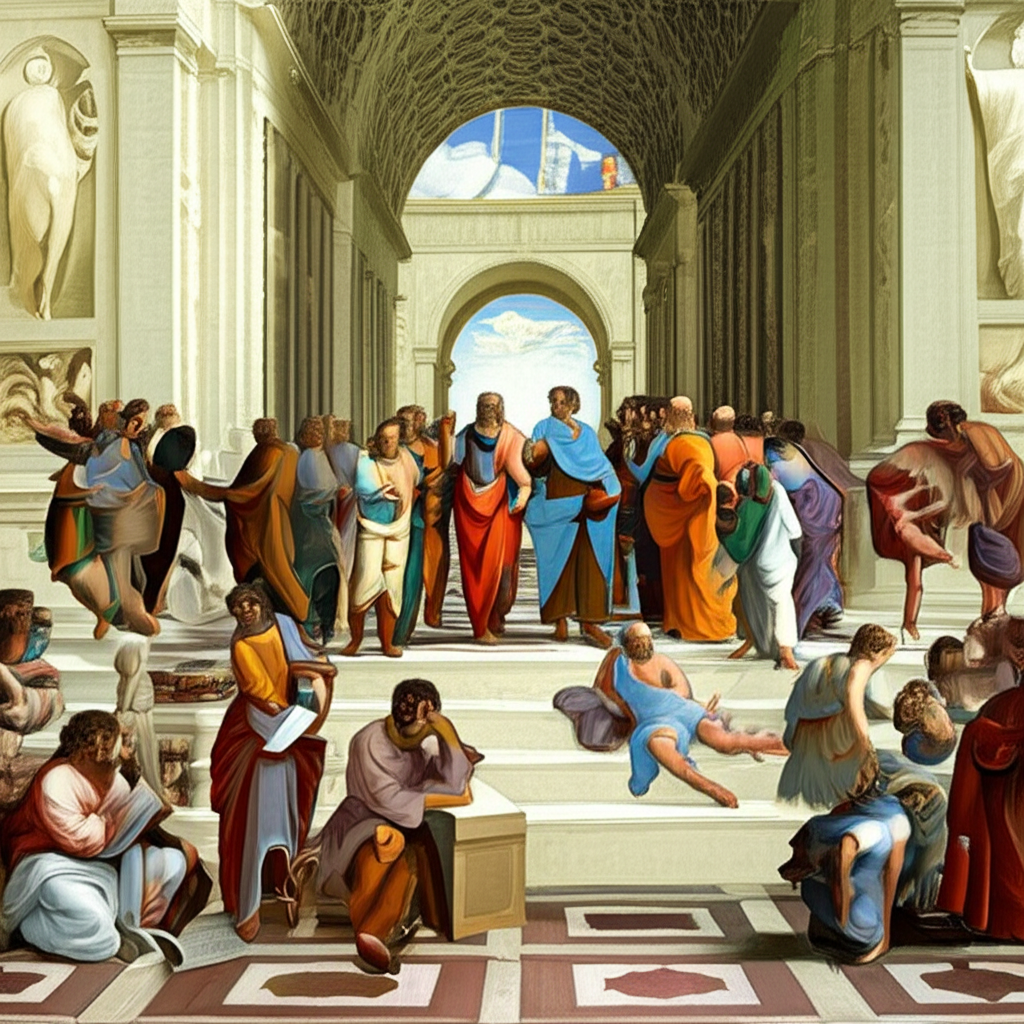
The very bedrock of Western political thought, as chronicled in the Great Books of the Western World, reveals a deep and often conflicted relationship with rhetoric. In ancient Greece, particularly in burgeoning democracies like Athens, the ability to speak persuasively was not just a skill but a civic duty and a pathway to power.
- Aristotle's Pragmatism: In his seminal work, Rhetoric, Aristotle systematically dissects the art of persuasion, defining it as "the faculty of observing in any given case the available means of persuasion." He categorized rhetorical appeals into ethos (character/credibility), pathos (emotion), and logos (logic). For Aristotle, rhetoric was a neutral tool, capable of being wielded for truth and justice, or for deceit. It was, in essence, the practical application of philosophical thought in the public sphere.
- Plato's Skepticism: Conversely, Plato, especially in dialogues like Gorgias and Phaedrus, viewed rhetoric with profound suspicion. He feared its capacity to manipulate opinion rather than lead to genuine knowledge. Plato argued that true philosophy sought universal truths, while rhetoric, particularly when practiced by sophists, merely aimed to win arguments, often at the expense of truth, by appealing to the prejudices and emotions of the masses.
- Cicero's Ideal Orator: Later, the Roman statesman and orator Cicero championed rhetoric as essential for civic life. His ideal orator was not merely a skilled speaker but a wise, moral, and knowledgeable individual who used their persuasive powers for the good of the republic. For Cicero, rhetoric was the language of leadership, vital for guiding citizens towards virtuous action and maintaining the social fabric.
These foundational perspectives highlight a timeless tension: is rhetoric a tool for enlightenment or manipulation?
Rhetoric's Dual Nature: Shaping Opinion for Good or Ill
The power of rhetoric lies in its profound ability to shape, shift, and solidify public opinion. In a democracy, where collective decisions are made, the narratives woven by rhetorical skill can determine the fate of policies, leaders, and even nations.
Table: The Dual Faces of Rhetoric in Democracy
| Aspect | Positive Application | Negative Application |
|---|---|---|
| Information | Clarifying complex issues, educating the public. | Spreading misinformation, creating echo chambers. |
| Persuasion | Mobilizing support for just causes, fostering unity. | Inciting division, manipulating emotions for selfish gain. |
| Deliberation | Encouraging reasoned debate, exploring diverse viewpoints. | Shutting down dissent, promoting groupthink. |
| Leadership | Inspiring action, articulating a compelling vision. | Demagoguery, exploiting fears and prejudices. |
| Language Use | Precision, clarity, evocative imagery for understanding. | Obfuscation, loaded terms, deceptive framing. |
Every political speech, every policy debate, every media commentary is an exercise in rhetoric. The choice of language, the structure of an argument, the emotional appeals – all are carefully calibrated to influence how citizens perceive reality and, consequently, how they vote or act.
The Modern Arena: Rhetoric in the Digital Age
While the principles of rhetoric remain constant, its application in contemporary democracy has been profoundly altered by technology. The rise of social media, 24/7 news cycles, and fragmented communication channels means that rhetorical battles are fought with unprecedented speed and reach.
The ability to craft compelling narratives, often condensed into soundbites or viral memes, has become paramount. Political actors, activists, and even ordinary citizens constantly engage in rhetorical acts, vying for attention and attempting to sway opinion. This environment amplifies both the potential for widespread enlightenment and the danger of widespread manipulation. The constant barrage of information, often lacking depth or nuance, makes it increasingly challenging for individuals to discern truth from sophistry.
Cultivating a Discerning Electorate
Given rhetoric's immense power, the health of a democracy hinges on the capacity of its citizens to critically engage with persuasive language. This requires:
- Philosophical Literacy: Understanding the historical and theoretical underpinnings of rhetoric, as explored in the Great Books, provides a crucial framework for analysis.
- Critical Thinking: The ability to dissect arguments, identify logical fallacies, and distinguish between evidence-based claims and emotional appeals is vital.
- Media Savvy: Recognizing how different platforms and formats shape rhetorical messages is essential in the digital age.
- Intellectual Humility: An openness to reconsider one's own opinion in the face of compelling counter-arguments, rather than clinging to preconceived notions.
By fostering these qualities, we equip ourselves to navigate the intricate web of rhetoric that defines our public discourse, transforming from passive recipients of persuasion into active, informed participants in our democracy.
Conclusion: The Unavoidable Dialogue
The power of rhetoric in democracy is undeniable and inescapable. It is the very language through which public life is conducted, shaping our collective opinion and driving our societal trajectory. From the classical philosophers who first grappled with its ethical implications to contemporary communication strategists, the art of persuasion remains central. To ignore its influence is to remain politically naive; to master its understanding is to become a truly empowered citizen in the ongoing, vital conversation of self-governance.
YouTube Video Suggestions:
-
📹 Related Video: PLATO ON: The Allegory of the Cave
Video by: The School of Life
💡 Want different videos? Search YouTube for: ""Plato's Gorgias: Philosophy and the Art of Rhetoric explained""
-
📹 Related Video: ARISTOTLE ON: The Nicomachean Ethics
Video by: The School of Life
💡 Want different videos? Search YouTube for: ""Aristotle Rhetoric Ethos Pathos Logos explained""