

The Fabric of Artistic Creation: Memory and Imagination in Art
Summary: The very essence of artistic creation, from the most ancient cave paintings to the avant-garde digital installations of today, is fundamentally woven from the threads of Memory and Imagination. This article delves into how these two profound faculties of the human mind, deeply explored in the Great Books of the Western World, serve not merely as tools for artists, but as the foundational wellsprings for all aesthetic experience. We shall explore their philosophical underpinnings, their individual contributions, and their inseparable synergy in shaping the world of Art.
I. The Philosophical Pedigree: Ancient Roots of Memory and Imagination
To comprehend the power of Memory and Imagination in Art, we must first turn to the venerable thinkers who laid the groundwork for our understanding of the human mind. Their insights, preserved within the Great Books, reveal how these faculties have always been central to our perception and creation of reality.
A. Plato's Forms and Recollection
For Plato, as articulated in dialogues such as Phaedrus and Republic, Art often stood in a complex relationship to truth. While he famously critiqued art as mimesis – an imitation of an imitation, thus twice removed from the ideal Forms – his philosophy implicitly elevates the role of Memory as anamnesis, the recollection of eternal truths accessible to the soul. An artist, striving to depict beauty or justice, might, through a profound act of Memory, tap into the archetypal Forms themselves. Imagination, in this context, becomes the faculty that attempts to bridge the chasm between the sensory world and these remembered ideals, even if imperfectly.
B. Aristotle's Empiricism and Phantasia
Aristotle, Plato's most famous student, offered a more grounded perspective. In works like Poetics and De Anima, he saw Art not just as imitation, but as a means of understanding universals through particulars. Here, Memory is the retention of sensory experience – the raw data collected by our senses. Crucially, Aristotle introduced the concept of phantasia (often translated as imagination or appearance), a faculty distinct from sensation and thought, which allows the mind to form images even in the absence of direct sensory input. This phantasia is vital for the artist, enabling the rearrangement and synthesis of remembered experiences into new, coherent, and often illuminating forms. It is the engine that transforms observation into creative expression.
II. Memory: The Wellspring of Artistic Truth
Memory serves as the vast reservoir from which artists draw their inspiration. It is not merely the recall of facts, but the deep retention of experience, emotion, and cultural heritage.
- Personal Experience: Artists frequently delve into their own past, their joys, traumas, and observations, giving form to deeply personal narratives. Frida Kahlo's self-portraits, for instance, are vivid chronicles of her physical and emotional suffering, intensely remembered and re-presented.
- Collective Memory: Beyond the individual, Art often acts as a custodian of collective Memory. Historical paintings, monumental sculptures, and epic poems preserve the stories, myths, and values of entire civilizations, allowing future generations to connect with their past. Think of the enduring power of Homer’s epics in shaping Western consciousness.
- The Artist as Chronicler: In many traditions, the artist serves as a chronicler, documenting moments in time, faces, landscapes, and events, ensuring their passage into the realm of shared Memory. This act of remembrance through creation underscores the profound human need to record and reflect.
III. Imagination: The Architect of New Realities
While Memory provides the material, Imagination is the architect that constructs new worlds, new perspectives, and new truths from that material. It is the faculty that allows Art to transcend mere imitation.
- Beyond Mimesis: Imagination enables the artist to move beyond simply replicating reality. It allows for the creation of the fantastic, the surreal, the abstract, and the utopian. Hieronymus Bosch's intricate and bizarre worlds, for example, are testaments to an unfettered Imagination.
- Synthesizing and Transforming: The mind uses Imagination to take disparate fragments of Memory – a childhood dream, a fleeting emotion, a scientific concept – and synthesize them into something entirely new. This transformative power is evident in movements like Surrealism, which deliberately sought to unlock the subconscious Imagination.
- The Visionary Mind: Imagination allows artists to envision what has not yet come to pass, to challenge existing norms, and to propose alternative realities. It is the wellspring of prophecy in Art, anticipating futures or exploring possibilities that exist only within the creative mind.
IV. The Indivisible Nexus: Where Memory and Imagination Converge in Art
The true power of Art lies not in the isolated functions of Memory or Imagination, but in their dynamic and inseparable interplay. They are two sides of the same coin, constantly informing and enriching each other within the creative mind.
- Art as a Dialogue: Every artwork is, in essence, a dialogue between what was (informed by Memory and experience) and what might be (shaped by Imagination). A sculptor recalls the texture of stone and the form of the human body (Memory) to envision a dynamic pose that defies gravity (Imagination).
- The Viewer's Experience: This interplay extends to the audience. When we engage with Art, our own memories are stirred, and our imaginations are ignited. A painting of a stormy sea might evoke our own past experiences with nature, while simultaneously prompting us to imagine the power and mystery of the ocean beyond our direct knowledge.
- The Mind's Creative Furnace: Ultimately, Art stands as a testament to the human mind's extraordinary capacity to both recall and invent. It is the crucible where the raw ore of experience and Memory is refined and forged by the fire of Imagination into something new, profound, and enduring. This creative furnace not only reflects our world but actively shapes our perception of it.
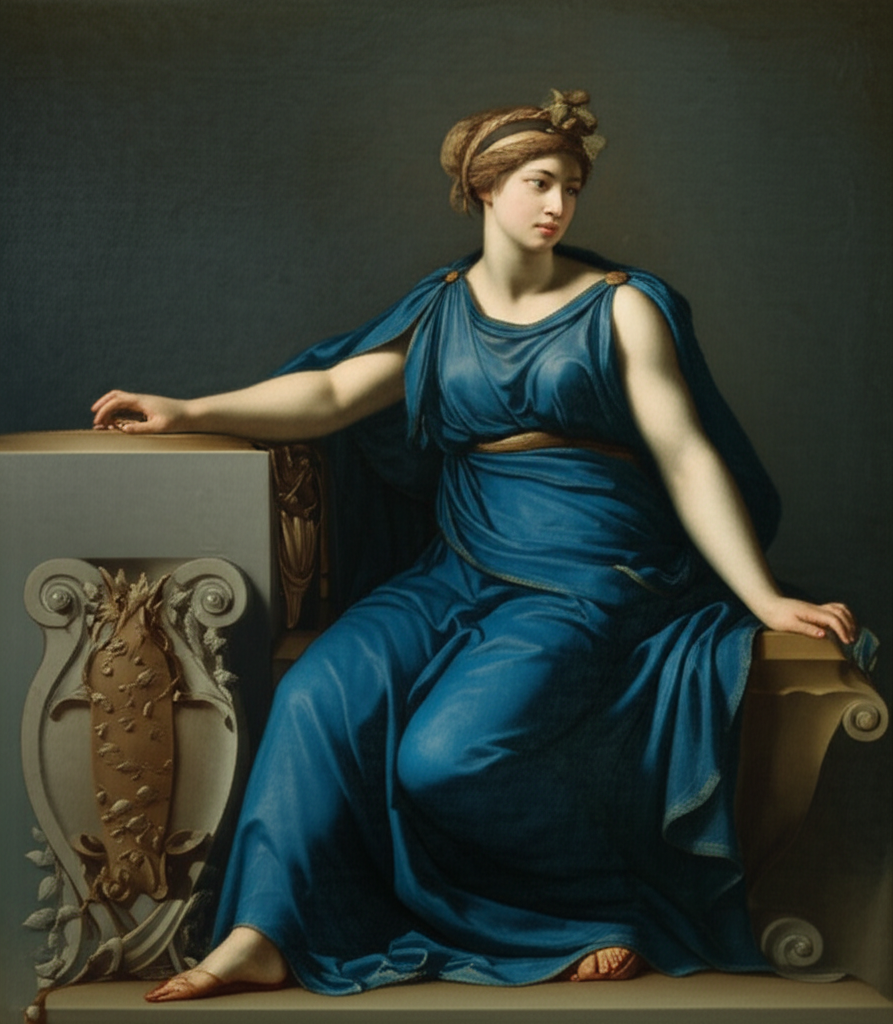 . Her gaze is distant, perhaps reflective, and she holds an ancient scroll, its surface inscribed with faded script. Behind her, faint, ghostly images of past events – a crumbling ruin, a historical battle, a forgotten face – shimmer in the background. On the right, a more ethereal, dynamic figure, perhaps with flowing robes and an upward, visionary gaze, embodies Imagination. She gestures towards a vibrant, almost surreal landscape that unfurls behind her: a city of impossible architecture, mythical creatures taking flight, and stars forming new constellations. A subtle, luminous bridge of light connects the two figures, symbolizing their profound and necessary interplay in the creative act, emphasizing how the artist's mind draws from the wellspring of experience to forge new realities in Art.)
V. Conclusion: Art's Enduring Legacy
The profound connection between Memory and Imagination is not merely an academic curiosity; it is the very engine that propels Art into existence and gives it enduring meaning. From the philosophical inquiries of antiquity to the boundless expressions of modernity, Art remains a powerful testament to the human mind's ability to recall what has been, to synthesize it with what could be, and to present these syntheses as new forms of truth and beauty. As we continue to navigate the complexities of our world, Art, fueled by these fundamental faculties, will undoubtedly remain our most potent means of understanding our past, shaping our present, and envisioning our future.
YouTube Video Suggestions:
- Plato's Theory of Forms and Art
- Aristotle Poetics Imagination Phantasia
📹 Related Video: What is Philosophy?
Video by: The School of Life
💡 Want different videos? Search YouTube for: "The Power of Memory and Imagination in Art philosophy"