

The Enduring Tapestry: Memory and Imagination in the Crucible of Art
Summary: The essence of artistic creation, from the ancient epic to the contemporary canvas, lies in the profound interplay of memory and imagination. These two fundamental faculties of the human Mind are not merely passive receptors or whimsical generators but active, dynamic forces that shape our perception of reality, transform our experience, and ultimately forge the very fabric of Art. Through the lens of memory, artists recall, reflect, and draw from the wellspring of lived moments, while imagination allows them to transcend the literal, synthesize the disparate, and conjure entirely new worlds, emotions, and forms. This article explores how these inseparable partners empower artistic expression, drawing insights from the rich tradition of Western thought.
The Unseen Architects: How Memory and Imagination Build Worlds
For millennia, philosophers have grappled with the mechanisms of human thought and creativity. From Plato's concept of anamnesis – a recollection of eternal forms – to Aristotle's empirical understanding of knowledge derived from sensory experience and its retention, the foundations of what we now call memory have been central to understanding the human Mind. Similarly, imagination, that boundless capacity to conceive what is not, or to rearrange what is, has been celebrated as the engine of invention and the gateway to empathy. In Art, these two faculties cease to be distinct cognitive processes and instead merge into a singular, potent force.
Memory: The Reservoir of Inspiration
Memory is far more than a simple archive of the past; it is a living, breathing component of our present Mind, constantly being reinterpreted and reshaped. For the artist, memory serves as an inexhaustible reservoir of raw material:
- Personal Memories: Lived experiences, emotions, sensations, conversations, and observations form the bedrock of an artist's unique perspective. A painter might recall the specific quality of light at dawn, a writer the nuanced dialogue of a childhood interaction, a musician the rhythm of a distant drumbeat.
- Collective and Cultural Memories: Art also draws from a shared human heritage – myths, historical events, cultural symbols, and archetypes. These collective memories, passed down through generations, provide a universal language and a framework for understanding human existence. The epic poems of Homer, for instance, are deeply rooted in the collective memory of ancient Greek society, re-telling and re-shaping shared narratives.
- Sensory Memories: The recall of sights, sounds, smells, tastes, and textures is crucial. A sculptor might remember the feel of clay, a composer the timbre of a particular instrument. These sensory details imbue Art with verisimilitude and emotional resonance.
The act of remembering for an artist is rarely a mere reproduction. It is often an initial act of selection, emphasis, and emotional coloring, already nudging towards the realm of Imagination.
Imagination: The Forge of Novelty
If memory provides the ingredients, Imagination is the chef, the architect, the alchemist. It is the faculty that allows the Mind to transcend the literal and create something new from the fragments of the old, or even from nothing at all.
- Synthesizing and Recombining: Imagination takes disparate elements from memory and recombines them in novel ways. A dreamscape painting might combine familiar objects in impossible configurations; a fantasy novel might blend historical periods with mythical creatures. As Aristotle noted in On the Soul, imagination (phantasia) is the faculty by which we form images, even in the absence of external stimuli, allowing for thought and deliberation.
- Empathy and Perspective-Taking: Imagination allows artists to step into the shoes of others, to envision different futures, or to explore alternative realities. This is crucial for character development in literature, for conveying emotion in visual Art, and for creating immersive worlds that resonate with the audience's own experience.
- Symbolism and Metaphor: Through imagination, artists imbue objects and experiences with deeper meaning. A simple tree can become a symbol of life, a journey a metaphor for personal growth. This symbolic language enriches Art and invites deeper contemplation.
- Problem-Solving and Innovation: Beyond purely aesthetic concerns, Imagination is essential for solving artistic challenges, finding new techniques, or inventing entirely new forms of expression.
The Creative Spectrum of Imagination
| Type of Imagination | Description | Artistic Manifestation |
|---|---|---|
| Reproductive | Recalling images or experiences from memory, often with some degree of reconstruction. | Realistic portraiture, historical fiction based on documented events. |
| Productive | Creating entirely new images or concepts by combining or transforming existing elements from memory. | Surrealist paintings, science fiction narratives, abstract musical compositions. |
| Empathic | The ability to understand and share the feelings of another through imaginative projection. | Character portrayal in drama, emotionally resonant music, socially conscious Art. |
The Interplay: A Dynamic Dialectic
The true power of Memory and Imagination in Art lies in their inseparable, dynamic relationship. One cannot truly flourish without the other. Memory provides the context, the detail, the emotional weight, and the raw data. Imagination liberates this data from its literal constraints, transforming it into something universal, symbolic, or entirely unprecedented.
Consider the words of Samuel Taylor Coleridge, who distinguished between "primary imagination" (the living power and prime agent of all human perception) and "secondary imagination" (which "dissolves, diffuses, dissipates, in order to recreate"). This "secondary imagination" perfectly describes the artist's process: taking the perceived world (filtered through memory) and creatively re-shaping it.
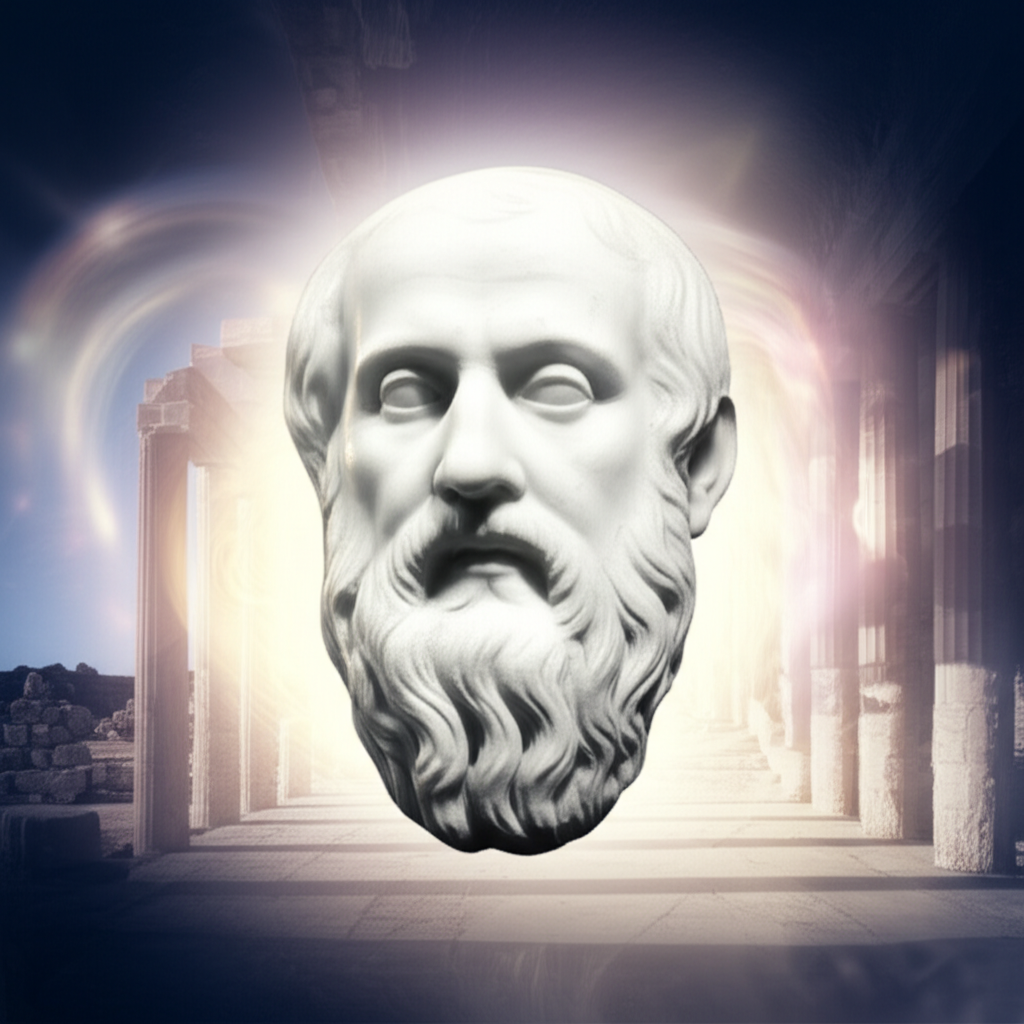
This constant interplay enriches not only the Art itself but also the artist's own Mind and the audience's experience. When we engage with a powerful piece of Art, we are invited to participate in this dialectic, recalling our own memories and activating our own imaginations to fully grasp its meaning and impact.
Philosophical Echoes in the Great Books
The profound connection between Memory and Imagination has been a recurring theme throughout the Great Books of the Western World.
- Plato: While often seen as distrustful of Art as mere imitation, his concept of anamnesis (recollection of ideal Forms) suggests a foundational role for a kind of intellectual memory in grasping truth, which can be mirrored in the artist's quest for ideal beauty or form.
- Aristotle: In On the Soul and Poetics, Aristotle meticulously analyzes perception, memory, and imagination (phantasia), seeing them as crucial steps in the acquisition of knowledge and the creation of mimetic Art that evokes pity and fear, leading to catharsis. His emphasis on experience as the source of knowledge makes memory paramount.
- St. Augustine: In his Confessions, Augustine marvels at the vastness and mystery of memory, describing it as a "great capacity, O God, great beyond measure!" He explores how memory contains not only images but also emotions, ideas, and even the self, making it a profound internal landscape for spiritual and artistic contemplation.
- Immanuel Kant: In his Critique of Pure Reason, Kant elevates the role of imagination to a transcendental faculty, the "productive imagination," which actively synthesizes sensory data into coherent experience, bridging the gap between sensibility and understanding. This active, world-building aspect of imagination is precisely what artists harness.
These thinkers, among many others, illuminate how deeply embedded Memory and Imagination are in our understanding of human cognition, creativity, and our capacity to engage with and create Art.
Conclusion: The Enduring Legacy
The power of Memory and Imagination in Art is not merely an academic concept; it is the very pulse of human creativity. It allows us to process our experience, to make sense of the past, to envision possible futures, and to communicate the incommunicable. From the detailed recall that grounds a realistic novel to the boundless fantasy that fuels a mythical epic, these faculties work in concert to expand the horizons of the human Mind. Through Art, memory is preserved and reinterpreted, and imagination is given tangible form, enriching our collective human experience and ensuring that the tapestry of human culture continues to grow, vibrant and ever-evolving.
YouTube Video Suggestions:
-
📹 Related Video: PLATO ON: The Allegory of the Cave
Video by: The School of Life
💡 Want different videos? Search YouTube for: ""Plato's Theory of Forms and Art""
2. ## 📹 Related Video: ARISTOTLE ON: The Nicomachean Ethics
Video by: The School of Life
💡 Want different videos? Search YouTube for: ""Coleridge Imagination Primary Secondary""