

The Canvas of Consciousness: Memory and Imagination in Art
Art, in its myriad forms, is more than mere aesthetic pleasure; it is a profound testament to the human mind's capacity to synthesize the past and envision the future. This article explores the inseparable and dynamic interplay of memory and imagination as the fundamental wellsprings of artistic creation and appreciation. Drawing from the rich philosophical traditions preserved in the Great Books of the Western World, we will delve into how artists harness the echoes of experience and the boundless potential of invention to craft works that resonate across time, inviting us, the audience, to engage with our own internal landscapes of recollection and possibility.
I. The Genesis of Creation: Memory and Imagination as Artistic Wellsprings
At the heart of every brushstroke, every sculpted form, and every poetic verse lies a complex interaction between what has been and what could be. Art is not simply an imitation of reality, but a re-creation and transformation of it, an intricate process shaped by our internal faculties.
- Memory serves as the artist's vast, often subconscious, storehouse. It holds not only factual recollections but also the sensory imprints of past experience, the emotional residue of moments lived, and the accumulated knowledge of human history and culture. It is the raw material, the palette of colors gathered over a lifetime.
- Imagination, on the other hand, is the architect. It is the faculty that allows the artist to reconfigure, combine, distort, invent, and project. It takes the fragments of memory and weaves them into novel patterns, conjuring worlds, characters, and emotions that may never have existed in concrete form, yet feel utterly real.
Together, these two powers of the mind forge the very essence of art, providing both its grounding in shared human experience and its soaring ascent into the realm of the transcendent.
II. Echoes of the Past: Memory's Role in Artistic Expression
Philosophers throughout history have grappled with the profound significance of memory in shaping our understanding of the world and our ability to create.
- Plato's Recollection and Mimesis: For Plato, as explored in dialogues like the Republic, artistic mimesis (imitation) often reflects the sensible world, which itself is an imperfect copy of eternal Forms. However, the mind possesses the capacity for anamnesis, or recollection of these perfect Forms. While art may be a "copy of a copy," its power lies in its ability to stir the soul, to awaken a latent memory of ideal beauty, truth, or justice, guiding us towards a deeper understanding of reality. The artist, in a sense, remembers the ideal.
- Aristotle's Empiricism and Poetics: In contrast to Plato, Aristotle, particularly in his Poetics, emphasizes experience as the foundation of knowledge and art. Art imitates human actions and characters, drawing from observed reality and the collective memory of human behavior. Poetry, for Aristotle, is more philosophical than history because it deals with universals, not particulars. This universality is distilled from countless individual experiences held in memory, allowing the artist to represent what might happen according or necessity or probability.
- Augustine's Interior Landscape: Saint Augustine, in his Confessions, marvels at the vastness and mystery of memory, describing it as a "palace" of the mind. It holds not just facts and images, but also feelings, principles, and even the very notion of God. For Augustine, the artist's work can be seen as an exploration and expression of this immense inner world, a reflection of the soul's journey and its search for meaning, all held within the intricate chambers of memory.
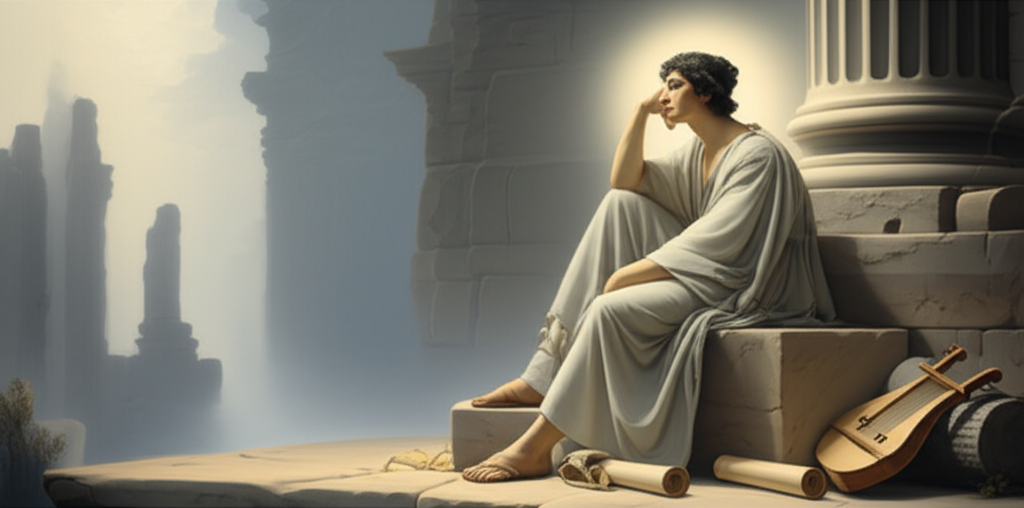
III. The Architect of the Unseen: Imagination's Transformative Power
While memory provides the material, imagination is the force that sculpts it into something new, transcending mere replication to achieve genuine innovation.
- From Imitation to Innovation: Imagination is the faculty that allows artists to go beyond simple recall. It synthesizes disparate elements, exaggerates features for expressive effect, invents entirely new forms, and projects possibilities. It is the engine of creativity, enabling the artist to create worlds, perspectives, and emotions that may exist only within the confines of the mind, yet possess profound resonance.
- Kant's Aesthetic Judgment: Immanuel Kant, in his Critique of Judgment, highlights the crucial role of imagination in aesthetic experience. For Kant, beauty arises from the "free play" of understanding and imagination. Imagination is not merely reproductive (recalling images) but productive, creating "aesthetic ideas" that stimulate thought and feeling without being reducible to a specific concept. This allows art to be universally communicable, despite its subjective origin.
- Coleridge's Primary and Secondary Imagination: Samuel Taylor Coleridge, drawing on German Idealism, articulated a nuanced view of imagination. He distinguished between:
- Primary Imagination: The living power and prime agent of all human perception, a repetition in the finite mind of the eternal act of creation in the infinite I AM. It is how we apprehend reality.
- Secondary Imagination: An echo of the primary, co-existing with the conscious will; it "dissolves, diffuses, dissipates, in order to recreate." This is the truly artistic faculty, enabling the poet or artist to transform and idealize, to fuse disparate elements into a new, organic whole.
IV. The Interplay: Weaving Memory and Imagination into the Fabric of Art
The true power of memory and imagination in art lies in their seamless integration, both in the artist's creative process and the audience's reception.
The Artist's Process: A Crucible of the Mind
The artist's mind acts as a crucible where personal experience (stored in memory) is subjected to the fires of imagination.
- Recall and Selection: The artist draws upon a vast reservoir of memories—sensory details, emotional states, learned techniques, cultural narratives.
- Transformation and Synthesis: Imagination then takes these raw materials, distorting them, combining them in unexpected ways, filling in gaps, and projecting new possibilities. A remembered landscape might be imbued with a fantastical creature, or a personal sorrow might be universalized through an invented narrative.
- Expression: The resulting artwork is not a literal transcription of memory, nor a pure flight of fancy, but a unique synthesis that bears the imprint of both.
The Audience's Reception: A Dialogue with the Work
When we encounter a piece of art, our own minds engage in a similar dance between memory and imagination.
- Evoking Memory: A painting might remind us of a childhood scene, a melody might recall a lost love, a story might echo our own struggles. Art taps into our personal and collective memories, forging an immediate connection.
- Stimulating Imagination: Beyond mere recognition, art invites us to imagine. It prompts us to fill in the unspoken, to consider alternative realities, to empathize with characters, or to project ourselves into abstract forms. It expands our capacity for experience beyond our immediate reality.
- Art as a Dialogue: The artwork becomes a dialogue between the artist's internal world and the audience's. It transcends individual experience, creating a shared space where the remembered past and the imagined future converge.
V. Philosophical Perspectives on Artistic Creation and Reception
The profound relationship between memory and imagination in art has been a recurring theme in philosophical inquiry.
- Hegel on Art as Spirit's Manifestation: Georg Wilhelm Friedrich Hegel viewed art as one of the primary ways for "Spirit" (the collective mind or consciousness) to become conscious of itself. Art translates abstract ideas into sensuous forms, drawing upon a collective cultural memory and the creative imagination of humanity to express profound truths about human experience and the unfolding of history.
- Nietzsche's Apollonian and Dionysian: Friedrich Nietzsche, in The Birth of Tragedy, presented art as a tension between two fundamental drives:
- Apollonian: Represents order, form, individuation, beauty, and often reflects conscious memory and rational thought. It is the dream-like vision, the structured narrative.
- Dionysian: Represents chaos, ecstasy, the dissolution of individuality, primordial unity, and is fueled by primal imagination and raw, unmediated experience. It is the intoxicating music, the breakdown of boundaries.
- Great art, for Nietzsche, arises from the dynamic interplay and synthesis of these two forces, allowing us to confront the terrifying aspects of existence through the veil of beautiful illusion.
VI. The Enduring Significance: Art as a Record and a Dream
The power of memory and imagination in art is what grants it its enduring significance. Art is simultaneously a meticulous record of humanity's past and a daring projection into its possible futures. It serves as:
- A Collective Memory: Preserving historical events, cultural values, and emotional truths across generations. It allows us to remember who we were and where we came from.
- A Collective Dream: Offering visions of ideal societies, challenging existing norms, exploring the depths of human potential, and imagining alternative realities. It encourages us to dream of what we could be.
The continuous cycle of experience, the processing mind, the storage of memory, and the creative leap of imagination ensures that art remains a vibrant, essential aspect of human existence, bridging the tangible and the ethereal, the known and the unknown.
Conclusion
The intricate dance between memory and imagination is not merely a feature of art; it is its very lifeblood. From the earliest cave paintings to the latest digital installations, artists have harnessed these profound faculties of the mind to interpret, question, and reshape our understanding of reality. Art stands as a testament to our capacity to remember, to learn from experience, and crucially, to transcend it through the boundless realm of imagination. It is through this powerful interplay that art continues to enrich our lives, challenging our perceptions, stirring our emotions, and reminding us of the infinite possibilities that lie within the canvas of consciousness.
📹 Related Video: PLATO ON: The Allegory of the Cave
Video by: The School of Life
💡 Want different videos? Search YouTube for: "Plato's Theory of Forms and Art"
📹 Related Video: KANT ON: What is Enlightenment?
Video by: The School of Life
💡 Want different videos? Search YouTube for: "Kant's Aesthetics and Imagination"