

In the grand tapestry of human endeavor, few threads are as intricately woven and profoundly impactful as the twin forces of Memory and Imagination in the realm of Art. Far from being mere passive receptacles or fleeting whims, these faculties of the Mind are the very crucible in which artistic Experience is forged, transforming raw perception into resonant expression. This article explores how artists, throughout history, have harnessed the power of what they remember and what they can conceive, not just to reflect the world, but to reshape it, inviting us to see beyond the immediate and into the infinite possibilities of human understanding.
The Intertwined Roots: Memory and Imagination as Catalysts for Creation
At the heart of every brushstroke, every sculpted form, every carefully chosen word, lies a profound interaction between what has been and what could be. The artist, in essence, is a philosopher of the senses, grappling with the nature of reality and possibility through the unique lens of their Mind. It is here that Memory and Imagination cease to be separate entities and begin their symbiotic dance, giving birth to works that challenge, comfort, and inspire.
We often think of Memory as a record keeper, a faithful archive of past events. Yet, in the artistic process, it is far more dynamic. It is a wellspring of emotion, a repository of sensory details, and a collection of cultural archetypes that an artist can draw upon. Imagination, conversely, is the faculty that allows us to transcend the bounds of immediate Experience, to conjure images, scenarios, and sensations that have never existed, or to reconfigure those that have in novel and provocative ways. Together, they form the bedrock of artistic creation, shaping both the content and the very form of Art.
Memory: The Deep Reservoir of Artistic Experience
Memory is not simply a mental photograph; it is a complex, often fluid, narrative constructed by our Mind. For the artist, this reservoir of personal and collective Experience provides an inexhaustible source of material.
- Personal Histories and Autobiographical Narratives: Artists frequently delve into their own pasts, exploring childhood memories, significant life events, or emotional landscapes. Frida Kahlo's poignant self-portraits, for instance, are deeply embedded in her physical and emotional Experience, transformed by Memory into universal statements of pain and resilience.
- Cultural and Collective Memory: Beyond individual recollection, artists tap into the shared Memory of a culture or civilization. Myths, legends, historical events, and ancestral traditions are reinterpreted, giving contemporary relevance to ancient narratives. Think of epic poems or historical paintings that seek to encapsulate the spirit of an era, not merely its facts.
- Sensory Recall and Emotional Resonance: A particular smell, a fleeting sound, the texture of a forgotten object – these sensory Memories can trigger profound emotional responses that artists translate into their work, aiming to evoke similar feelings in the viewer. The power lies not just in remembering the event, but in recalling the feeling of it.
Memory, therefore, is not just about what happened, but about how it felt and how it continues to resonate within the artist's Mind. It is the raw material, imbued with the weight of Experience, that awaits transformation.
Imagination: The Architect of Unseen Worlds
If Memory provides the foundation, Imagination erects the edifice, often defying the very laws of the remembered world. It is the faculty that allows the artist to see beyond the empirical, to postulate new realities, and to articulate the ineffable.
- Transcending Reality: Imagination empowers artists to move beyond literal representation. Surrealist painters like Salvador Dalí created dreamscapes that challenged logic, blending familiar objects in unfamiliar ways, drawing from the subconscious Mind to construct new visual Experiences.
- Conceiving the Ideal and the Impossible: From Plato's forms to utopian visions, the human Mind has always sought to imagine perfect states or impossible scenarios. Artists give form to these aspirations and anxieties, whether through the idealized figures of classical sculpture or the fantastical beasts of mythological Art.
- Innovation and Abstraction: Imagination is crucial for artistic innovation. It allows artists to break from established conventions, to experiment with new forms, materials, and techniques. Abstract Art, for example, relies heavily on the artist's Imagination to convey emotion or concept through pure form, color, and line, rather than direct representation.
Key Functions of Imagination in Art:
| Function | Description | Artistic Manifestation |
|---|---|---|
| Synthesis | Combining disparate elements from Memory into new wholes. | Collage, hybrid creatures, allegorical scenes. |
| Transformation | Altering the appearance or meaning of familiar objects or concepts. | Metamorphosis in Ovid, Cubist fragmentation, symbolic Art. |
| Projection | Envisioning future states, hypothetical scenarios, or alternative realities. | Science fiction, dystopian Art, speculative design. |
| Empathy | Imagining the Experience of others, fostering connection and understanding. | Portraiture, social commentary Art, dramatic narrative. |
The Symbiotic Dance: Memory, Imagination, and the Artistic Mind
The true power emerges not from these faculties in isolation, but from their dynamic interplay. Memory provides the vocabulary, the syntax, and the emotional resonance; Imagination composes the poem, building new meanings and Experiences from the remembered fragments.
An artist might recall a vivid childhood dream (Memory), then use their Imagination to elaborate upon it, adding details, symbolism, and narrative structure to create a compelling piece of Art. Conversely, an imaginative concept might prompt the artist to search their Memory for suitable visual metaphors or emotional anchors to ground the abstract idea in relatable Experience.
This continuous feedback loop enriches both the artist's Mind and the resulting Art. The act of creating, driven by this interplay, becomes a form of philosophical inquiry, exploring the nature of reality, truth, and human Experience. As we engage with such Art, our own Memory and Imagination are stirred, allowing us to connect with the artist's vision and forge new meanings within our own Minds.
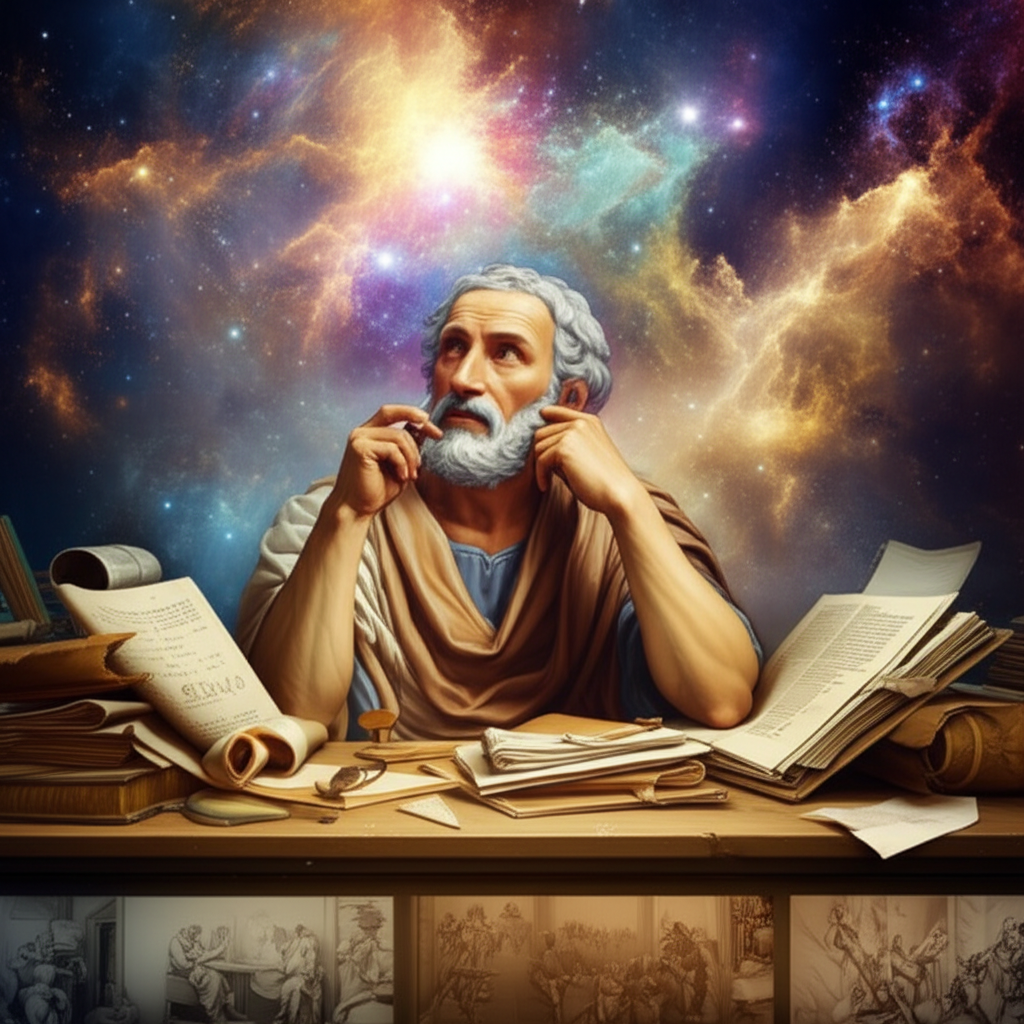
Art as a Mirror and a Window to the Mind
Ultimately, Art born from this powerful synergy serves a dual purpose. It acts as a mirror, reflecting our shared human condition, our collective Memories, and the common threads of our Experience. It also functions as a window, opening onto new perspectives, inviting us to imagine possibilities beyond our immediate grasp, and expanding the horizons of our individual and collective Minds.
Through Art, we not only encounter the artist's unique interpretation of Memory and Imagination, but we are also prompted to activate our own. This engagement is what makes Art a living, breathing entity, continually reinterpreted and re-experienced across generations. It is a testament to the enduring power of the human Mind to remember, to dream, and to create.
Conclusion: The Enduring Legacy
The power of Memory and Imagination in Art is not merely a technical skill but a profound philosophical statement about the human condition. It underscores our capacity to learn from the past, to envision the future, and to imbue the present with meaning. From the earliest cave paintings, capturing the Memory of the hunt and the Imagination of the spirit world, to the complex digital Art of today, these faculties remain the indispensable tools for artists seeking to understand, interpret, and transform the world around them. In exploring Art, we are, in essence, exploring the depths of the human Mind itself, forever shaped by what we recall and what we dare to imagine.
YouTube Video Suggestions:
-
📹 Related Video: PLATO ON: The Allegory of the Cave
Video by: The School of Life
💡 Want different videos? Search YouTube for: ""Plato's Theory of Forms and Art Explained""
-
📹 Related Video: What is Philosophy?
Video by: The School of Life
💡 Want different videos? Search YouTube for: ""The Role of Imagination in Human Cognition Philosophy""