

In the grand tapestry of human endeavor, few threads are as intricately woven and profoundly significant as those connecting Memory and Imagination to the creation and appreciation of Art. Far from mere tools, these faculties of the Mind are the very crucible in which raw Experience is transmuted into meaning, beauty, and insight. This article explores how memory provides the bedrock of accumulated knowledge and sensation, while imagination, unfettered yet informed, constructs new realities, allowing art to transcend simple representation and touch the deepest parts of our shared human condition.
The Intertwined Roots: Memory and the Artist's Palette
Memory, often conceived as a repository of the past, serves as the fundamental wellspring for artistic creation. It is not merely a passive archive but an active, interpretive faculty that shapes how an artist perceives, recalls, and re-presents the world. From the vivid recollections of a childhood landscape to the echoes of a profound emotional encounter, memory provides the essential data points for the creative impulse.
Recollection as Foundation
Philosophers, from Plato's concept of anamnesis to Locke's empirical understanding of ideas formed through sensation, have long grappled with memory's role in shaping our consciousness. For the artist, this translates into a rich internal landscape:
- Sensory Recall: The precise shade of a sunset, the texture of weathered stone, the timbre of a human voice – these are stored and retrieved, sometimes consciously, often subconsciously, to imbue art with authenticity.
- Emotional Resonance: Art frequently seeks to evoke or convey emotion. Memory allows the artist to tap into their own emotional history, understanding the nuances of joy, sorrow, fear, or wonder, and translating these into a universally recognizable form.
- Cultural Heritage: Collective memory, passed down through generations, informs artistic traditions, symbols, and narratives. Artists draw upon this vast reservoir, reinterpreting myths, historical events, and established forms to speak to contemporary audiences.
Without memory, art would lack context, depth, and the very connection to the human story that gives it enduring power. It is the artist's personal and cultural ledger, constantly referenced and re-evaluated.
Imagination: Architect of New Realities
While memory grounds art in what was, Imagination propels it into what could be. It is the faculty that allows the artist to rearrange, combine, exaggerate, and invent, transforming the raw material of memory and experience into something novel, something that exists first in the Mind before it manifests in paint, sound, word, or stone.
Beyond Mimesis: The Creative Leap
Aristotle, in his Poetics, recognized that art's imitation (mimesis) was not mere copying but an imitation of action and character, often presenting things "as they ought to be" or "as they are said or thought to be." This hints at the transformative power of imagination:
- Synthesis and Invention: Imagination takes disparate elements from memory and experience and fuses them into new wholes. A painter might combine the light from one memory with the form of another to create an entirely new scene. A writer might invent characters and plots that, while fictional, resonate with universal truths about human nature.
- Empathy and Perspective: Through imagination, artists can step into other skins, explore alternative realities, and present perspectives that challenge or expand our own. This capacity for imaginative projection is crucial for storytelling, drama, and any art that seeks to deepen our understanding of others.
- Symbolism and Abstraction: Imagination allows artists to move beyond literal representation, creating symbols that encapsulate complex ideas or venturing into abstraction to explore pure form, color, or sound, thereby touching the ineffable aspects of Experience.
The interplay between memory and imagination is dynamic. Memory provides the building blocks, while imagination provides the blueprint and the creative force to construct entirely new structures of meaning and beauty.
The Mind's Grand Theatre: Art as a Dialogue
The ultimate power of Memory and Imagination in art lies in their ability to bridge the gap between the artist's inner Mind and the audience's external Experience. When we engage with a work of art, our own memories and imaginations are activated, creating a unique dialogue.
Experience Refashioned and Shared
Art, born of the artist's internal world, invites us into a shared space of reflection and revelation.
- Evoking Shared Experience: A piece of music might recall a forgotten joy, or a painting might evoke a universal sense of longing, simply because the artist's imaginative interpretation of their memory taps into similar human experiences within us.
- Expanding the Mind: By presenting new perspectives or imagined worlds, art challenges our preconceived notions, broadens our emotional range, and encourages us to see the familiar in new ways. This expansion of the Mind is a profound philosophical function of art.
The Great Books of the Western World are replete with examples of this power, from Homer's epic narratives that shaped collective memory and imagination for millennia, to Shakespeare's plays that explore the depths of human psychology through imagined scenarios, to the philosophical treatises that seek to systematically understand these very faculties.
Here’s how memory and imagination manifest across different artistic forms:
| Art Form | Role of Memory | Role of Imagination |
|---|---|---|
| Painting | Recalling colors, forms, light, emotional states. | Composing scenes, inventing figures, abstracting reality. |
| Literature | Remembering events, dialogue, personal feelings. | Crafting plots, inventing characters, building worlds. |
| Music | Recalling melodies, rhythms, emotional associations. | Composing new harmonies, structuring soundscapes, evoking unseen realms. |
| Sculpture | Remembering human/natural forms, textures. | Conceiving new shapes, expressing abstract ideas in three dimensions. |
| Drama | Recalling human interactions, historical contexts. | Creating dialogue, developing characters, staging conflicts. |
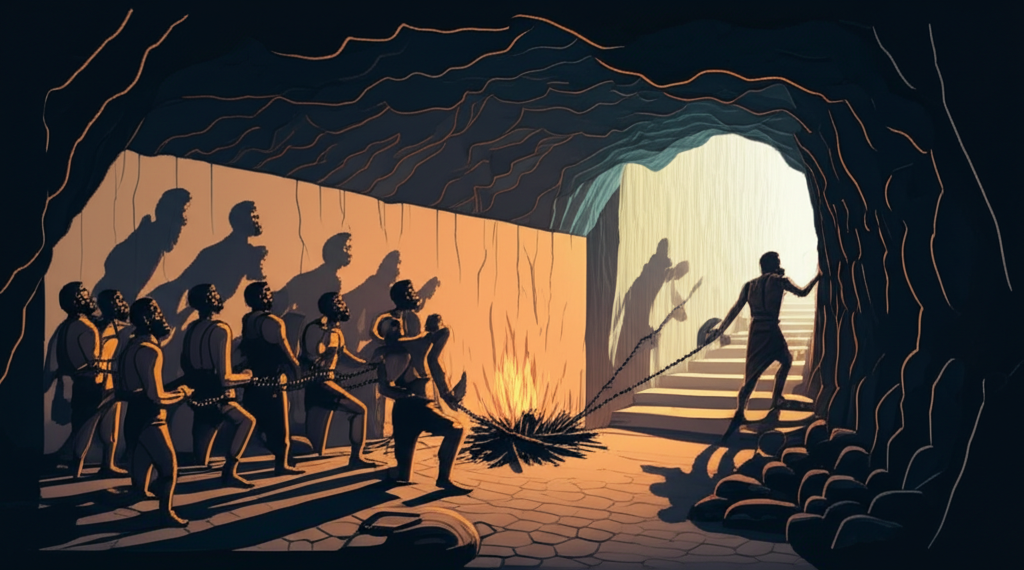
The enduring legacy of art is not merely in its aesthetic appeal but in its capacity to serve as a conduit for the human Mind to explore, express, and transcend Experience through the potent alchemy of Memory and Imagination. It is through these faculties that we build our internal worlds and, in turn, shape the external reality we share.
📹 Related Video: PLATO ON: The Allegory of the Cave
Video by: The School of Life
💡 Want different videos? Search YouTube for: ""Plato's Allegory of the Cave explained""
📹 Related Video: KANT ON: What is Enlightenment?
Video by: The School of Life
💡 Want different videos? Search YouTube for: ""The Role of Imagination in Kant's Philosophy""