

The Enduring Tapestry: Memory and Imagination Woven into the Fabric of Art
In the grand tapestry of human endeavor, few threads are as fundamental and intricately intertwined as Memory and Imagination, especially when contemplating the realm of Art. It is through these profound faculties of the Mind that artists draw from the wellspring of Experience and sculpt new realities, offering us not merely reflections of the world, but profound insights into our inner selves. This article delves into how these two pillars of consciousness serve as the bedrock for all creative expression, shaping both the genesis and reception of artistic works, and ultimately, our understanding of what it means to be human.
I. The Deep Wellspring: Memory as Art's Foundation
Before the brush touches the canvas or the pen meets the page, there exists a vast, personal archive within the artist's Mind: Memory. It is the repository of every sight, sound, emotion, and thought ever encountered, forming the raw material from which initial sparks of creation ignite. Memory is not merely passive recollection; it is an active force, constantly sifting, categorizing, and imbuing past Experiences with new significance.
Artists, whether consciously or instinctively, tap into this deep wellspring in various forms:
- Personal Memory: The visceral recall of childhood landscapes, the echo of a loved one's voice, the texture of a forgotten moment. These intimate Experiences become the emotional core of much autobiographical or expressive Art.
- Collective Memory: Beyond the personal, Art often draws upon shared histories, myths, cultural narratives, and societal Experiences. From ancient epics to modern protest songs, Art serves as a vessel for preserving, interpreting, and even challenging the collective consciousness of a people.
- Sensory Memory: The lingering scent of rain, the sharp tang of a specific spice, the unique quality of light at dawn – these sensory details, stored in Memory, can be painstakingly recreated or evoked, adding layers of authenticity and resonance to artistic works.
Indeed, much of Art's power lies in its ability to evoke or reawaken our own memories, creating a profound connection between the artist's Experience and our own. It is a testament to the enduring influence of the past on our present perceptions and future imaginings.
II. The Architect of Worlds: Imagination's Creative Impulse
While Memory provides the bricks, Imagination is the architect that designs the structure, transcending mere recollection to forge entirely new forms and narratives. Imagination is the faculty of the Mind that allows us to conceive of what is not present, what has never been, or what could be. It is the engine of invention, enabling artists to reconfigure, distort, combine, and elevate existing Experiences into novel creations.
Consider the diverse roles Imagination plays:
- Recombinatory Power: Imagination takes disparate elements from Memory and recombines them in unprecedented ways. A creature from myth, for instance, is often a composite of familiar animals, reshaped by the imaginative faculty.
- Empathic Projection: An artist can imagine themselves into another's shoes, conceiving of emotions, perspectives, and Experiences beyond their own, thereby creating characters or scenarios that resonate with universal human truths.
- Visionary Conception: Imagination is the birthplace of utopian dreams, dystopian warnings, and abstract forms that defy literal interpretation. It pushes the boundaries of perception, inviting viewers to explore realms beyond the tangible.
Without Imagination, Art would be a mere chronicle of events; with it, Art becomes a transformative force, capable of challenging our perceptions, expanding our empathy, and offering glimpses into possibilities yet unexplored.
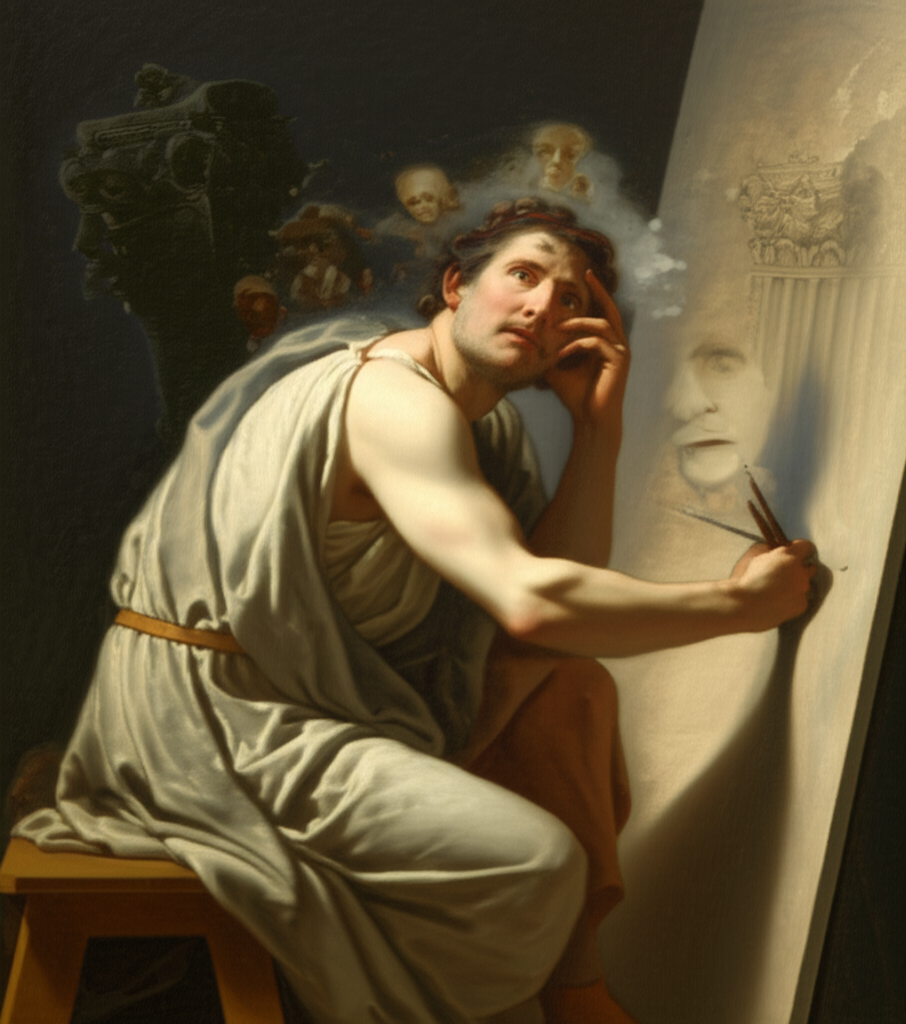 intertwine with brighter, more vivid, and abstract forms (like geometric patterns or fantastical creatures) that seem to emanate from their brow, illustrating the internal interplay of memory and imagination in the creative process. The background is a mix of shadowy recollection and vibrant, nascent ideas.)
III. The Synergistic Dance: When Memory Meets Imagination in Artistic Expression
Crucially, Memory and Imagination are not isolated faculties but engage in a continuous, synergistic dance within the artistic Mind. Seldom does Art emerge from pure, unadulterated Memory or wholly unfettered Imagination. Instead, it is the dynamic interplay between the two that yields the richest and most compelling works. Memory provides the ground, while Imagination provides the wings.
This intricate relationship can be observed across various artistic processes:
| Artistic Process | Role of Memory | Role of Imagination | Outcome in Art |
|---|---|---|---|
| Portraiture | Recalling facial features, expressions, personality. | Envisioning the sitter's inner life, future self. | A depiction that captures both likeness and spirit. |
| Historical Fiction | Researching factual events, customs, historical figures. | Inventing dialogue, subplots, emotional nuances. | A narrative that feels authentic yet offers fresh perspectives. |
| Abstract Painting | Remembering colors, textures, feelings from nature/life. | Translating those into non-representational forms. | An evocative visual experience that resonates without literal depiction. |
| Music Composition | Recalling melodies, harmonies, rhythmic patterns. | Inventing new sequences, developing themes, expressing emotions. | A symphony that builds on tradition yet innovates and moves the listener. |
| Architectural Design | Remembering structural principles, material properties. | Envisioning new forms, functions, and spatial experiences. | A building that is both structurally sound and aesthetically groundbreaking. |
The artist constantly navigates between what was and what could be, drawing upon the well-worn paths of Memory to venture into the untrodden territories of Imagination. This fusion is what allows Art to resonate deeply, offering both familiarity and revelation.
IV. Art as a Mirror to the Mind: Reflecting Inner Experience
Ultimately, Art serves as a profound mirror to the human Mind itself, reflecting the complex ways we process and make sense of Experience. When we engage with Art, we are not merely passive observers; we too activate our Memory and Imagination. A painting might evoke a forgotten moment, a piece of music might transport us to a different time, or a sculpture might prompt us to imagine new possibilities.
This reciprocal relationship highlights Art's philosophical significance:
- Art demonstrates the Mind's incredible capacity for internal world-building.
- It provides a unique window into the artist's subjective Experience and worldview.
- It challenges viewers to expand their own Imagination, to empathize, and to reconsider their memories.
Through Art, we confront the very nature of perception, consciousness, and the subjective reality that each individual constructs. It reminds us that our internal landscapes of Memory and Imagination are as real and impactful as the external world we inhabit.
Conclusion: The Unfolding Canvas of Human Understanding
The power of Memory and Imagination in Art is not merely an aesthetic consideration; it is a profound philosophical statement about the human condition. From the ancient Greek musings on recollection to modern theories of consciousness, thinkers have grappled with how we remember the past and envision the future. Art stands as a living testament to these faculties, continually demonstrating our capacity to not only recount our Experiences but to transform them, to dream beyond them, and to share those dreams with others.
As long as there are Minds capable of remembering and Imagination bold enough to venture, Art will continue to be the vibrant, ever-unfolding canvas upon which humanity paints its deepest truths and most soaring aspirations.
📹 Related Video: PLATO ON: The Allegory of the Cave
Video by: The School of Life
💡 Want different videos? [Search YouTube for: ""Plato's Theory of Recollection (Anamnesis"](https://www.youtube.com/results?search_query="Plato's Theory of Recollection (Anamnesis) Explained")
📹 Related Video: What is Philosophy?
Video by: The School of Life
💡 Want different videos? Search YouTube for: ""The Philosophy of Imagination in Art and Aesthetics""