

The Inner Canvas: Memory and Imagination in the Crucible of Art
The creation and appreciation of art are not merely acts of skill or aesthetic judgment; they are profound engagements with the very architecture of the human Mind. At the heart of this engagement lie two formidable faculties: Memory and Imagination. This article posits that these twin powers are not simply tools, but the essential wellsprings from which all meaningful Art emerges, shaping our Experience of reality and offering profound insights into the self. From the reconstruction of the past to the envisioning of the utterly new, Memory and Imagination forge the narratives, images, and forms that define our cultural and personal landscapes.
The Artist as Architect of the Inner World
The genesis of any artistic endeavor begins long before brush touches canvas or chisel meets stone. It commences within the artist's Mind, a fertile ground where the echoes of the past meet the whispers of the possible. Art, in its most fundamental sense, is a bridge between the subjective inner world and the objective external reality, and it is Memory and Imagination that construct this vital span. Without the capacity to recall, reflect, and reinterpret, or to conceive, combine, and create, the artistic impulse would remain dormant, a mere potential never actualized.
Memory: The Wellspring of Artistic Inspiration
Memory is often perceived as a passive repository, a dusty archive of past events. Yet, in the hands of an artist, it transforms into an active, reconstructive force. It is the raw material, the rich soil from which artistic seeds sprout.
Recollection, Reflection, and Reinterpretation
Memory is not simply remembering; it is a process of re-membering, of putting disparate pieces back together, often with new emphasis and meaning. Artists draw upon a vast reservoir of Experience – personal anecdotes, historical events, cultural myths, sensory impressions – not to replicate them verbatim, but to distill their essence, to find the universal within the particular.
Consider the philosopher's long-standing inquiry into the nature of memory, from Plato's notion of anamnesis, the recollection of eternal forms, to Locke's empirical view of memory as a collection of ideas derived from sensation and reflection. For the artist, this act of recall is inherently selective and interpretive. A painter revisiting a childhood landscape doesn't merely depict the scene as it was, but imbues it with the emotion, nostalgia, or perhaps even the disillusionment of the intervening years. The past, filtered through the artist's unique Mind, becomes a prism refracting new light onto old forms, offering a reinterpretation of shared or personal history.
Imagination: The Forge of New Realities
If memory provides the foundation, imagination is the architect that designs new structures, often defying the constraints of the observed world. It is the faculty that transcends the empirical and ventures into the realm of the hypothetical, the symbolic, and the utterly novel.
Beyond Mimesis: Inventing the Unseen
While Art can certainly be mimetic, imitating reality, its true power often lies in its capacity to create something entirely new, something that has no direct counterpart in the physical world. This is the domain of Imagination. It allows artists to combine disparate elements, to envision impossible scenarios, to give form to abstract concepts, and to express the ineffable.
Philosophers like Kant highlighted the productive power of imagination, not merely as a reproductive faculty that recalls images, but as a transcendental power that structures our very perception of reality. For the artist, this translates into the ability to conceive of alternative worlds, to invent mythologies, to fashion new symbols, or to articulate emotions that defy simple description. A surrealist painter might juxtapose familiar objects in unfamiliar ways, creating a dreamscape that speaks to the subconscious Mind. A composer might weave melodies that evoke feelings never before consciously experienced. This creative leap, this "making new," is the distinctive mark of robust Imagination.
The Interplay: A Dynamic Duo in Artistic Creation
Crucially, Memory and Imagination do not operate in isolation. They are deeply interwoven, engaged in a continuous, dynamic dialogue that fuels the artistic process. One provides the raw material, the other shapes it; one grounds the work in Experience, the other elevates it to universal significance.
Synthesizing Past and Future Selves
The artist's Mind acts as a crucible where the molten metal of Memory is poured into the molds cast by Imagination. A novelist might recall a forgotten conversation (memory) and then invent an entire character and plotline around its implications (imagination). A sculptor might remember the texture of a particular stone (memory) and then envision a form that pushes the material beyond its conventional uses (imagination).
This synthesis allows Art to become a profound exploration of human Experience – not just as it was, but as it could be, or as it is perceived to be. It allows us to process the past, understand the present, and anticipate the future, all within the aesthetic framework. The audience, too, engages in this interplay, bringing their own memories and imaginations to interpret and complete the artwork.
| Faculty | Primary Role in Art | Contribution to the Mind/Experience |
|---|---|---|
| Memory | Provides raw material, personal/collective history, data | Grounds art in reality, offers context, evokes emotion |
| Imagination | Transforms, invents, combines, envisions new possibilities | Elevates art beyond imitation, fosters novelty, abstract thought |
| Interplay | Synthesizes past and future, enriches meaning, creates depth | Allows for empathy, understanding, and the creation of new realities |
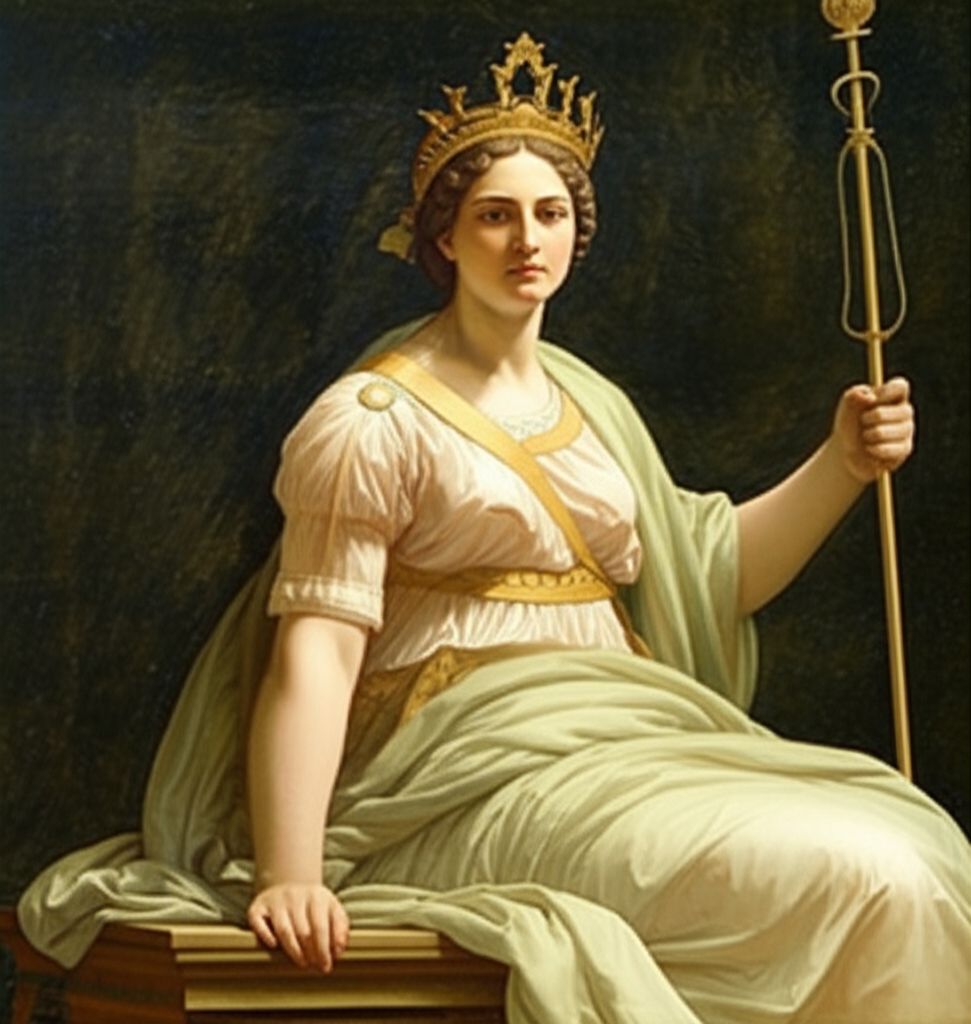 or Urania (imagination/inspiration), gazing intently into a swirling vortex of light and shadow, from which emerge fragmented images of past events and fantastical, ethereal forms. The figure's hand might be poised as if to capture or sculpt these fleeting visions, symbolizing the act of artistic creation from the wellsprings of the inner mind.)
Art as a Mirror and a Window to the Mind
Ultimately, Art born of Memory and Imagination serves as both a mirror reflecting the intricacies of the human Mind and a window offering glimpses into alternative realities. It demonstrates our innate capacity to not only recall what has been, but to conceive of what might be, and to imbue both with meaning and feeling.
Through Art, we Experience the shared human condition, the triumphs and tragedies, the dreams and nightmares, filtered through the unique lens of an artist's inner world. It allows us to step outside our own immediate Experience and inhabit another's, thereby expanding our empathy and understanding. The enduring works celebrated in the Great Books of the Western World – from epic poems that recall ancient myths to philosophical dialogues that imagine ideal states – are testaments to this power. They are not merely records of events but imaginative interpretations and constructions of human Experience, shaped by the profound interplay of Memory and Imagination.
The Enduring Legacy of Inner Worlds
The power of Memory and Imagination in Art is an enduring testament to the boundless capabilities of the human Mind. These faculties allow us to transcend the limitations of the present moment, to learn from the past, and to envision a future that is rich with possibility. Art, in its myriad forms, stands as a vibrant testament to this interplay, continually reminding us that the deepest, most transformative realities are often those we construct within ourselves. It is through these inner worlds, shaped by what we remember and what we dare to imagine, that humanity continues to define its Experience and leave its indelible mark upon the world.
📹 Related Video: PLATO ON: The Allegory of the Cave
Video by: The School of Life
💡 Want different videos? Search YouTube for: ""Plato's Theory of Forms and Anamnesis Explained""
📹 Related Video: KANT ON: What is Enlightenment?
Video by: The School of Life
💡 Want different videos? Search YouTube for: ""Kant's Critique of Judgment: Imagination and Aesthetic Experience""