

The Political Structure of Ancient Aristocracy: Rule by the "Best"
Ancient Aristocracy, a fascinating and complex form of Government, stands as a pivotal chapter in the History of political thought and organization. At its core, aristocracy, derived from the Greek aristokratia (rule of the "best"), posited that the State should be governed by a select few individuals deemed most virtuous, wise, or capable. This system, distinct from monarchy or democracy, shaped the destiny of numerous ancient societies, leaving an indelible mark on their laws, culture, and philosophical discourse. Understanding its structure requires a deep dive into its ideals, its practical manifestations, and the inherent tensions that often led to its transformation.
Defining Aristocracy: Beyond Mere Birthright
When we speak of Aristocracy in the ancient world, it's crucial to distinguish it from a simple hereditary oligarchy. While noble birth often played a significant role, the philosophical ideal underpinning true aristocracy, as discussed by thinkers like Aristotle in the Great Books of the Western World, emphasized rule by those possessing superior moral and intellectual virtue, not merely wealth or lineage.
- Etymology: From Greek aristos (best) or excellent and kratos (power) or rule.
- Core Principle: Governance by a select group believed to be inherently superior in character, wisdom, or experience, ruling for the common good of the State.
- Ideal vs. Reality: Often, the ideal of meritocratic rule by the "best" eventually succumbed to the reality of rule by the wealthiest or most powerful families, leading to its degeneration into oligarchy.
Historical Foundations: From Athens to Rome
The tapestry of ancient History offers numerous examples of states experimenting with aristocratic forms of Government. These varied greatly in their implementation and longevity, reflecting the diverse socio-political landscapes of the time.
- Early Athens: Before the democratic reforms of Solon and Cleisthenes, Athens was largely governed by an aristocracy, notably the Archons and the Council of the Areopagus. Membership in these bodies was typically restricted to the Eupatridae, the "well-born" landowning families. Their power was immense, controlling religious rites, judicial functions, and military leadership.
- Sparta: While often described as an oligarchy due to the narrow rule of the two kings and the Gerousia (Council of Elders), Sparta exhibited strong aristocratic elements. Its emphasis on a rigorous education (agoge) designed to produce the "best" warriors and citizens, and the communal lifestyle of the Spartiates, reflected an attempt to cultivate a virtuous ruling class, albeit one focused intensely on military prowess and civic discipline.
- The Roman Republic: The early Roman State was a classic example of an aristocratic republic. The Senate, composed primarily of patricians (members of the oldest and wealthiest families), held immense authority. While magistrates were elected, the influence of the senatorial class, their dignitas and auctoritas, ensured that Government remained firmly in the hands of the elite. Even as plebeians gained more rights, the underlying structure often ensured that power gravitated towards a relatively small number of leading families.
Key Characteristics of Aristocratic Governance
The political structure of ancient aristocracy manifested through several common features, reflecting its core tenets and practical necessities.
I. Councils and Assemblies
Central to aristocratic Government was the role of councils, typically composed of elder statesmen or prominent families.
| Council Name | State | Composition | Key Function |
|---|---|---|---|
| Areopagus | Early Athens | Former Archons (Eupatridae) | Judicial oversight, guardian of laws, religious matters |
| Gerousia | Sparta | 28 men over 60 (plus 2 kings), elected for life | Prepared legislation, highest court, advised kings |
| Roman Senate | Rome | Former magistrates (Patricians, later some Plebeians) | Advised magistrates, controlled finance and foreign policy |
II. The Role of Law and Justice
In an aristocratic State, the administration of justice and the creation of law were often prerogatives of the ruling elite, believed to possess the wisdom to discern and uphold the common good. Early legal codes, while sometimes harsh, aimed to maintain social order and the integrity of the State. The belief was that the "best" would create the "best" laws.
III. Education and Virtue
A defining feature of the aristocratic ideal was the emphasis on a specific form of education designed to cultivate aretē (virtue or excellence) in its leaders. This was not merely academic learning but encompassed moral character, civic responsibility, and martial skill. Plato's concept of the philosopher-king, though an ideal, reflects this aspiration for rule by the truly "best" and wisest.
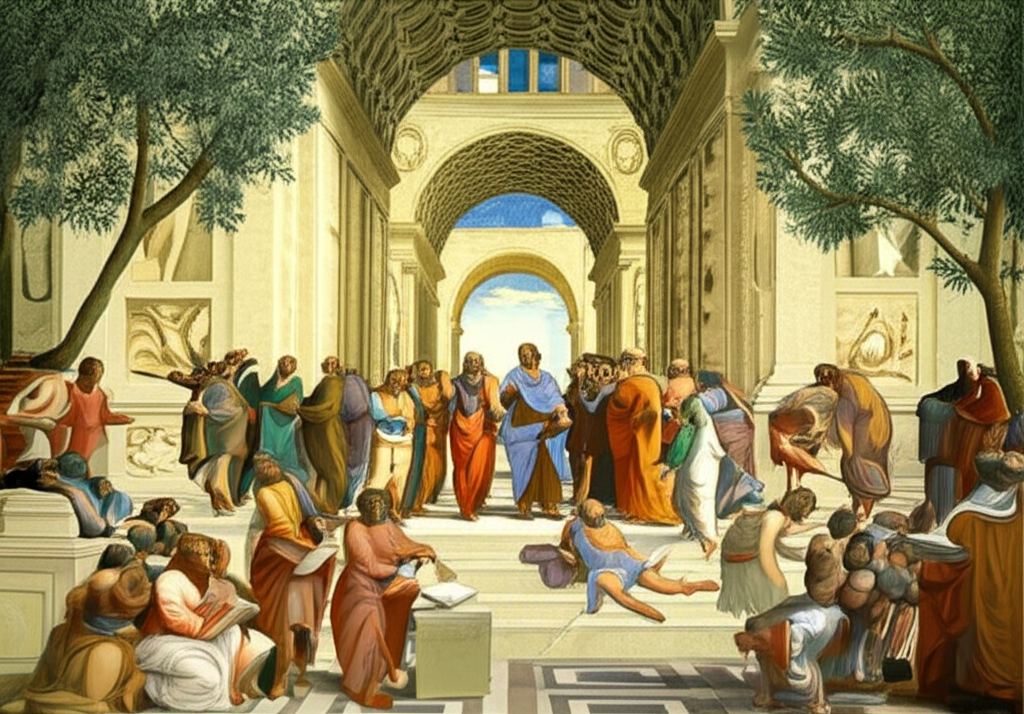
Philosophical Perspectives from the Great Books
The nature of Aristocracy and its place within the spectrum of Government forms was a central concern for ancient philosophers, whose insights continue to illuminate our understanding.
- Plato's Ideal State: In his Republic, Plato outlines a highly structured State ruled by "philosopher-kings," individuals whose rigorous education and innate wisdom qualify them to discern truth and govern for the ultimate good. While not a typical aristocracy based on birth, it embodies the ultimate aristocratic ideal of rule by the truly "best" and most rational. He distinguishes this from timocracy (rule by honor-lovers) and oligarchy (rule by the wealthy).
- Aristotle's Classification: Aristotle, in his Politics, provides a nuanced analysis. He classifies Aristocracy as one of the "good" forms of Government, alongside kingship and polity. For Aristotle, aristocracy is "the Government of the best, with a view to the best interests of the State and of the citizens." He contrasts it sharply with its corrupt counterpart, Oligarchy, where rule by the wealthy few serves only their self-interest. Aristotle recognized that a true aristocracy was rare, often degenerating into oligarchy due to the pursuit of wealth over virtue.
Challenges and Transformations: The Inherent Instability
Despite its lofty ideals, ancient aristocratic Government was frequently beset by internal strife and the seeds of its own transformation.
- Factionalism: Competition among powerful aristocratic families often led to bitter feuds, destabilizing the State.
- Economic Inequality: As wealth became concentrated, the gap between the aristocratic elite and the common populace widened, fueling resentment and calls for reform. This often led to the degeneration of aristocracy into oligarchy, where wealth, not virtue, became the primary criterion for rule.
- Rise of the People: The dissatisfaction of the common people (the demos) with aristocratic privilege and perceived injustices often paved the way for populist leaders (tyrants or demagogues) or democratic revolutions, as seen in Athens.
- Military Changes: Shifts in military technology or tactics could empower non-aristocratic citizens (e.g., hoplite armies), giving them greater leverage to demand political inclusion.
Conclusion: The Enduring Legacy of Aristocratic Ideals
The political structure of ancient Aristocracy, though often short-lived in its purest form, left an enduring legacy on the History of political thought. It championed the notion that leadership requires specific virtues, wisdom, and a commitment to the common good—ideals that continue to resonate in discussions about good Government today. While its practical manifestations often fell short, degenerating into self-serving oligarchies, the philosophical pursuit of rule by the "best" continues to challenge us to consider what qualities truly qualify individuals to lead the State, and how societies can cultivate such excellence.
Further Exploration
📹 Related Video: ARISTOTLE ON: The Nicomachean Ethics
Video by: The School of Life
💡 Want different videos? Search YouTube for: "Aristotle Politics explained"
📹 Related Video: PLATO ON: The Allegory of the Cave
Video by: The School of Life
💡 Want different videos? Search YouTube for: "Plato Republic summary political philosophy"