

The Enduring Framework: Unpacking the Political Structure of Ancient Aristocracy
Summary: Ancient aristocracy, derived from the Greek aristokratia (rule of the best), represented a form of Government where power resided in a select group believed to be superior in virtue, intellect, or birth. This political State was often idealized as the governance of the most capable for the common good, distinct from its frequent degeneration into oligarchy (rule of the wealthy). Exploring its History reveals a complex interplay of philosophical ideals, social structures, and practical challenges that shaped classical civilization.
Greetings, fellow travelers on the intellectual path! As we delve into the rich tapestry of political History, few forms of Government ignite as much philosophical debate and historical scrutiny as the ancient Aristocracy. Often misunderstood, sometimes romanticized, and frequently criticized, its true nature lies in the nuanced exploration of its structure, ideals, and eventual transformations.
What Was Ancient Aristocracy? A Philosophical Ideal
At its core, aristocracy stems from the Greek words aristos (best) and kratos (power or rule). Thus, it literally means the "rule of the best." For thinkers like Plato and Aristotle, this was not merely a system of inherited privilege, but an aspirational ideal.
- Plato's Republic: Envisioned an ideal State governed by "philosopher kings" – individuals whose lives were dedicated to wisdom, justice, and the common good, selected through rigorous education and proven virtue. This was the pinnacle of Government in his thought.
- Aristotle's Politics: Classified aristocracy as one of the "good" forms of Government, alongside kingship and polity. He distinguished it by the rulers' aim: to govern for the benefit of the entire community, not just themselves. Its corruption, he warned, led to oligarchy, where the wealthy ruled purely for their own gain.
This philosophical underpinning is crucial. It highlights that the ideal of ancient aristocracy was fundamentally meritocratic, even if its practical application often fell short, blurring the lines with systems based on birth or wealth.
Key Characteristics of the Aristocratic Ideal:
- Rule by the Virtuous: Emphasis on arete (excellence) in character, wisdom, and civic duty.
- Focus on the Common Good: Rulers were expected to prioritize the welfare of the entire State.
- Education and Cultivation: Extensive training in philosophy, rhetoric, military arts, and ethics was often a prerequisite.
- Stability and Order: Seen as a balanced form of Government that could prevent the excesses of tyranny or pure democracy.
The Pillars of Ancient Aristocratic Governance in Practice
While the ideal was lofty, the practical political structure of ancient aristocracy varied significantly across different civilizations and time periods. Nevertheless, certain common elements underpinned its operation.
1. Eligibility and Selection: Birth, Wealth, and Merit
The "best" were rarely chosen purely on philosophical merit. More often, a combination of factors determined who belonged to the ruling elite:
- Heredity: In many ancient societies, noble birth was a primary, if not exclusive, gateway to aristocratic status. Families with long lineages were presumed to possess inherent qualities of leadership and virtue. Early Roman patricians exemplify this.
- Wealth (Land Ownership): Economic independence, typically derived from extensive landholdings, was essential. It provided the leisure necessary to dedicate oneself to governance without the need for manual labor, and often signified a stake in the stability of the State.
- Military Prowess: Especially in early periods, military distinction and leadership in battle were highly valued and often a path to aristocratic recognition.
- Education and Culture: Access to advanced education, particularly in rhetoric, philosophy, and law, distinguished the aristocratic class and prepared them for public office.
2. Institutions and Decision-Making
Aristocratic Government typically featured specific institutional arrangements:
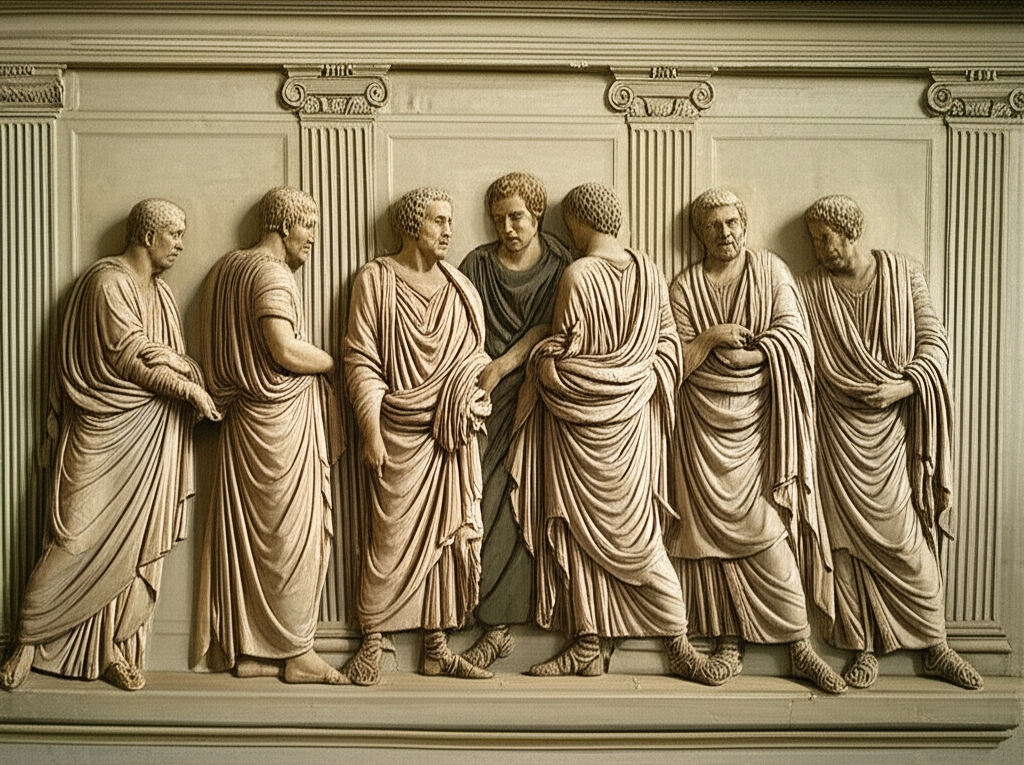
- Councils and Senates: Governing bodies composed of aristocratic elders or prominent families played a central role. Examples include the Roman Senate or the Spartan Gerousia. These bodies debated policy, advised magistrates, and often held significant legislative power.
- Magistracies: Key executive and judicial offices were usually held by members of the aristocracy, often for limited terms to prevent the concentration of power in a single individual.
- Assemblies (Limited Scope): While popular assemblies might exist, their power was often circumscribed, serving more to ratify decisions or elect magistrates from a pre-selected aristocratic pool.
3. The Economic and Social Basis
The perpetuation of aristocratic rule was deeply intertwined with social and economic structures.
- Land as Power: Control over agricultural land was the foundation of aristocratic wealth and influence. It provided the resources to maintain their lifestyle, support their political activities, and often command loyalty from tenants or dependents.
- Leisure for Governance: The ability to live without manual labor was crucial. It allowed the aristocracy to dedicate their time to civic duties, military training, and intellectual pursuits, reinforcing their claim to being "the best" suited to rule.
- Social Hierarchy: A clear social hierarchy, with the aristocracy at the apex, was generally accepted. This often included a system of clientage or patronage, where the elite provided protection and support to lower classes in exchange for loyalty and service.
Variations Across Ancient States
The concept of aristocracy manifested differently across various ancient civilizations:
| Ancient State | Dominant Aristocratic Elements | Key Characteristics |
|---|---|---|
| Sparta | Homoioi (Equals), Gerousia (Council of Elders) | Hereditary warrior elite, rigorous education (agoge), dual kingship, strong emphasis on military virtue. |
| Early Rome | Patricians, Senate | Hereditary nobility, landownership, extensive clientage, Senate as the primary governing body with immense power. |
| Athens | Eupatridae (well-born) before democratic reforms | Landed aristocracy, control of early magistracies (archons), gradually challenged by emerging merchant class. |
| Carthage | Council of 104, Suffetes (magistrates) | Oligarchic elements with aristocratic families dominating trade and Government. |
Challenges, Degeneration, and Transformation
Despite its lofty ideals, ancient aristocracy was rarely stable. Aristotle himself observed the tendency for good forms of Government to degenerate.
- Oligarchy: The most common corruption of aristocracy, where the "rule of the best" devolved into the "rule of the wealthy" or a narrow, self-serving elite. Wealth became the sole criterion for power, neglecting virtue and the common good.
- Internal Strife: Conflicts between aristocratic factions, often fueled by personal ambition, economic disparities, or disputes over succession, frequently destabilized the State.
- External Pressures: Wars, economic crises, and the rise of new social classes (e.g., merchants, skilled artisans) challenged the traditional power base of the aristocracy.
- Rise of Tyranny or Democracy: Discontent among the populace, often exploited by ambitious individuals (tyrants) or leading to popular uprisings, could overthrow aristocratic rule and usher in new forms of Government.
The Enduring Legacy for Political Thought
Even as ancient aristocracies faded or transformed, their philosophical underpinnings left an indelible mark on Western political thought. The debate over who is "best suited to rule" – whether by birth, wealth, virtue, or popular mandate – continues to resonate.
The concept of a virtuous elite, dedicated to public service, influenced later ideas of republicanism and enlightened leadership. The warnings against the corruption of power, articulated by classical philosophers, remain pertinent cautionary tales for any form of Government. Understanding ancient aristocracy is not merely an exercise in History; it is a vital lens through which to examine the enduring questions of justice, power, and the ideal State.
Conclusion
The political structure of ancient aristocracy was a complex and often contradictory phenomenon. While the ideal posited a Government by the most virtuous for the common good, its practical manifestation was frequently intertwined with heredity, wealth, and social privilege. From Plato's philosopher-kings to the patricians of Rome, the pursuit of the "best" rulers shaped the History of classical civilizations, leaving a rich legacy of political philosophy that continues to inform our understanding of governance and the human condition.
YouTube Video Suggestions:
-
📹 Related Video: PLATO ON: The Allegory of the Cave
Video by: The School of Life
💡 Want different videos? Search YouTube for: "Plato's Republic Political Philosophy Explained"
-
📹 Related Video: ARISTOTLE ON: The Nicomachean Ethics
Video by: The School of Life
💡 Want different videos? Search YouTube for: "Aristotle's Politics Forms of Government Analysis"