

The Enduring Framework: Unpacking the Political Structure of Ancient Aristocracy
From the earliest city-states to the grandest empires, the concept of aristocracy has profoundly shaped the course of human history and the very fabric of government. Far from a mere historical curiosity, understanding the political structure of ancient aristocracy offers crucial insights into foundational philosophical debates about justice, virtue, and the ideal State. This article delves into the core tenets of aristocratic rule, exploring its philosophical underpinnings, key characteristics, and historical manifestations, drawing upon the rich tapestry of thought preserved in the Great Books of the Western World.
Defining Aristocracy: The Rule of the "Best"
At its heart, aristocracy derives from the Greek aristokratia, meaning "rule of the best." This isn't merely a descriptor of social standing but an aspirational ideal: a government administered by those deemed most virtuous, capable, and wise. Philosophers like Plato and Aristotle grappled extensively with this ideal, contrasting it sharply with other forms of rule, such as democracy (rule of the many), oligarchy (rule of the few, often wealthy), and tyranny (rule of a single, oppressive individual).
- Ideal vs. Reality: While the ideal envisioned a State led by individuals of unparalleled excellence, historical aristocracies often manifested as hereditary rule by a privileged class. The tension between this noble ideal and its often less-than-perfect real-world application is a recurring theme in political philosophy.
- Beyond Wealth: Crucially, ancient aristocratic theory often distinguished itself from mere oligarchy. An oligarchy might be the rule of the wealthy, but an aristocracy, in its purest form, was theoretically the rule of those best suited to govern, regardless of their immediate material wealth, though wealth and lineage often coincided with perceived "excellence."
Philosophical Foundations: Virtue at the Helm
The most compelling arguments for aristocratic government are found within the philosophical traditions of ancient Greece. Thinkers sought to identify the optimal structure for a flourishing State, often concluding that leadership by the most virtuous citizens was paramount.
- Plato's Philosopher Kings: In his seminal work, The Republic, Plato famously proposes a highly structured State governed by "philosopher kings" – individuals trained from birth in reason, justice, and courage, whose sole focus is the well-being of the polis. For Plato, this was the ultimate form of aristocracy, where wisdom, not popular opinion or inherited wealth, dictated policy.
- Aristotle on Excellence: Aristotle, in his Politics, also explored the concept of aristocracy as a government by the virtuous. He classified it as one of the "good" forms of government, alongside monarchy and polity, where rulers aim for the common good. He recognized, however, that the practical implementation often devolved into oligarchy due to the natural human inclination towards self-interest. The pursuit of aretē (excellence or virtue) was central to the aristocratic ideal for both these towering figures of ancient thought.
The Anatomy of the Ancient Aristocratic State
The actual political structures of ancient aristocracies varied, but certain common characteristics emerge from their history. These elements often reflected the underlying belief that only a select few were truly capable of guiding the State.
Key Features of Aristocratic Governance:
- Hereditary Succession (Common but not Universal): While theoretically based on merit, many ancient aristocracies evolved into systems where political power and privilege were largely inherited, passed down through noble families.
- Emphasis on Education and Training: Future leaders were often subjected to rigorous education, focusing on rhetoric, philosophy, military strategy, and civic duty, preparing them for their roles in government.
- Limited Franchise: Citizenship and political participation were typically restricted to a small, privileged class, excluding women, slaves, and often common laborers.
- Role of Councils and Assemblies: Decision-making often rested with councils (e.g., the Spartan Gerousia, the Roman Senate in its early days) composed of elder aristocrats, whose experience and wisdom were highly valued. While assemblies of citizens might exist, their power was usually advisory or limited to ratifying decisions made by the aristocratic elite.
- Land Ownership as a Prerequisite: In many ancient societies, land ownership was inextricably linked to political power and social status, serving as a material basis for aristocratic dominance.
- Public Service as a Virtue: Ideally, aristocratic rule was underpinned by a strong ethos of public service, where leaders were expected to dedicate themselves to the welfare of the State.
| Aspect of Governance | Description in Ancient Aristocracy | Contrast with Modern Democracy |
|---|---|---|
| Leadership Selection | Hereditary, meritocratic ideal (often devolved), based on lineage/virtue. | Elections, popular vote, meritocracy (ideally) based on skills/experience. |
| Citizen Participation | Restricted to a small, elite class. | Universal suffrage (typically), broad participation. |
| Decision-Making Body | Councils of elders/nobles (e.g., Senate, Gerousia). | Legislatures elected by the populace. |
| Basis of Authority | Perceived wisdom, virtue, divine right, inherited status. | Consent of the governed, rule of law. |
| Social Structure | Rigid hierarchy, distinct classes. | More fluid, emphasis on equality (ideally). |
Historical Glimpses: Sparta and Early Rome
The history of ancient Greece provides vivid examples of aristocratic structures. Sparta, with its highly disciplined society, was governed by a dual kingship and a council of elders (the Gerousia), embodying a martial aristocracy. Early Athens, before its democratic reforms, was also dominated by aristocratic families (the Eupatridae).
The Roman Republic, too, began with a strong aristocratic bent. The Senate, initially a council of elders drawn from the patrician class, wielded immense power and influence. While the Republic evolved to incorporate plebeian representation, the underlying aristocratic ethos and the enduring power of noble families (the nobiles) remained a significant force throughout its history.
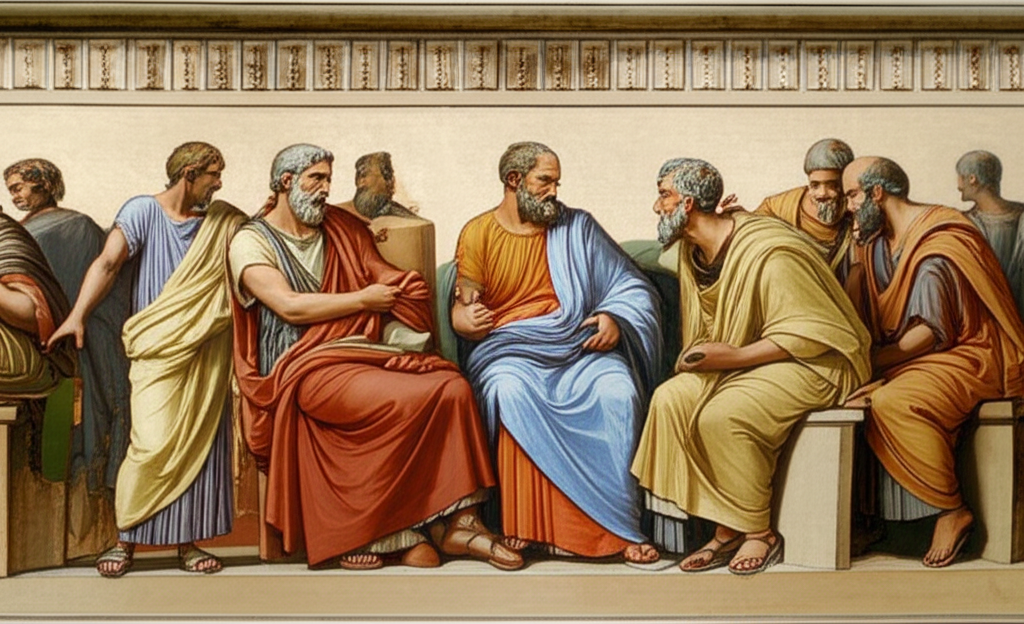
The Enduring Legacy and Its Critiques
While ancient aristocracy as a dominant political structure largely faded with the rise of more representative forms of government, its philosophical underpinnings continue to resonate. The question of whether the "best" should rule, and how one defines and identifies "the best," remains a perennial debate in political thought. Critiques of aristocracy often highlight its inherent tendencies towards elitism, exclusion, and the potential for the "best" to become self-serving oligarchs. Yet, its emphasis on virtue, education, and public service offers a timeless ideal that continues to challenge and inspire discussions about good governance.
The journey through the political structures of ancient aristocracy reveals a complex interplay of philosophical ideals, historical realities, and enduring questions about leadership and the State. It reminds us that the quest for just and effective government is as old as civilization itself.
YouTube Video Suggestions:
-
📹 Related Video: PLATO ON: The Allegory of the Cave
Video by: The School of Life
💡 Want different videos? Search YouTube for: "Plato's Republic Political Philosophy Explained"
-
📹 Related Video: ARISTOTLE ON: The Nicomachean Ethics
Video by: The School of Life
💡 Want different videos? Search YouTube for: "Aristotle Politics Forms of Government Explained"