

The Political Structure of Ancient Aristocracy: A Philosophical Inquiry
The term "aristocracy" often conjures images of inherited privilege and lavish lifestyles, but its philosophical roots in ancient history reveal a far more complex and often idealized form of government. At its core, ancient aristocracy, particularly as theorized by figures like Plato and Aristotle in the Great Books of the Western World, represented rule by the "best" – aristoi – citizens. This wasn't merely about birthright, though that often played a role, but about a perceived inherent virtue, wisdom, and capacity for leadership deemed essential for the optimal functioning of the State. This article delves into the intricate political structures that characterized ancient aristocratic States, exploring their mechanisms, ideals, and eventual transformations through the lens of political philosophy.
Defining Ancient Aristocracy: Rule of the "Best"
Ancient aristocracy, from its etymological roots in Greek (aristos meaning "best" and kratos meaning "power"), was conceived as a system where governance was entrusted to those individuals deemed most qualified to lead. This qualification was often multifaceted, encompassing:
- Moral Virtue: A commitment to justice, temperance, and wisdom, believed to be cultivated through rigorous education and philosophical contemplation.
- Intellectual Acuity: The capacity for rational thought and sound judgment, essential for crafting just laws and policies.
- Military Prowess: In many early aristocratic societies, leadership was intrinsically linked to the ability to defend the community and command respect on the battlefield.
- Noble Birth and Wealth: While not the sole determinants, a distinguished lineage and sufficient means often provided the leisure and resources necessary for public service and philosophical training, making them practical prerequisites for entry into the ruling class.
This ideal stood in stark contrast to other forms of government, such as democracy (rule by the many) or oligarchy (rule by the wealthy few), aiming instead for a State guided by superior intellect and character.
Pillars of Aristocratic Governance
The political structure of ancient aristocracy was rarely a simple monarchy or a free-for-all among the elite. Instead, it typically involved a sophisticated interplay of institutions designed to embody the rule of the aristoi.
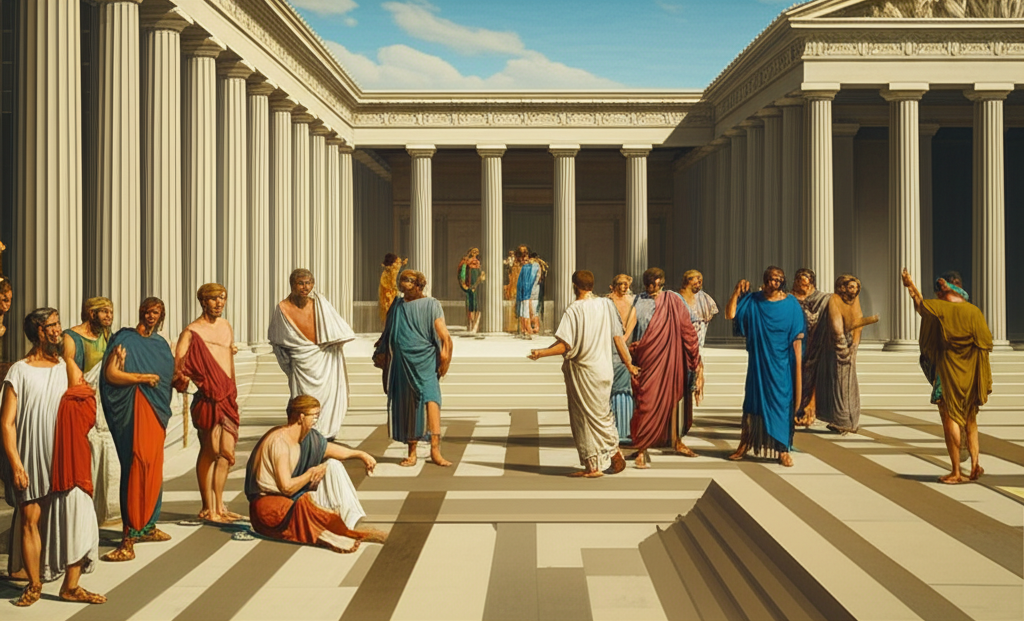
Key Institutions and Mechanisms:
Ancient aristocratic States often featured a blend of executive, legislative, and judicial functions distributed among qualified citizens.
- Councils (e.g., Areopagus in Athens, Senate in Rome): These bodies were often the heart of aristocratic power. Composed of elder statesmen, former magistrates, or those from distinguished families, they held significant advisory, legislative, and sometimes judicial authority. Their members were typically chosen for life or long terms, ensuring continuity and experience.
- Magistracies: Executive offices (e.g., Archons in Athens, Consuls in Rome) were usually held for limited terms and often by individuals from aristocratic families. These roles involved administering laws, leading armies, and conducting foreign policy. While powerful, they were frequently accountable to the councils or assemblies.
- Assemblies (with limited powers): While broader citizen assemblies existed in many ancient States, under aristocratic rule, their powers were often circumscribed. They might approve laws, elect magistrates, or declare war, but the agenda and often the candidates were heavily influenced or controlled by the aristocratic councils.
- Laws and Custom: Adherence to established laws and ancestral customs was paramount, seen as a bulwark against tyranny and a reflection of accumulated wisdom. The interpretation and application of these laws often fell to aristocratic judges or councils.
The Ideal vs. Reality: Transformations and Challenges
While the philosophical ideal of aristocracy posited rule by the truly "best," the practical History of ancient States reveals a constant tension and often a drift towards less virtuous forms of government.
From Aristocracy to Oligarchy:
Aristotle, in his Politics, critically examined the distinctions between true aristocracy and its corrupt form, oligarchy. He noted that when the emphasis shifted from virtue and collective good to wealth and birth alone, aristocracy degenerated.
| Characteristic | True Aristocracy | Degenerate Oligarchy |
|---|---|---|
| Basis of Rule | Virtue, wisdom, public good | Wealth, birth, private gain |
| Goal of Government | The best life for all citizens | Accumulation and preservation of wealth for the few |
| Selection of Rulers | Merit, demonstrated excellence | Inheritance, property qualifications |
| Stability | Generally stable due to broad perceived legitimacy | Prone to factionalism and revolution |
This transformation was a recurring theme in ancient History, as the "best" often became synonymous with the wealthiest, leading to resentment among the less privileged and eventual political instability.
Legacy and Philosophical Reflections
The concept of aristocracy, despite its historical challenges, profoundly influenced Western political thought. Philosophers like Plato, particularly in his Republic, envisioned an ideal State ruled by philosopher-kings – an aristocracy of intellect and virtue. While perhaps never fully realized, this ideal served as a benchmark against which other forms of government were measured. The debates surrounding who is "best" to rule, how they should be selected, and what safeguards prevent corruption continue to resonate in contemporary discussions about leadership, meritocracy, and the nature of the just State.
The ancient aristocratic structures, with their emphasis on councils, magistracies, and a perceived hierarchy of competence, laid foundational elements for later republican and even democratic systems, demonstrating a continuous evolution in the quest for effective and just governance.
Conclusion
The political structure of ancient aristocracy was a sophisticated attempt to establish a government guided by the most virtuous and capable citizens. Rooted in a philosophical ideal of excellence, it employed various institutions—councils, magistrates, and carefully structured assemblies—to maintain order and pursue the common good. However, the inherent challenges of maintaining true meritocracy often led to its degeneration into oligarchy, highlighting the perennial struggle between political ideals and the realities of power. The History of these ancient States offers invaluable lessons for understanding the complexities of governance and the enduring quest for a just and stable political order.
📹 Related Video: PLATO ON: The Allegory of the Cave
Video by: The School of Life
💡 Want different videos? Search YouTube for: ""Plato's Republic political philosophy" or "Aristotle Politics forms of government""