

The Enduring Quest: Navigating the Political Philosophy of Liberty
The concept of Liberty stands as a towering pillar in the grand edifice of Philosophy, a term often invoked with passion yet rarely understood without deep reflection. At its core, the political philosophy of liberty grapples with fundamental questions about the individual's freedom in relation to society and the State. It explores the boundaries of personal autonomy, the legitimate scope of governmental power, and the very nature of human flourishing. From the ancient Greek city-states to the Enlightenment salons, and into our modern digital age, the discourse surrounding liberty has shaped our understanding of justice, rights, and the ideal form of governance. This article delves into the rich tapestry of ideas that define liberty, examining its historical evolution, its various interpretations, and its inextricable links with Law and the apparatus of the State.
Unpacking the Foundations: What is Political Liberty?
To speak of liberty is to speak of freedom, but what kind of freedom? In political philosophy, liberty is not merely the absence of chains; it's a nuanced concept that has spurred centuries of debate. Broadly, it refers to the condition of being free from arbitrary or despotic control, allowing individuals to act, think, and speak without undue interference. Yet, this simple definition quickly branches into complex distinctions.
- Negative Liberty: Often championed by thinkers like John Locke (whose Two Treatises of Government is foundational) and John Stuart Mill (On Liberty), negative liberty is freedom from external constraint. It emphasizes the absence of barriers, interference, or coercion by others, especially the State. To be negatively free is to have an area where one can act unimpeded.
- Positive Liberty: Conversely, positive liberty is freedom to do or be something. It focuses on the capacity to act on one's own free will, to be self-directed, and to achieve one's potential. Jean-Jacques Rousseau's concept of being "forced to be free" in The Social Contract hints at this, suggesting that true liberty might require collective adherence to a "general will" that enables genuine self-governance.
These two dimensions, famously articulated by Isaiah Berlin, highlight the tension inherent in the pursuit of a free society. Is it enough to be left alone, or does true freedom demand certain conditions be met, perhaps even enforced, by the State?
Historical Echoes: Liberty Through the Ages (Great Books Perspective)
The journey of liberty through Philosophy is a testament to the evolving human understanding of self and society.
- Ancient Roots: While not using "liberty" in our modern sense, thinkers like Plato (Republic) and Aristotle (Politics) explored the concept of citizenship, the ideal State, and the conditions for a virtuous life. For them, freedom was often tied to participation in public life and adherence to the city's Laws, rather than individual rights against the state. The Roman Republic's emphasis on libertas for its citizens, though limited, marked an early appreciation for freedom from tyranny.
- Medieval Shifts: The Magna Carta (1215), though a feudal document, laid groundwork by asserting that even monarchs were subject to Law, thereby limiting arbitrary power and protecting certain "liberties" of the nobility. This period saw the nascent ideas of natural law emerge, suggesting inherent rights beyond the king's decree.
- The Enlightenment's Apex: This era truly crystallized the political philosophy of liberty.
- Thomas Hobbes (Leviathan) argued that in the "state of nature," life was "solitary, poor, nasty, brutish, and short." For him, liberty meant little without security, and individuals rationally surrendered some freedom to an absolute sovereign for peace and order, thus establishing the State.
- John Locke countered Hobbes, positing that individuals possess inherent natural rights to life, liberty, and property. The State, formed through a social contract, exists to protect these rights, and its power is limited by the consent of the governed. If the State oversteps, the people have a right to revolt.
- Jean-Jacques Rousseau (The Social Contract) introduced the idea of civic liberty, where individuals achieve true freedom by participating in a collective general will. Freedom is not merely doing what one wants, but obeying a Law that one has prescribed for oneself, as part of a free community.
- John Stuart Mill (On Liberty) passionately defended individual freedom against both governmental and societal coercion. His "harm principle" states that the only legitimate reason for power to be exercised over any member of a civilized community, against his will, is to prevent harm to others.
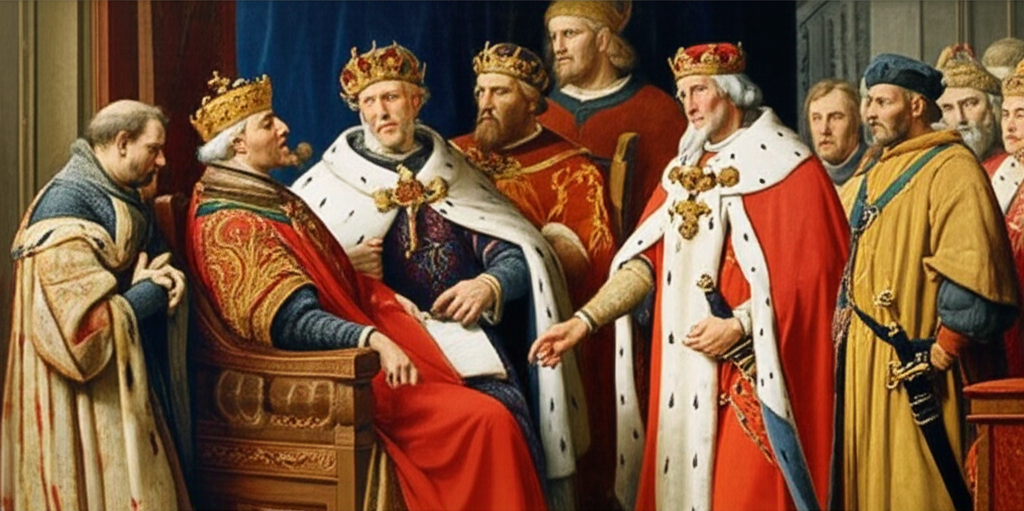
The Interplay of Liberty, Law, and the State
The relationship between Liberty, Law, and the State is perhaps the most critical area of inquiry in this philosophy. Is Law a constraint on liberty or its very guarantor? Does the State protect freedom or diminish it?
- Law as Protector: For many, particularly those advocating for negative liberty, Law is essential for freedom. A system of clear, predictable Laws prevents arbitrary rule and ensures that individuals know the boundaries of their actions and the extent of their protections. Without Law, one person's liberty could easily infringe upon another's, leading to chaos. The rule of Law, where everyone, including the government, is subject to the same Laws, is seen as a cornerstone of a free society.
- Law as Constraint: Conversely, every Law is, by its nature, a restriction. It tells us what we cannot do. The philosophical challenge lies in determining which restrictions are legitimate and necessary for a free society, and which are arbitrary infringements on individual autonomy. Mill's harm principle is a classic attempt to draw this line.
- The State's Dilemma: The State is the primary enforcer of Law and the ultimate arbiter of social order. Its very existence is predicated on a degree of power over its citizens. The central dilemma of the political philosophy of liberty is how to empower the State sufficiently to protect individual freedoms (from internal and external threats) without allowing it to become a tyrannical force that crushes those very freedoms. This is why concepts like constitutionalism, separation of powers, and bills of rights are so crucial. They are mechanisms designed to limit the State's power and safeguard Liberty.
| Concept | Relationship to Liberty | Key Thinkers (Great Books) |
|---|---|---|
| Negative Liberty | Freedom from interference by the State or others. | Locke (Two Treatises), Mill (On Liberty) |
| Positive Liberty | Freedom to achieve self-realization; self-mastery. | Rousseau (Social Contract) |
| Law | Can be a guarantor of freedom (rule of law) or a constraint. | Hobbes (Leviathan), Locke, Mill |
| The State | Essential for order and protection, but also a potential oppressor. | Plato (Republic), Aristotle (Politics), Hobbes, Locke, Rousseau |
Contemporary Challenges to Liberty
The political philosophy of liberty is not a static field; it continually evolves to address new challenges. In the 21st century, debates rage over:
- Digital Liberty: How do privacy concerns, surveillance, and data collection by both State and corporations impact individual freedom in the digital age?
- Economic Liberty: What role should the State play in the economy? Is economic freedom a prerequisite for political liberty, or does unchecked economic liberty lead to new forms of oppression?
- Cultural and Identity Liberty: How do questions of identity, expression, and cultural practices intersect with traditional notions of individual and collective freedom?
- Security vs. Liberty: In an era of global threats, how much individual liberty should be sacrificed for collective security, and who decides?
📹 Related Video: PLATO ON: The Allegory of the Cave
Video by: The School of Life
💡 Want different videos? Search YouTube for: ""John Locke on Natural Rights and Limited Government" "Isaiah Berlin Two Concepts of Liberty Explained""
Conclusion: The Unfinished Work of Freedom
The political philosophy of Liberty remains one of the most vibrant and critical areas of human inquiry. It is a testament to our enduring aspiration for self-determination and a constant reminder that the balance between individual freedom and collective order is a delicate, ongoing negotiation. From the ancient insights of Plato and Aristotle to the foundational theories of Locke and Mill, and into the complexities of our modern world, the pursuit of liberty continues to challenge us to define, defend, and reimagine what it means to be truly free within the framework of Law and the apparatus of the State. This is not merely an academic exercise; it is the very essence of human progress and the bedrock upon which just societies are built.