

The Physics of Matter and Form: Unpacking Ancient Wisdom
Have you ever stopped to consider what truly makes something what it is? It's a question that has puzzled philosophers and scientists for millennia, leading us back to foundational concepts like matter and form. This article delves into how ancient thinkers, particularly Aristotle, wrestled with these ideas, shaping what they understood as "physics"—the study of nature—and offering insights that continue to resonate in our quest to understand the fabric of reality. We'll explore how matter provides the raw potential, while form gives definition and essence, creating the world of diverse objects and beings we experience every day.
Unraveling Reality: Matter and Form in Classical Thought
For many ancient philosophers, understanding the physical world wasn't just about observation; it was about discerning fundamental principles. At the heart of this inquiry lay the distinction between matter and form. It’s not just an abstract philosophical game; it’s a profound attempt to explain change and persistence in the world around us.
Consider a bronze statue. The bronze itself is the matter – the stuff, the raw material, capable of taking on many shapes. The shape of the statue – say, a depiction of a warrior – is its form. Without the bronze, there's no statue to begin with. Without the form, it's just a lump of bronze, not a warrior. This seemingly simple example opens a philosophical Pandora's Box.
Aristotle's Hylomorphism: The Union of Potential and Actuality
Perhaps the most influential articulation of matter and form comes from Aristotle, a giant among the Great Books of the Western World authors. His concept of hylomorphism (from Greek hyle for matter and morphe for form) posits that every physical substance is a composite of both.
- Matter ( Hyle ): The Principle of Potentiality
Aristotle saw matter as the indeterminate substratum, the "stuff" that underlies all change. It is pure potentiality, capable of becoming anything it is formed into. It has no specific characteristics of its own until it receives a form. Think of it as clay: it's not a pot, or a brick, or a sculpture until it's given a specific form. - Form ( Morphe ): The Principle of Actuality
Form, in Aristotle's view, is what actualizes matter. It is the structure, organization, and essence that makes something what it is. It's not just the shape, but the defining principle, the "what-it-is-to-be" of a thing. The form of a human being, for instance, is what makes us human, distinct from a cat or a tree, even though we are all composed of matter.
This dynamic interplay is crucial. Matter provides the "what it is made of," while form provides the "what it is."
Form Beyond Shape: The Essence and the Element
It's easy to confuse form with mere external shape, but for Aristotle, it was far more profound. The form of a thing is its essence, its defining characteristics, its purpose, and its function.
Let's consider the concept of an Element. In ancient Greek thought, elements like earth, air, fire, and water were not just physical substances but were understood through their inherent forms and qualities. Fire, for example, had the form of hot and dry, defining its nature and behavior.
Today, in chemistry, we speak of chemical elements. Gold, for instance, is defined not just by its atomic structure (which could be seen as its physical form) but by its characteristic properties – its luster, malleability, and resistance to corrosion. These properties are intrinsic to the form of gold as an element, distinguishing it from, say, lead or copper. The underlying atoms (our modern understanding of matter) take on the specific form of gold due to their arrangement and electron configuration.
This table highlights the core distinctions:
| Feature | Matter | Form |
|---|---|---|
| Nature | Potentiality, Indeterminate substratum | Actuality, Defining principle |
| Role | That out of which something is made | That by virtue of which something is |
| Examples | Bronze, Clay, Atoms, Chemical Elements | Statue's shape, Pot's function, Human essence, Gold's properties |
| Change | Persists through change in form | Is gained or lost during change |
The Physics of Change: Matter and Form in Motion
One of the primary drivers for these philosophical distinctions was the problem of change. How can something change, yet remain the same thing? Aristotle's solution lay in matter and form.
When a sculptor carves a block of marble into a statue, the matter (the marble) persists, but its form changes. It goes from the form of a raw block to the form of a statue. Similarly, when a seed grows into a tree, the matter (nutrients, water) is constantly being assimilated, but the form of the tree, its organizing principle, directs this growth and maintains the tree's identity through its various stages of development.
This understanding of change, where matter persists while form is acquired or lost, provided a coherent framework for what ancient Greeks understood as physics – the study of natural processes and beings. It allowed them to explain everything from the growth of living organisms to the transformation of substances.
Enduring Relevance: From Ancient Physics to Modern Reflections
While our modern physics operates with a vastly different toolkit – quantum mechanics, relativity, particle accelerators – the underlying philosophical questions about what constitutes reality, what makes something what it is, and how change occurs, remain profoundly relevant.
Could we see fundamental particles as a kind of "matter" and the laws of physics that govern their interactions and arrangements as their "form"? When information dictates the structure and behavior of complex systems, are we seeing a modern echo of form shaping matter? These are deep philosophical questions that continue to bridge ancient wisdom with contemporary scientific inquiry, reminding us that the "physics" of existence is a multifaceted and ongoing exploration.
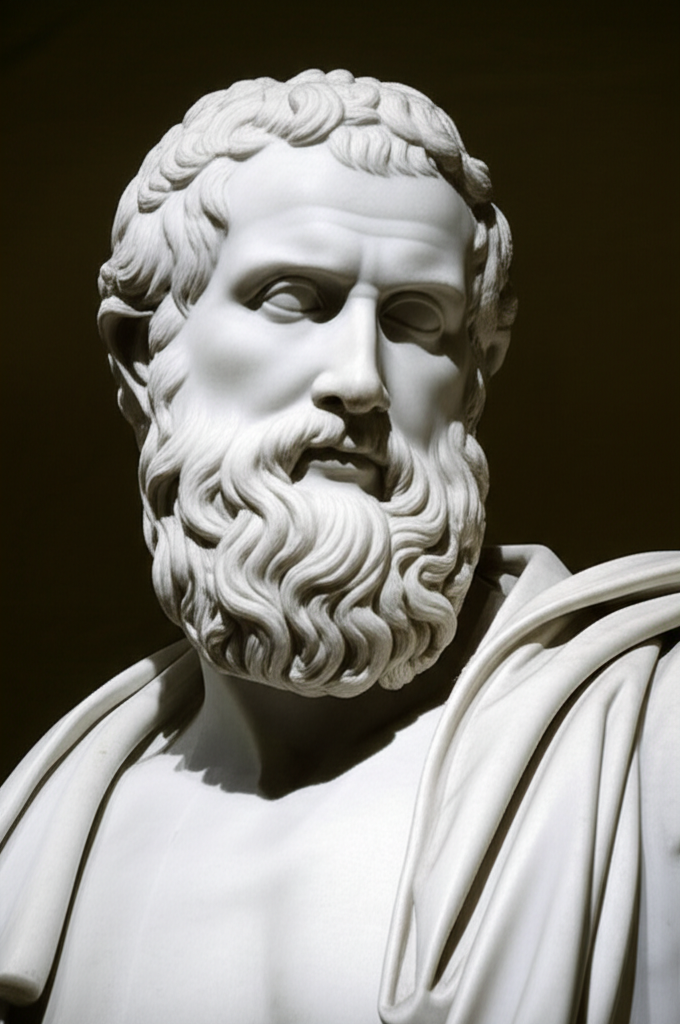 and the deliberate, defining shape and essence (form) imparted by the artist.)
Explore Further
To deepen your understanding of these enduring philosophical concepts, consider these resources:
-
📹 Related Video: ARISTOTLE ON: The Nicomachean Ethics
Video by: The School of Life
💡 Want different videos? Search YouTube for: "Aristotle's Metaphysics Matter and Form Explained"
-
📹 Related Video: What is Philosophy?
Video by: The School of Life
💡 Want different videos? Search YouTube for: "Hylomorphism Philosophy Basics"