

The Philosophical Role of the Citizen: Beyond Mere Allegiance
The concept of a "citizen" often conjures images of legal status, rights, and responsibilities within a State. However, to truly grasp the profound implications of citizenship, one must delve into its philosophical underpinnings. Far from a passive recipient of state provisions or a mere subject bound by law, the Citizen, viewed through the lens of Philosophy, is an active participant, a moral agent whose very existence is intertwined with the fabric of their community and the nature of the State. This article explores the historical and conceptual evolution of the citizen's role, highlighting the inherent Duty to engage critically and constructively with the political sphere, drawing insights from the foundational texts of Western thought.
A Historical Glimpse: Foundations of Civic Thought
The philosophical inquiry into the citizen's role is as old as organized society itself. From the ancient polis to the modern nation-state, thinkers have grappled with the ideal relationship between the individual and the collective.
The Ancient Polis and Civic Virtue
In the classical world, particularly in ancient Greece, citizenship was a privilege and a profound Duty. Thinkers like Plato and Aristotle, whose works are cornerstones of the Great Books of the Western World, articulated a vision where the good life (eudaimonia) was inextricably linked to active participation in the polis.
- Plato's Republic: While often critiqued for its hierarchical structure, Plato's ideal State necessitated citizens who understood their place and performed their Duty for the collective good. The philosopher-king, a specialized citizen, embodied the highest form of civic virtue through wisdom and justice.
- Aristotle's Politics: Aristotle famously declared man a "political animal" (zoon politikon). For him, true human flourishing could only be achieved within the community of the State. The citizen was not merely a resident but someone capable of ruling and being ruled, actively participating in deliberation and judgment. Their Duty was to contribute to the common good, cultivating virtues essential for the health of the polis.
Enlightenment Contracts and Rights
Centuries later, the Enlightenment philosophers shifted the focus, emphasizing individual rights and the contractual basis of the State. Yet, even here, a philosophical Duty remained central.
- John Locke: In his Two Treatises of Government, Locke posited that individuals enter into a social contract to protect their natural rights. The Citizen's Duty was not blind obedience but conditional consent, with the right to resist tyranny if the State failed to uphold its end of the bargain.
- Jean-Jacques Rousseau: Rousseau, particularly in The Social Contract, argued that true freedom lies in obeying laws one has prescribed for oneself through the "general will." The Citizen's Duty was to actively participate in shaping this general will, making the legislative process an essential philosophical endeavor.
The Intertwined Nature of Citizen, State, and Duty
The relationship between the Citizen and the State is a dynamic philosophical interplay, defined by mutual obligations and aspirations.
Table: Philosophical Perspectives on Citizen's Duty
| Philosopher/Era | Core View of Citizen | Primary Philosophical Duty | Context of the State |
|---|---|---|---|
| Plato/Aristotle | Member of the polis | Cultivate civic virtue, participate in governance for common good | Organic, teleological |
| Locke | Bearer of natural rights | Consent to legitimate authority, protect rights, resist tyranny | Contractual, protective |
| Rousseau | Participant in the General Will | Actively contribute to legislation, obey laws made by collective self | Contractual, expressive of popular sovereignty |
| Hobbes | Subject seeking security | Obey sovereign to maintain order and avoid chaos | Authoritarian, security-focused |
| Kant | Rational moral agent | Act according to universal moral law, contribute to a just society | Realm of moral law, universal reason |
- Duty Beyond Obedience: As Immanuel Kant, another titan of the Great Books, might suggest, the Duty of a citizen extends beyond mere legal compliance. It encompasses a moral imperative to contribute to a just society, driven by reason and universal principles. This implies a critical engagement with the State's actions, questioning whether they align with ethical demands.
- The State as a Reflection: The State is not an external entity but a collective expression of its citizens' values, aspirations, and philosophical commitments. Apathy or uncritical acceptance by the citizenry leads to a State that may not serve the common good or uphold justice.
Embracing the Philosophical Duty: Active Engagement
The truly philosophical citizen understands that their role is not passive but active, demanding continuous intellectual and moral engagement.
- Critical Inquiry: A fundamental Duty of the philosophical citizen is to question, to analyze, and to scrutinize the policies and structures of the State. This involves applying philosophical tools – logic, ethics, political theory – to understand complex issues and challenge injustices.
- Deliberation and Discourse: Engaging in reasoned public discourse is vital. The exchange of ideas, the willingness to listen and persuade, and the pursuit of truth are all philosophical acts that strengthen the State and inform collective decision-making.
- Shaping the Future: The citizen's philosophical role culminates in the active shaping of the future. Whether through voting, advocacy, community organizing, or simply engaging in thoughtful conversation, citizens contribute to the ongoing evolution of their society, ensuring that the State remains accountable and responsive to the highest ideals of justice and human flourishing.
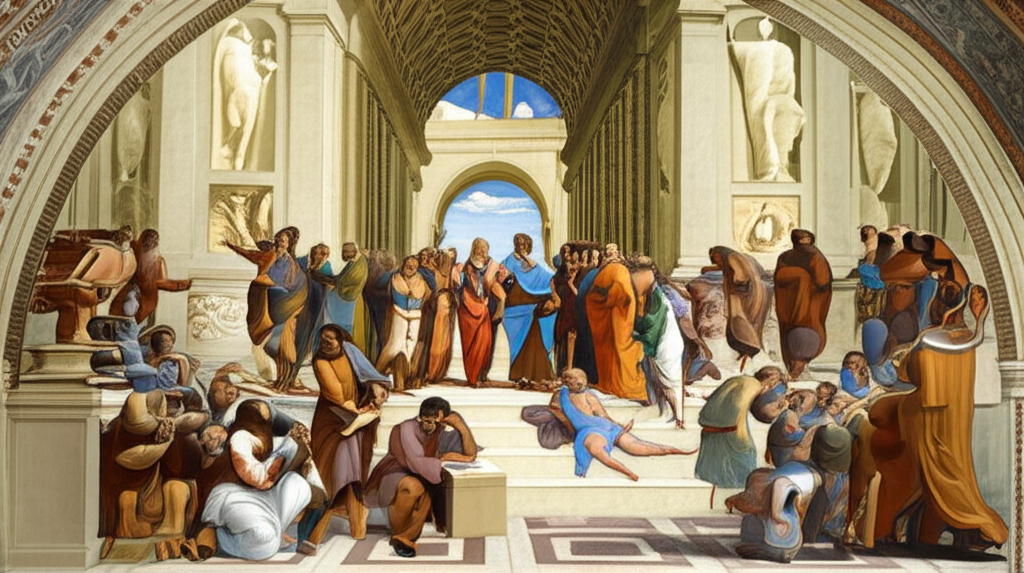
Conclusion: The Enduring Imperative of the Philosophical Citizen
The Philosophical Role of the Citizen is an enduring imperative, echoing through the ages from the Athenian agora to the modern public square. It is a call to recognize that our individual lives are deeply interwoven with the health and justice of the State, and that our Duty extends beyond mere compliance to active, critical, and thoughtful engagement. By embracing Philosophy as a tool for understanding and shaping our civic existence, we fulfill not just our legal obligations, but our profound human potential to contribute to a more just, flourishing, and truly enlightened society. The Great Books of the Western World remind us that the quest for the good citizen is, at its heart, a quest for the good life itself.
📹 Related Video: PLATO ON: The Allegory of the Cave
Video by: The School of Life
💡 Want different videos? Search YouTube for: ""Plato's Republic: Ideal State and Citizen Duty Explained""
📹 Related Video: ARISTOTLE ON: The Nicomachean Ethics
Video by: The School of Life
💡 Want different videos? Search YouTube for: ""Aristotle's Political Philosophy and the Good Life in the Polis""