

The Philosophical Role of Poetry: Beyond Mere Aesthetics
Poetry, often perceived as a realm solely dedicated to aesthetic beauty or emotional expression, holds a profound and often overlooked role in philosophy. Far from being a mere decorative art form, it serves as a unique and powerful mode of inquiry, using the nuanced capabilities of language to explore, articulate, and even challenge fundamental philosophical questions concerning existence, truth, ethics, and human experience. Poetry pushes the boundaries of conventional discourse, offering insights that propositional logic sometimes struggles to capture, thereby enriching and expanding the philosophical landscape.
A Distinct Mode of Inquiry: Unveiling Truth Through Verse
The relationship between poetry and philosophy is ancient and complex, dating back to the foundational texts of Western thought. While philosophy typically strives for clarity, precision, and logical coherence, poetry often embraces ambiguity, metaphor, and emotional resonance. Yet, it is precisely these qualities that enable poetry to access and convey certain truths that might otherwise remain inexpressible.
- Exploring the Ineffable: Poets often grapple with concepts that defy straightforward definition—love, death, beauty, transcendence. Through metaphor, symbolism, and rhythm, poetry creates an experiential understanding, allowing readers to feel their way into complex ideas rather than just intellectualizing them.
- Challenging Dogma: By presenting alternative perspectives or questioning societal norms through imaginative narratives and vivid imagery, poetry can act as a critical philosophical tool, provoking thought and encouraging re-evaluation of established beliefs.
- Revealing Nuance: The careful selection and arrangement of words in poetry highlight the subtle shades of meaning inherent in language, forcing a deeper engagement with concepts than might be achieved through purely discursive prose.
The Ancient Debate: Plato, Aristotle, and the Poetic Truth
The tension and synergy between philosophy and poetry are vividly illustrated in the works of the ancient Greeks, forming a cornerstone of the Great Books of the Western World.
- Plato's Critique: In his seminal work, The Republic, Plato famously argued for the banishment of poets from his ideal state. His concern stemmed from poetry's mimetic (imitative) nature, which he believed presented mere copies of reality, further removed from the true Forms. He also worried about poetry's capacity to stir emotions, potentially corrupting reason and leading citizens astray. For Plato, the art of poetry, particularly dramatic poetry, was a powerful force that could undermine the rational pursuit of truth.
- Aristotle's Defense: Countering Plato's severe stance, Aristotle, in his Poetics, offered a more nuanced defense of poetry. While acknowledging its mimetic quality, Aristotle argued that poetry imitates actions and characters in a way that reveals universal truths about human nature (what might happen, rather than just what did happen). He posited that tragedy, for example, evokes catharsis—a purging of pity and fear—which serves a psychologically beneficial role. For Aristotle, poetry was not merely a distortion of truth but a distinct path to understanding human experience and the underlying principles governing it.
This foundational debate underscores poetry's enduring philosophical significance, demonstrating that even its critics recognized its immense power to shape thought and perception.
Language as a Philosophical Instrument in Poetry
The very essence of poetry lies in its innovative and deliberate use of language. Poets manipulate syntax, rhythm, sound, and imagery to forge new meanings and unveil hidden connections.
| Poetic Device | Philosophical Implication | Example/Explanation |
|---|---|---|
| Metaphor | Bridging disparate concepts, revealing underlying unity or tension. | "All the world's a stage" (Shakespeare): Implies life is performative, questioning authenticity and the nature of identity. |
| Symbolism | Imbuing concrete objects with abstract meaning, exploring deeper truths. | A rose symbolizing love, beauty, or transience: Forces contemplation of abstract concepts through tangible representation. |
| Imagery | Evoking sensory experience to convey ideas beyond logical description. | Describing the "cold, hard facts" vs. "the chill wind of truth": The latter makes truth an felt experience, not just an intellectual one, connecting it to physical reality and emotional impact. |
| Rhythm/Meter | Creating patterns that can mirror natural processes, emotional states, or logical structures. | The steady beat of a poem might reflect the relentless march of time or a heartbeat, grounding abstract philosophical ideas in embodied experience. Free verse might mirror the chaotic nature of modern thought or the struggle for individual expression. |
| Paradox | Presenting seemingly contradictory statements that contain a deeper truth. | "The sound of silence": Highlights the profound presence of absence, inviting reflection on perception, reality, and the limits of language. |
Through these and other linguistic strategies, poetry transforms language from a transparent medium for conveying information into an active participant in the philosophical act itself, shaping our understanding of reality.
Poetry, Art, and Epistemology: How We Know What We Know
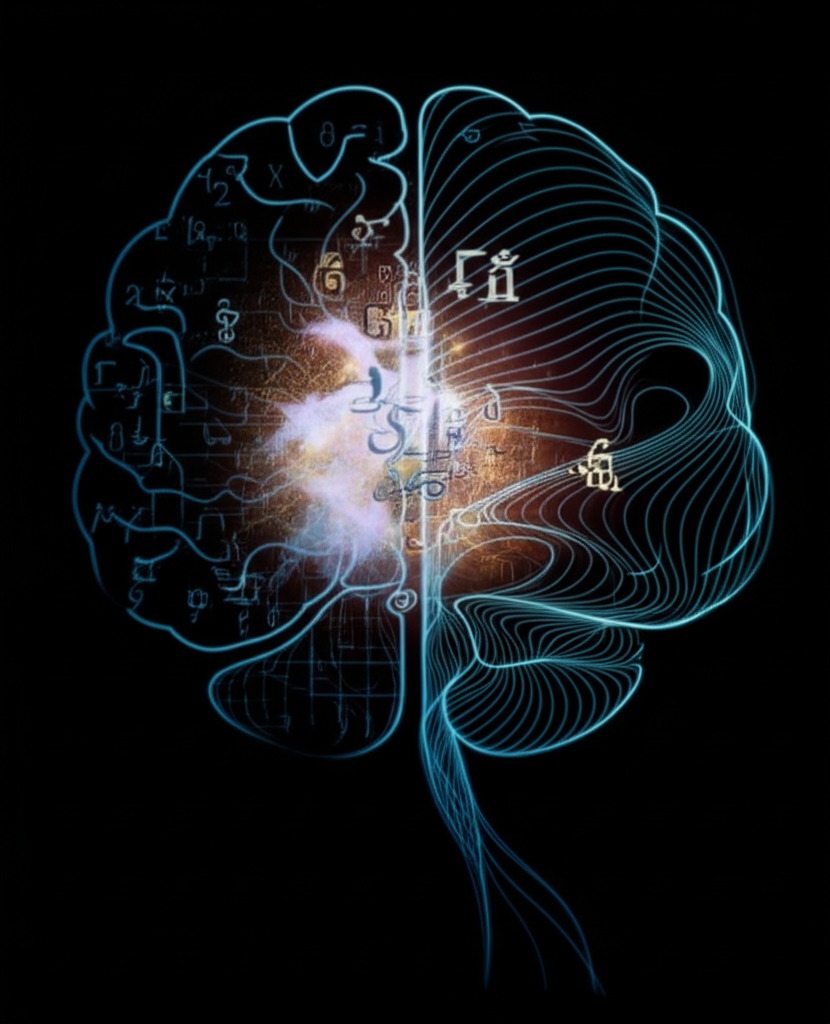
As an art form, poetry engages with epistemology—the study of knowledge—in unique ways. It questions the very mechanisms through which we acquire and validate knowledge. Does knowledge solely derive from empirical observation and logical deduction, or can intuition, emotion, and aesthetic experience also contribute to our understanding of the world?
Poetry suggests that truth is not always reducible to propositional statements. It can be felt, imagined, or intuited. A powerful poem about grief, for instance, might offer a more profound understanding of loss than a psychological treatise, not by explaining it, but by allowing the reader to experience its contours through empathetic engagement. This experiential knowledge is crucial for a holistic philosophical understanding of the human condition.
The Ethical and Existential Dimensions of Poetic Philosophy
Many philosophical inquiries revolve around ethics and existential questions: What does it mean to live a good life? What is our purpose? How do we confront suffering and death? Poetry frequently serves as a direct engagement with these profound dilemmas.
- Moral Imagination: By presenting characters in complex moral situations, poetry cultivates empathy and encourages readers to consider ethical choices from multiple perspectives, fostering moral imagination.
- Existential Reflection: Poets often confront the finitude of life, the search for meaning in an indifferent universe, and the nature of freedom and responsibility. Their verses offer solace, challenge, and companionship in grappling with these universal human concerns.
- Beauty as a Value: Poetry, through its pursuit of beauty, implicitly argues for its intrinsic value. Philosophically, this raises questions about the nature of value itself, the role of aesthetics in human flourishing, and whether beauty can itself be a form of truth.
Conclusion: The Enduring Dialogue
The philosophical role of poetry is not to replace systematic philosophy but to complement, challenge, and enrich it. By pushing the boundaries of language, engaging our imagination, and appealing to our deepest intuitions, poetry offers a distinctive pathway to truth and understanding. From the ancient debates of Plato and Aristotle to contemporary explorations of consciousness and identity, poetry remains an indispensable art form for anyone seeking to grapple with the fundamental questions of human existence. It reminds us that truth is multifaceted, and that sometimes, the most profound insights emerge not from rigorous logic alone, but from the evocative power of a well-crafted line.
📹 Related Video: PLATO ON: The Allegory of the Cave
Video by: The School of Life
💡 Want different videos? Search YouTube for: ""Plato Aristotle poetry philosophy debate""
📹 Related Video: What is Philosophy?
Video by: The School of Life
💡 Want different videos? Search YouTube for: ""Heidegger poetry language truth""