

The Enduring Enigma: Unpacking the Philosophical Problem of Quantity
A Summary of Measure and Being
The philosophical problem of quantity, at its core, is an inquiry into the fundamental nature of "how much" or "how many." Far from a mere mathematical concern, this problem delves deeply into metaphysics, questioning whether quantity is an inherent property of reality, a construct of the human mind, or a descriptor that bridges the two. From ancient Greek contemplation of the One and the Many to modern debates on the definition of discrete units versus continuous wholes, philosophers have grappled with how quantity shapes our understanding of existence, substance, and the very fabric of the cosmos. This article explores the historical trajectory and enduring challenges posed by quantity within philosophy.
The Genesis of Measure: Ancient Roots of Quantity
The moment humanity began to count, weigh, or measure, a philosophical Pandora's Box was opened. The philosophy of quantity is not merely about arithmetic; it’s about being. How can something be quantifiable? What does it mean for reality to possess numerical attributes?
Ancient Greek thinkers, whose profound insights form much of the Great Books of the Western World, laid the groundwork for this enduring problem.
- Pythagoras and the Harmony of Numbers: For the Pythagoreans, number was not just a descriptive tool but the essence of all things. The cosmos was an ordered arrangement, a symphony governed by numerical ratios. This elevated quantity from a mere attribute to the very substance of reality.
- Plato's Forms and Mathematical Ideals: Plato posited ideal, unchanging Forms existing beyond the sensible world. Mathematical entities—numbers, geometric shapes—were seen as perfect exemplars of these Forms. For Plato, sensible objects participated in these ideal quantities, suggesting that true quantity resided in an abstract realm, not in the imperfect, changing world we perceive.
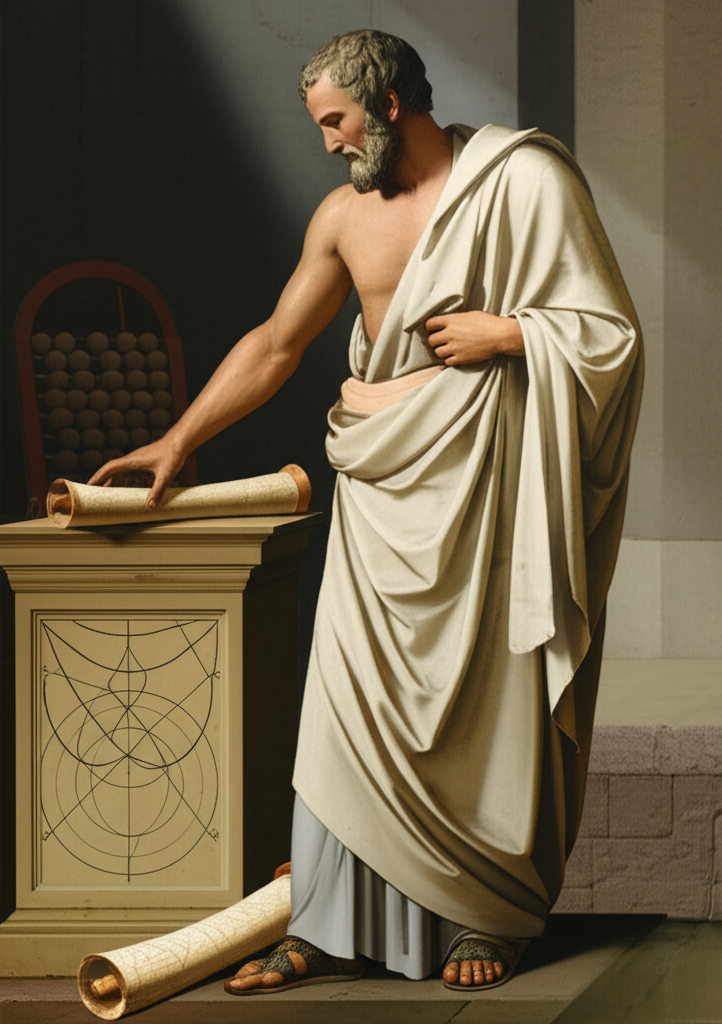
- Aristotle's Categories and the Definition of Quantity: Aristotle, ever the systematizer, placed quantity as one of his ten categories of being, alongside quality, substance, relation, and so forth. For him, quantity was an inherent attribute of a substance, describing its "how much" or "how many." He distinguished between discrete quantity (number, which is countable) and continuous quantity (magnitude, which is measurable, like lines, surfaces, and bodies). This distinction remains crucial in philosophical discourse.
Defining the Indefinable: What Exactly is Quantity?
Before we can solve the problem of quantity, we must first attempt to pin down its definition. Is it a property inherent in objects, or a way our minds structure reality?
Aristotle's Categorization of Quantity provides a foundational framework:
| Type of Quantity | Description | Examples |
|---|---|---|
| Discrete Quantity | Consists of distinct, separable, and countable units. No shared boundary. | Numbers, a flock of sheep, a collection of books |
| Continuous Quantity | Consists of parts that share a common boundary and are infinitely divisible. | Lines, surfaces, volumes, time, space |
Beyond this, later philosophers introduced further distinctions:
- Extensive Quantity: Can be measured by adding parts together (e.g., length, weight, volume).
- Intensive Quantity: Cannot be measured by adding parts; it's a degree or intensity (e.g., temperature, brightness, pressure). You can't add two 20°C temperatures to get 40°C.
The very act of categorizing quantity highlights a deep metaphysical challenge: are these distinctions merely linguistic, or do they reflect genuine divisions in reality?
The Metaphysical Quagmire: Quantity and the Nature of Being
The problem of quantity quickly spirals into core metaphysics. If quantity is fundamental, what does that imply about the nature of reality?
- Quantity vs. Quality: How do these two primary categories interact? Does quantity determine quality, or vice-versa? For instance, does a quantitative change (adding more water) lead to a qualitative change (water becoming a flood)? This relationship is central to understanding change and identity.
- The Problem of Universals: Are numbers and quantities real entities, existing independently of our minds (Platonism), or are they merely concepts we apply to collections of particulars (Nominalism), or are they properties inherent in particulars (Aristotelian Realism)? This question profoundly impacts the philosophy of mathematics.
- Substance and Accident: Can quantity exist independently, or is it always an attribute of a substance? If we remove all quantitative descriptions from an object, does anything remain? This thought experiment, explored by thinkers like Locke and Hume, pushes us to question the very meaning of "substance."
- The Infinite and the Indivisible: The concept of continuous quantity leads to Zeno's paradoxes, challenging our understanding of motion, space, and time. If a line is infinitely divisible, how can we ever traverse it? This problem forces us to confront the limits of our conceptual tools when dealing with the infinite.
Modern Echoes: Quantity in Contemporary Thought
The philosophical problem of quantity continues to resonate in modern philosophy and science.
- Philosophy of Mathematics: This field directly tackles the ontological status of numbers and mathematical objects. Are they discovered or invented? Do they exist in a Platonic realm, or are they mental constructs?
- Quantum Mechanics: The very term "quantum" signifies a discrete unit of energy. This scientific development has profound philosophical implications, suggesting that at the most fundamental level, certain aspects of reality are quantized, challenging purely continuous models of the universe.
- Mereology: This is the formal theory of parts and wholes. It investigates the relationships between objects and their components, directly engaging with the definition of what constitutes a "unit" or a "whole," a problem deeply entwined with quantity.
Conclusion: The Unending Count
From the ancient Greeks to the quantum physicists, the philosophical problem of quantity remains a vibrant and essential area of inquiry. It forces us to examine not just how we measure the world, but what it means for the world to be measurable at all. Is quantity an objective feature of reality, or a lens through which we inevitably perceive it? The answers, as ever in philosophy, are complex, multifaceted, and continue to fuel the intellectual journey into the heart of metaphysics.
📹 Related Video: ARISTOTLE ON: The Nicomachean Ethics
Video by: The School of Life
💡 Want different videos? Search YouTube for: ""Aristotle categories quantity" or "philosophy of mathematics universals""