

The Unyielding Riddle: Navigating the Philosophical Problem of Life and Death
The questions of life and death are not merely biological facts but profound philosophical chasms that have occupied the greatest minds throughout history. From the ancient Greeks to the Enlightenment, thinkers grappled with what it means to be alive, what constitutes the self that persists (or doesn't) through death, and the very purpose of our finite existence. This article delves into the core philosophical problem of life and death, exploring how various traditions, particularly those found within the Great Books of the Western World, have sought to understand our beginning, our end, and the potential beyond. We will examine the concept of the soul, the nature of being, and the existential weight these questions impose upon human experience.
The Inescapable Inquiry: Why Life and Death Are Philosophical Quandaries
At its most basic, life is existence, and death is its cessation. Yet, for philosophers, this simple dichotomy opens a Pandora's box of inquiries. It's not just about the biological processes, but the meaning imbued in those processes, the value of existence, and the nature of the entity that lives and dies. Is life a gift, a curse, a test, or merely a random occurrence? Does death represent utter annihilation, a transition, or a liberation? These are the foundational questions that elevate life and death from biological phenomena to the ultimate philosophical problem.
Ancient Echoes: The Soul's Journey in Classical Philosophy
The earliest and most influential explorations of life and death often centered on the concept of the soul. For many ancient thinkers, the soul was the animating principle, the essence of life itself, and its fate after death was paramount.
Plato's Immortal Soul: A Release from the Body
In the dialogues of Plato, particularly the Phaedo, Socrates famously argues for the immortality of the soul. For Plato, influenced by Pythagorean thought, the soul is distinct from the body, a divine and eternal entity trapped within a mortal shell. Death, far from being an end, is presented as a liberation—a release of the soul from the corrupting influence and limitations of the body, allowing it to return to the realm of pure Forms, true knowledge, and perfect being.
- Key Idea: The body is a prison; death is freedom for the soul.
- Implication: Life is a preparation for death, a striving for knowledge and virtue that purifies the soul.
Aristotle's Entelechy: The Soul as Form of the Body
Aristotle, Plato's student, offered a more integrated, biological understanding of the soul in his work De Anima. For Aristotle, the soul is not a separate entity but the form of the body, its animating principle, its "first actuality." It is what makes a living thing alive. Just as the shape of an axe is its form, and its matter is wood and metal, the soul is the form of the living body.
- Types of Souls:
- Nutritive Soul: Plants (growth, reproduction)
- Sensitive Soul: Animals (sensation, locomotion)
- Rational Soul: Humans (thought, reason, all lower functions)
- Key Idea: The soul and body are inseparable; the soul is the entelechy (the actualization) of the body.
- Implication: If the body perishes, the soul, as its form, also perishes with it. While Aristotle hints at the possibility of an immortal active intellect, his general view suggests individual life and death are bound together.
Faith, Reason, and Dualism: Medieval and Early Modern Perspectives
The philosophical landscape shifted dramatically with the advent of Christian thought, which profoundly shaped Western understanding of the soul, life, and death. Later, the scientific revolution introduced new ways of conceiving the mind and body.
Christian Eschatology: Augustine and Aquinas
For figures like St. Augustine (Confessions, City of God) and St. Thomas Aquinas (Summa Theologica), the soul is unequivocally immortal, created by God, and destined for an eternal afterlife—either in communion with God or in eternal damnation. Life on Earth becomes a probationary period, a test of faith and virtue, with death serving as the gateway to divine judgment.
- Key Idea: The soul is an individual, immortal essence.
- Problem of Evil: The existence of suffering and death in a world created by an all-good, all-powerful God becomes a central philosophical problem, often addressed through concepts like free will and original sin.
Descartes' Mind-Body Dualism
René Descartes, in his Meditations on First Philosophy, solidified a profound dualism between the mind (which he identified with the soul) and the body. The mind is an unextended, thinking substance, while the body is an extended, non-thinking substance. This radical separation allowed for the possibility of the soul's survival after the death of the body, as they are fundamentally different kinds of things.
- Key Idea: The mind (or soul) is distinct from the body; one can exist without the other.
- Problem: How do these two distinct substances interact? This "mind-body problem" continues to challenge philosophers.
The Enduring Philosophical Problem: Core Questions
Despite millennia of inquiry, the philosophical problem of life and death remains a vibrant and essential area of study. The questions persist, though the frameworks for answering them have evolved.
| Aspect of the Problem | Core Philosophical Questions |
|---|---|
| Nature of Life | What defines "life"? Is consciousness essential? Is there an inherent purpose to living? |
| Nature of Death | Is death merely biological cessation, or something more? Is it an end, a transition, or a transformation? |
| The Self/Soul | What is the "I" that lives and dies? Does the soul exist? If so, what is its nature and destiny? |
| Meaning & Value | Does life have inherent meaning, or is it something we create? How does the certainty of death impact the value we place on life? |
| Ethics | What are our ethical obligations concerning life (e.g., abortion, euthanasia)? How should we live in the face of our finitude? |
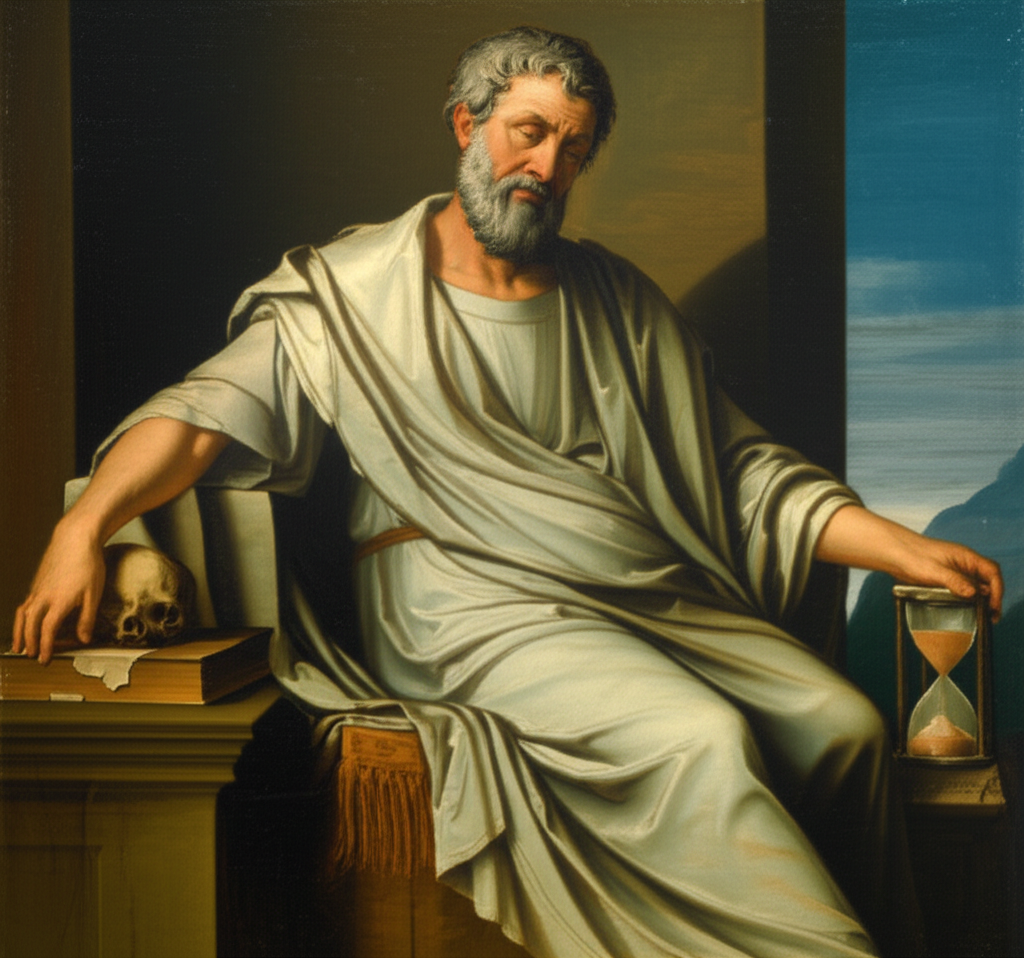
Conclusion: Living with the Unanswerable
The philosophical problem of life and death is not one that offers easy answers, nor does it typically yield to a single, universally accepted solution. Instead, it invites continuous reflection, challenging us to define our values, understand our place in the cosmos, and confront the ultimate limits of our existence. From Plato's yearning for the eternal soul to Aristotle's grounded biological insights, and from Christian hopes for salvation to Descartes' radical dualism, the Great Books of the Western World provide a rich tapestry of thought that continues to inform our contemporary grappling with these fundamental mysteries. To engage with this problem is to engage with the very essence of human experience.
YouTube Video Suggestions:
-
📹 Related Video: PLATO ON: The Allegory of the Cave
Video by: The School of Life
💡 Want different videos? Search YouTube for: "Plato Phaedo Summary Philosophy"
2. ## 📹 Related Video: ARISTOTLE ON: The Nicomachean Ethics
Video by: The School of Life
💡 Want different videos? Search YouTube for: "Aristotle On the Soul Explained"