

The Philosophical Problem of Life and Death: An Eternal Inquiry
The human experience is bookended by two profound mysteries: birth and death. From the moment we draw our first breath to our last, these universal phenomena shape our existence, provoke our deepest questions, and form the bedrock of philosophical inquiry. This pillar page delves into the multifaceted "Philosophical Problem of Life and Death," exploring how thinkers across millennia have grappled with its implications for our understanding of Being, the nature of the Soul, and the very purpose of Philosophy itself.
Unveiling the Enigma: A Summary
The philosophical problem of Life and Death is not merely a biological or medical question, but a fundamental quest to understand existence, consciousness, and meaning. It asks: What is life? What is death? Does anything endure beyond our mortal coil? From ancient Greek metaphysics contemplating the Soul's immortality to modern existentialism confronting the finitude of Being, philosophy has consistently sought to illuminate these ultimate boundaries. This exploration draws heavily from the foundational texts found within the Great Books of the Western World, revealing a continuous dialogue that shapes our perceptions of self, morality, and the cosmos.
Introduction: The Inescapable Question
For Benjamin Richmond, and indeed for any reflective individual, the contemplation of Life and Death is not an academic exercise but an existential imperative. These two poles define our temporality, our hopes, and our fears. To live is to be aware of death; to die is to cease living, or so it appears. But what does it truly mean to "be" alive, and what happens when that Being concludes? These are not questions with easy answers, but their persistent pursuit forms the very heart of philosophy.
From the earliest myths to the most sophisticated scientific theories, humanity has striven to make sense of the transition from non-existence to existence, and back again. The Great Books of the Western World bear witness to this enduring struggle, offering a rich tapestry of perspectives that challenge, comfort, and provoke.
The Nature of Life: What Does it Mean to Be?
Before we can ponder death, we must first confront the mystery of Life itself. What constitutes Being? Is it consciousness, biological function, or something more?
Ancient Perspectives on Being and Life
Ancient Greek philosophers, particularly those found in the Great Books, laid much of the groundwork.
- Plato: For Plato, as seen in dialogues like the Phaedo, life is intimately tied to the Soul. The body is merely a temporary vessel, while the Soul is the true essence, capable of apprehending eternal Forms. The Soul's connection to the body constitutes life, and its separation is death.
- Aristotle: In contrast, Aristotle, in works like De Anima (On the Soul), viewed the soul not as a separate entity but as the form of a living body. It is the principle of life, the animating force that gives a body its specific functions (nutrition, sensation, thought). For Aristotle, life is the self-organizing activity of an organism, and the soul is its actualization.
Modern Interpretations: Existence and Experience
Later philosophical traditions shifted focus.
- Descartes: In the 17th century, René Descartes, whose Meditations on First Philosophy is a cornerstone of the Great Books, solidified the mind-body dualism. For Descartes, life is characterized by the union of an extended, physical body and a thinking, non-extended mind (or soul). The essence of Being for humans is thinking ("Cogito, ergo sum").
- Existentialism: In the 20th century, existentialists like Jean-Paul Sartre and Martin Heidegger emphasized Being as a dynamic process, a "being-in-the-world." Life is characterized by freedom, choice, and the burden of creating meaning in an indifferent universe. For Heidegger, Being is always "being-towards-death," meaning our mortality fundamentally shapes our existence.
The Enigma of Death: The Ultimate Horizon
If life is a state of Being, then death often appears as the ultimate negation. Yet, its nature is far from simple. Is it an end, a transition, or an illusion?
Death as Cessation vs. Transition
This fundamental dichotomy has driven countless philosophical debates:
- Cessation: Many materialist and empiricist philosophies view death as the absolute end of consciousness and Being. When the body ceases to function, the mind, which is a product of the brain, also ceases. This perspective often leads to a focus on the present life and its finite meaning.
- Transition: Conversely, many religious and spiritual philosophies, along with certain metaphysical systems, posit death as a transition. This might involve the soul moving to an afterlife, reincarnation into a new body, or absorption into a larger cosmic consciousness.
The Immortality of the Soul
The question of the Soul's immortality is perhaps the most enduring aspect of the Philosophical Problem of Life and Death.
- Plato's Arguments: In the Phaedo, Plato presents several arguments for the Soul's immortality, including the argument from opposites (life comes from death, so death must come from life), the argument from recollection (the soul pre-exists the body to have knowledge of Forms), and the argument from simplicity (the soul is simple and therefore cannot be broken down or destroyed).
- Christian Theology: Rooted in both Greek philosophy and Abrahamic traditions, Christian theology (represented by figures like Augustine and Aquinas in the Great Books) firmly asserts the immortality of the soul and its destiny in an afterlife, either heaven or hell, based on earthly life.
- Descartes' Dualism: Descartes' clear distinction between the thinking substance (mind/soul) and the extended substance (body) allowed for the theoretical possibility of the soul surviving the body's demise, as they are fundamentally different kinds of things.
Confronting the Fear of Death
The fear of death is a primal human emotion. Philosophy offers various strategies for confronting this fear:
- Epicureanism: Epicurus famously argued, "When we exist, death is not yet present, and when death is present, then we do not exist." Therefore, there is no point in fearing death, as it is never experienced.
- Stoicism: Stoics like Epictetus and Seneca (whose works are essential in the Great Books) advocated for accepting death as a natural and inevitable part of the cosmic order. By focusing on what is within our control (our judgments and reactions) and letting go of what is not (our mortality), one can achieve tranquility.
- Existentialism: While acknowledging the anxiety of non-being, existentialism encourages embracing the finitude of life as a catalyst for authentic living, for making choices that define our Being in the limited time we have.
Ethical Dimensions of Life and Death
The philosophical problem of Life and Death extends deeply into ethics, shaping our understanding of moral responsibility and the value of human existence.
The Value of Life
What makes life valuable? Is it inherent, or does its value derive from consciousness, potential, or contribution? This question underpins debates on:
- Abortion: At what point does a fetus gain the moral status of a life that deserves protection?
- Euthanasia: When, if ever, is it morally permissible to end a life to alleviate suffering?
- Capital Punishment: Is the state justified in taking a life as punishment for a crime?
- War and Conflict: Under what conditions can the taking of human life be justified?
These are not merely legal or political questions; they are profound philosophical inquiries into the nature and sanctity of life.
Metaphysical Speculations: Beyond the Veil
Beyond ethics, the problem of Life and Death ventures into metaphysics, exploring what might lie beyond our empirical understanding.
- Reincarnation: Many Eastern philosophies and some Western esoteric traditions propose that the soul is reborn into new bodies, continuing a cycle of life, death, and rebirth until enlightenment or liberation is achieved.
- Afterlife Concepts: Visions of heaven, hell, purgatory, or other spiritual realms are common across religions, offering frameworks for understanding the soul's journey post-mortem.
- The Role of Philosophy: In the face of these unknowns, philosophy does not always provide definitive answers but offers frameworks for coherent thought, critical analysis, and the articulation of belief systems. It helps us navigate the profound questions that science, by its very nature, cannot fully address.
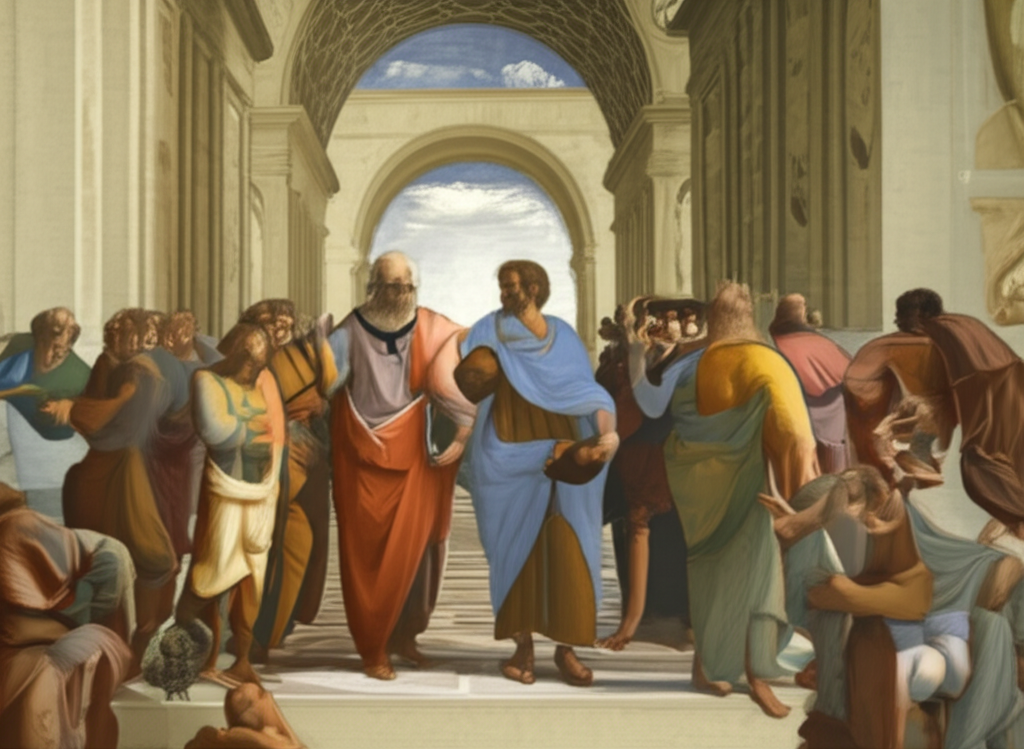
Key Philosophical Questions on Life and Death
The enduring nature of this problem is best illustrated by the fundamental questions it continually poses:
- What is the essence of Life? Is it a biological state, a conscious experience, or a spiritual journey?
- What happens to consciousness or the Soul after Death? Does it persist, transform, or cease to exist?
- What is the meaning of Life in the face of our inevitable Death? Does mortality diminish or enhance our existence?
- How should the knowledge of our finitude influence how we live? Does it compel us to seek pleasure, virtue, or legacy?
- Are there moral obligations regarding the beginning and end of Life? (e.g., abortion, euthanasia, suicide).
Great Thinkers and Their Enduring Contributions
The Great Books of the Western World provide an unparalleled resource for understanding the evolution of these questions. Here are just a few pivotal figures:
| Philosopher | Key Contribution to Life & Death Problem
📹 Related Video: What is Philosophy?
Video by: The School of Life
💡 Want different videos? Search YouTube for: "The Philosophical Problem of Life and Death philosophy"