

The Unending Dialogue: Navigating the Philosophical Problem of Life and Death
The problem of Life and Death stands as the most profound and enduring question in Philosophy. From ancient inquiries into the nature of Being and the immortality of the Soul to modern existential reflections on meaning and mortality, philosophers across millennia have grappled with what it means to live, to die, and whether anything persists beyond our earthly existence. This pillar page explores the historical trajectory of these inquiries, examining key concepts, influential thinkers, and the diverse perspectives that illuminate our fundamental human predicament. It is a journey into the heart of human experience, guided by the wisdom contained within the Great Books of the Western World.
I. The Ancient Overture: Defining Life, Death, and the Soul
The earliest philosophers, observing the ephemeral nature of existence, quickly turned their gaze to the twin mysteries of Life and Death. How do we define life itself? What constitutes its cessation? And is there an essential part of us that transcends the body's decay?
A. Early Greek Speculations on Being and Becoming
Presocratic thinkers like Parmenides grappled with the concept of Being as eternal and unchanging, contrasting it with the ever-shifting world of appearances. Heraclitus, on the other hand, famously declared that "you cannot step into the same river twice," emphasizing constant flux and the cyclical nature of generation and decay. These foundational ideas set the stage for understanding life as a temporary manifestation within a larger, perhaps eternal, reality.
B. Plato's Dualism: The Immortal Soul and the Realm of Forms
For Plato, as explored extensively in dialogues like the Phaedo, the body is merely a prison for the eternal Soul. Death, therefore, is not an end but a liberation—a return of the soul to its true home in the realm of perfect Forms.
- Key Platonic Ideas on Life and Death:
- The Soul's Immortality: The soul pre-exists birth and survives death, having knowledge of the Forms.
- Philosophy as Practice for Death: To live philosophically is to detach from bodily pleasures and prepare the soul for its journey.
- Reincarnation (Metempsychosis): Souls may be reborn into new bodies depending on their actions in life.
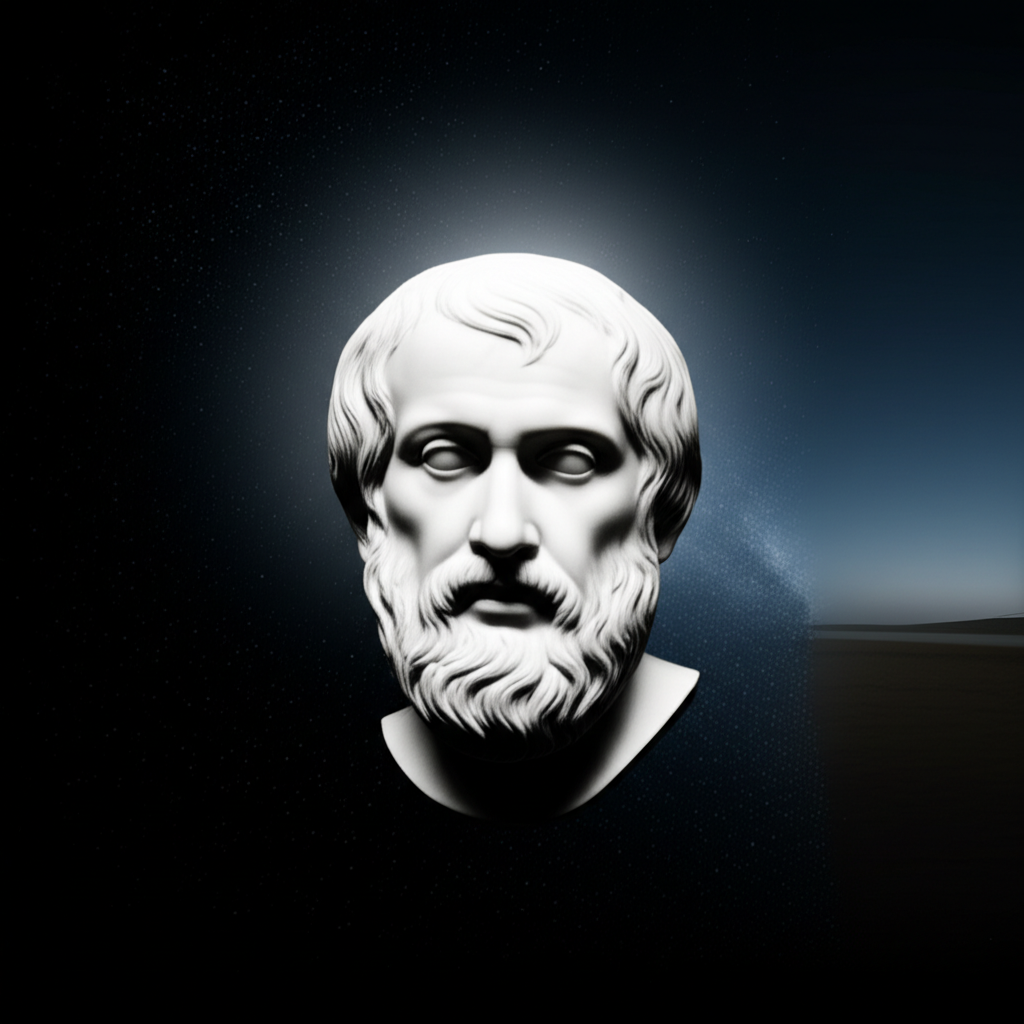
C. Aristotle's Functionalism: The Soul as the Form of the Body
Aristotle, while acknowledging the Soul, took a more empirical approach. In De Anima, he argues that the soul is not a separate entity imprisoned within the body but rather the "form" or "actuality" of the body. It is what gives a living thing its characteristic functions—nutrition, sensation, locomotion, and thought.
| Philosophical Concept | Plato's View | Aristotle's View |
|---|---|---|
| Nature of Soul | Immortal, distinct from body | Form of the body, inseparable (mostly) |
| Death | Liberation of the soul | Cessation of the body's functions |
| Immortality | Yes, for the individual soul | Unlikely for individual soul; perhaps for intellect |
| Primary Focus | Metaphysical, spiritual | Biological, functional |
II. Medieval Synthesis: Faith, Reason, and the Eternal Life
With the rise of monotheistic religions, particularly Christianity, the philosophical problem of Life and Death became intertwined with theological doctrines of creation, salvation, and the afterlife. Thinkers like Augustine and Aquinas sought to reconcile classical philosophy with religious dogma.
A. Augustine and the Christian Soul
St. Augustine, heavily influenced by Neoplatonism, adopted Plato's concept of an immortal Soul but reinterpreted it within a Christian framework. The soul is created by God, distinct from the body, and destined for either eternal communion with God or eternal damnation after death. The resurrection of the body also added a new dimension to the discussion of post-mortem existence.
B. Aquinas on the Human Being and the Beatific Vision
Thomas Aquinas, drawing extensively from Aristotle, viewed the human Being as a composite of body and Soul. The soul is the substantial form of the body, yet it also possesses an intellectual faculty that can exist independently. For Aquinas, the ultimate purpose of human life is the "beatific vision"—the direct, intellectual apprehension of God after death, which constitutes true happiness. This vision is the ultimate fulfillment of the soul's capacity for knowledge and love.
III. The Modern Turn: Self, Consciousness, and Mortality
The Enlightenment brought new challenges to traditional views of Life and Death, focusing more on individual consciousness, reason, and empirical observation.
A. Descartes' Dualism and the Thinking Self
René Descartes, in his Meditations on First Philosophy, famously established mind-body dualism. He argued that the essence of the self is consciousness, the "thinking thing" (res cogitans), which is distinct from the extended, material body (res extensa). This clear separation again opened the door to the possibility of the soul's survival after the body's death, though he struggled to explain their interaction.
B. Empiricism and the Limits of Knowledge
British empiricists like John Locke and David Hume questioned whether we could truly know anything beyond sensory experience. Hume, in particular, was skeptical of the Soul as a persistent entity, viewing the self as merely a "bundle of perceptions." This perspective made the concept of an immortal soul, or even a continuous self after death, difficult to prove empirically, leaving the question largely to faith or personal conviction.
IV. Existentialism: Confronting Non-Being and Creating Meaning
The 19th and 20th centuries saw a powerful philosophical movement, Existentialism, which placed the problem of Life and Death at the very center of human experience.
A. The Anguish of Freedom and the Certainty of Death
Existentialists like Søren Kierkegaard, Friedrich Nietzsche, Jean-Paul Sartre, and Albert Camus emphasized human freedom, responsibility, and the inherent meaninglessness of a universe without inherent purpose. Death, for them, is not just a biological event but the ultimate horizon of human existence—the "nothingness" that defines our Being.
- Key Existentialist Themes:
- Facticity: The unchangeable facts of our existence, including our mortality.
- Anguish: The profound sense of responsibility that comes with absolute freedom in a meaningless world.
- Absurdity: The conflict between humanity's search for meaning and the universe's indifference.
- Authenticity: Living in full awareness of one's freedom and mortality, taking responsibility for one's choices.
B. Crafting Meaning in the Face of Annihilation
Despite the bleak outlook, existentialism is not nihilistic. Instead, it argues that precisely because life has no pre-given meaning, we are free—and obligated—to create our own meaning through our choices and actions. Facing the certainty of death forces us to live more authentically and passionately.
V. Contemporary Reflections: Bioethics, Technology, and the Future of Being
In the modern era, scientific advancements and technological capabilities have introduced new dimensions to the philosophical problem of Life and Death.
A. Bioethics and the Boundaries of Life
The rise of bioethics directly confronts questions like when life begins, when it ends, the right to die, genetic engineering, and organ transplantation. These areas force us to re-evaluate our definitions of Life and Death and the moral responsibilities that come with our increasing power over biological processes.
B. Transhumanism and the Quest for Immortality
Some contemporary thinkers and movements, such as transhumanism, explore the possibility of radically extending human lifespan, enhancing human capacities, and even achieving digital immortality. These ideas challenge traditional notions of mortality and the natural limits of human Being, raising profound questions about what it means to be human in a post-biological future.
Conclusion: The Enduring Question
The philosophical problem of Life and Death remains as potent and perplexing today as it was for the ancient Greeks. From Plato's immortal Soul to Aristotle's functional Being, from Aquinas's beatific vision to Sartre's anguish in the face of non-being, the ongoing dialogue illuminates our deepest fears, hopes, and aspirations. Philosophy offers no single, definitive answer, but rather a rich tapestry of perspectives that compel us to reflect on our own existence, to confront our mortality, and to find meaning in the precious, fleeting gift of Life. Engaging with these profound questions is not merely an academic exercise; it is an essential part of the human journey, shaping how we live, how we love, and how we ultimately face the unknown.
📹 Related Video: PLATO ON: The Allegory of the Cave
Video by: The School of Life
💡 Want different videos? Search YouTube for: "Plato's Phaedo Summary - Philosophy of Death and Immortality"
📹 Related Video: EXISTENTIALISM: The Philosophy of Freedom
Video by: The School of Life
💡 Want different videos? Search YouTube for: "Existentialism Life and Death Meaning"