

The Enduring Philosophical Problem of Life and Death
The fundamental questions surrounding Life and Death stand as one of philosophy's most ancient and persistent challenges. From the earliest human inquiries into existence to the intricate ethical dilemmas of modern biotechnology, thinkers have grappled with what it means to be, what constitutes a living entity, and what happens when that existence ceases. This pillar page delves into the multifaceted philosophical problem of Life and Death, exploring how thinkers across millennia have sought to define being, ponder the nature of the soul, and confront the ultimate cessation of existence. We will traverse the intellectual landscapes of the Great Books of the Western World, examining the enduring arguments that shape our understanding of these most profound mysteries.
What is Life? Defining the Threshold of Being
Before we can contemplate death, we must first attempt to understand life itself. Is it merely a biological process, a complex arrangement of matter, or something more? Philosophy has offered diverse perspectives on the essence of being.
Biological vs. Philosophical Definitions of Life
While biology provides a framework for understanding living organisms—growth, metabolism, reproduction—philosophy pushes beyond these empirical observations to ask about the meaning and nature of that vitality.
- Ancient Greek Perspectives: For Aristotle, life was intrinsically linked to the concept of the psyche or soul, which he understood as the form or organizing principle of a living body. Different types of souls (nutritive, sensitive, rational) corresponded to different levels of being, with the rational soul unique to humans. This wasn't a disembodied spirit but the very essence of a living thing's functionality.
- Modern Interpretations: With the rise of mechanistic philosophy, figures like René Descartes posited a sharp distinction between mind (res cogitans) and body (res extensa). For Descartes, animals were essentially complex machines, while human life was characterized by the presence of a rational, non-material soul capable of thought and consciousness. This dualism profoundly shaped subsequent discussions on the uniqueness of human being.
The question of what constitutes life thus becomes a journey through varying conceptions of organization, consciousness, and purpose. Is life merely a temporary state of matter, or does it possess an inherent value that transcends its physical manifestation?
What is Death? The Ultimate Cessation or Transition?
If life is enigmatic, death is its perhaps even more perplexing counterpart. Is death the absolute end of being, or a transition to another state? Philosophy offers no single answer, but a rich tapestry of theories.
Death as Annihilation vs. Immortality
One of the most profound divides in the philosophy of Life and Death concerns the ultimate fate of the individual.
- Death as Annihilation: Many philosophers, particularly materialists and some existentialists, view death as the definitive end of consciousness and individual existence. Epicurus, for example, argued that "when we are, death is not come, and when death is come, we are not." Fear of death is thus irrational because one does not experience it. For existentialists like Martin Heidegger, death is an inherent possibility of human being (Dasein), a limit that gives meaning and urgency to life. Confronting this absolute finitude is central to authentic existence.
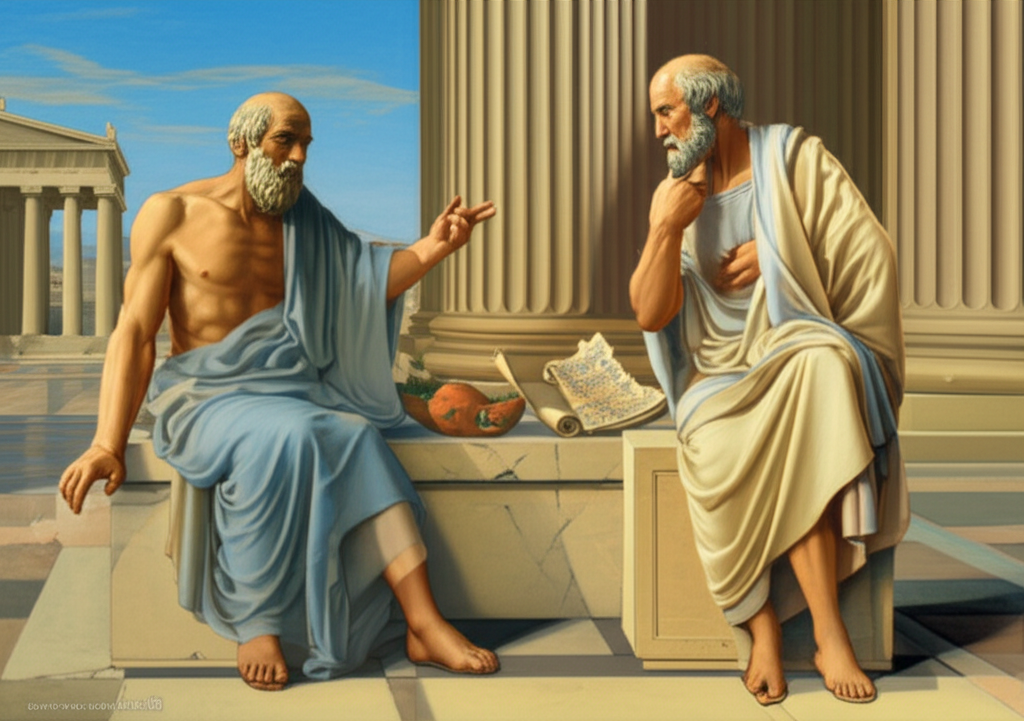
- Death as Transition or Immortality: Conversely, a long tradition, notably stemming from Plato, argues for the immortality of the soul. In dialogues like the Phaedo, Socrates famously discusses the soul's independence from the body and its journey to another realm after death. This belief in a non-material soul that survives bodily demise is a cornerstone of many religious and philosophical systems, offering comfort and a framework for ethical living based on eternal consequences.
The Experience of Dying and the Problem of Non-Existence
Beyond the metaphysical fate of the soul, philosophers also ponder the experience of dying and the conceptual difficulty of imagining non-existence. Can we truly conceive of a state where we no longer are? This intellectual hurdle often contributes to the fear and fascination surrounding death.
- Phenomenological Approaches: Some philosophers attempt to describe the experience of dying, not as an event after life, but as an integral part of life's unfolding. The anticipation, the acceptance, or the struggle against death are all aspects of human being.
- The Problem of Personal Identity: If death is annihilation, what happens to personal identity? Is it irrevocably lost, or is there a way to conceive of continuity even without individual consciousness? This leads to fascinating discussions about what truly constitutes "you."
The Nature of the Soul: A Philosophical Battleground
The concept of the soul is central to understanding the philosophical problems of Life and Death. Its definition, existence, and fate have been debated for millennia.
Key Philosophical Conceptions of the Soul
| Philosopher/School | Conception of the Soul | Relation to Life and Death |
|---|---|---|
| Plato | Immaterial, immortal, pre-existent, the true self, repository of reason. | Separates from the body at death, journeys to the realm of Forms. Life is a temporary imprisonment. |
| Aristotle | The "form" or "first actuality" of a natural body having life potentially; the animating principle, not separate from the body (except perhaps the rational part). | Dies with the body as its organizing principle ceases. The rational soul's fate is ambiguous. |
| Descartes | Immaterial substance (res cogitans), distinct from the material body (res extensa), seat of consciousness and thought. | Survives the death of the body, proving immortality. Life is the union of mind and body. |
| Materialists | No distinct soul; consciousness is an emergent property of the brain. | Ceases to exist with brain death. Life is a purely physical phenomenon. |
| Existentialists | Focus on subjective experience and freedom; less emphasis on a traditional "soul," more on "Dasein" (being-in-the-world). | Death is the absolute end of individual consciousness and possibility, giving meaning to life. |
📹 Related Video: PLATO ON: The Allegory of the Cave
Video by: The School of Life
💡 Want different videos? Search YouTube for: "Plato's Theory of Forms and the Soul Explained"
The debate over the soul is not merely academic; it has profound implications for how we live, how we mourn, and how we conceive of our own purpose in the grand scheme of things.
Ethical Dimensions: Navigating the Boundaries of Life and Death
The philosophical problem of Life and Death extends directly into the realm of ethics, forcing us to make difficult decisions about when life begins, when it ends, and who has the right to decide.
Contemporary Ethical Dilemmas
Modern technology and societal changes have intensified these ethical quandaries:
- Beginning of Life: Questions surrounding abortion, genetic engineering, and in vitro fertilization force us to ask: When does a human being acquire moral status? Is it at conception, viability, birth, or consciousness?
- End of Life: Euthanasia, physician-assisted suicide, and the definition of brain death challenge our understanding of what it means to be alive and when it is permissible to end suffering. Is there a "right to death" as there is a "right to life"?
- Prolonging Life: Advances in medicine raise questions about the pursuit of immortality, anti-aging technologies, and the ethical implications of extending human life indefinitely. What are the social, economic, and philosophical consequences of radical life extension?
These are not easy questions, and philosophy provides tools for rigorous analysis, but rarely simple answers. They demand careful consideration of individual autonomy, suffering, dignity, and the value of life itself.
Conclusion: The Enduring Search for Meaning in Life and Death
The philosophical problem of Life and Death is not a puzzle to be definitively solved, but rather a fundamental aspect of the human condition to be continually explored. From the ancient insights of the Great Books to contemporary bioethical debates, philosophy compels us to confront our finitude, to define our being, and to grapple with the mystery of the soul.
Whether one believes in an immortal soul or views death as absolute annihilation, the very act of pondering these questions enriches our understanding of what it means to live a meaningful life. It encourages us to appreciate the preciousness of existence, to consider our impact on others, and to find purpose in the face of the inevitable. The journey through the philosophy of Life and Death is ultimately a journey into the depths of ourselves.
📹 Related Video: EXISTENTIALISM: The Philosophy of Freedom
Video by: The School of Life
💡 Want different videos? Search YouTube for: "Existentialism and the Meaning of Life and Death"