

The Philosophical Meaning of Revolution: An Inquiry into Justice and the State
A Profound Shift in Thought and Action
Revolution, a term often associated with dramatic societal upheaval and political violence, carries a far deeper and more intricate philosophical meaning than its surface-level definition suggests. At its heart, a revolution represents not merely a change in government, but a fundamental rethinking of the State, the very foundations of Justice, and the nature of human freedom. From ancient Greek idealists to modern critical theorists, philosophy has grappled with revolution as both a terrifying disruption and a necessary catalyst for progress, examining its legitimacy, its aims, and its enduring impact on the human condition.
Unpacking the Concept: What is a Philosophical Revolution?
When we speak of revolution philosophically, we move beyond the historical event to explore its underlying principles, its ethical justifications, and its long-term implications for political theory and social order. It compels us to ask:
- What makes a State legitimate?
- Under what conditions do citizens have a right—or even a duty—to overthrow their government?
- What vision of Justice drives such radical change?
- Can true freedom only be achieved through revolutionary means?
These questions have occupied the greatest minds throughout history, shaping our understanding of power, rights, and the pursuit of a better world.
Ancient Roots: Cycles, Corruption, and the Ideal State
Our journey into the philosophical meaning of revolution must begin with the ancients, particularly those foundational texts found within the Great Books of the Western World.
- Plato's Republic: Plato, through Socrates, meticulously outlines an ideal State governed by philosopher-kings, where Justice is achieved through a harmonious balance of societal classes. For Plato, revolutions are often seen as a symptom of the State's decay, a descent from aristocracy to timocracy, oligarchy, democracy, and finally, tyranny. Each transition represents a corruption of the initial ideal, driven by a shift in the ruling passion from reason to honor, wealth, freedom, or insatiable desire. The philosophical inquiry here is less about the right to revolution and more about preventing the conditions that necessitate it by establishing an uncorruptible system.
- Aristotle's Politics: Aristotle, more empirical, observed various constitutions and their inherent instabilities. He noted that revolutions (or stasis) arise from inequality, a perceived lack of Justice, and the desire for either absolute equality or absolute superiority. For Aristotle, revolutions aim to change the constitution (the form of government) and can be partial or complete. He meticulously cataloged the causes and remedies, emphasizing the importance of a balanced constitution and a strong middle class to prevent the extremes that lead to overthrow. Both Plato and Aristotle provide a framework for understanding how the structure and ethical character of the State are intrinsically linked to its stability or revolutionary potential.
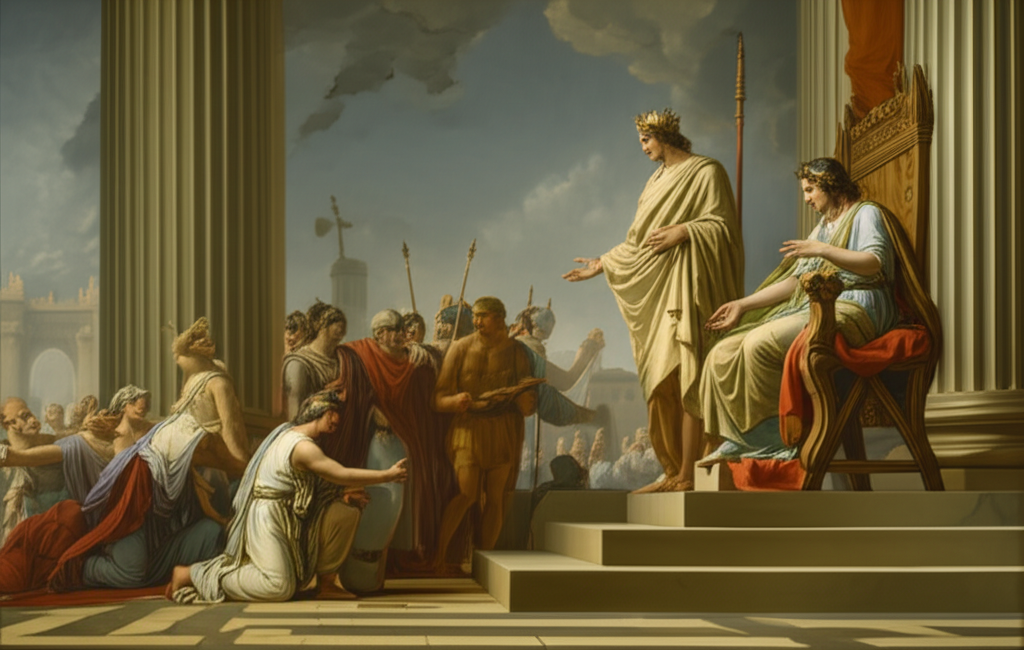
The Enlightenment: Rights, Contracts, and the Mandate of the People
The Enlightenment era dramatically shifted the philosophical discourse on revolution, placing individual rights and the concept of the social contract at its core.
- John Locke's Two Treatises of Government: Locke is arguably the most influential philosopher on the right to revolution. He posited that individuals possess inherent natural rights to life, liberty, and property, which the State is formed to protect. If the government (the State) systematically violates these rights, breaking the social contract, the people retain the right to dissolve that government and establish a new one. For Locke, revolution is not an act of chaos but a legitimate, albeit last-resort, defense of natural law and Justice when the established power becomes tyrannical.
- Jean-Jacques Rousseau's The Social Contract: Rousseau explored the concept of the "general will," arguing that legitimate political authority arises from the collective will of the people. While he did not explicitly advocate for violent revolution in the same way Locke did, his ideas laid the groundwork for popular sovereignty. If the State no longer represents the general will, or if it enslaves its citizens rather than liberating them, its legitimacy is dissolved, implying a fundamental right of the people to reclaim their sovereignty and re-establish a State that truly serves the common good and Justice.
These thinkers provided the philosophical ammunition for the American and French Revolutions, transforming revolution from a sign of decay into a potential instrument of liberation and the establishment of a more just State.
Modern Perspectives: Economic Determinism and the Constitution of Freedom
The 19th and 20th centuries brought new philosophical interpretations, expanding the scope of revolution beyond mere political change.
- Karl Marx and Friedrich Engels: For Marx, revolution is an inevitable historical force, driven by economic contradictions and class struggle. In works like Das Kapital and The Communist Manifesto, they argued that capitalism inherently creates an exploited proletariat, whose revolutionary overthrow of the bourgeoisie is necessary to establish a classless society and achieve true Justice. This perspective views revolution not as a choice but as a historical necessity, leading to a new form of the State (the dictatorship of the proletariat) and ultimately, its withering away.
- Hannah Arendt's On Revolution: Arendt distinguishes between liberation and freedom. Liberation is merely being freed from oppression, but true freedom, the aim of revolution, is the ability to participate in public life and constitute a new political order. For Arendt, revolution is about the founding of freedom, the creation of new institutions and a new body politic. She critically examines how many revolutions, despite aiming for freedom, often devolve into terror or merely achieve liberation without constituting lasting freedom, highlighting the immense philosophical challenge of establishing a truly just and free State post-revolution.
The Interplay of Philosophy, Revolution, State, and Justice
The philosophical meaning of revolution is thus a dynamic interplay of these core concepts:
| Philosophical Lens | Primary Focus on Revolution | Relationship to the State | Pursuit of Justice |
|---|---|---|---|
| Ancient (Plato/Aristotle) | Symptom of decay; cyclical constitutional change | Ideal vs. corrupt forms; stability through balance | Maintenance of existing order; prevention of injustice through good governance |
| Enlightenment (Locke/Rousseau) | Legitimate right to overthrow tyranny; expression of popular will | Based on social contract; protecting natural rights | Restoration of rights; common good; popular sovereignty |
| Modern (Marx/Arendt) | Historical necessity (Marx); constitution of freedom (Arendt) | Overthrow of oppressive State (Marx); founding new institutions (Arendt) | Classless society (Marx); establishment of lasting public freedom (Arendt) |
Each philosophical tradition offers a unique lens through which to understand the profound implications of revolutionary action. It compels us to confront the moral dilemmas of violence, the aspirations for a better society, and the enduring question of how humans can best govern themselves to achieve Justice within the framework of the State. Revolution, in this philosophical sense, is an ongoing dialogue about human possibility and the perennial struggle for a more equitable and free existence.
Conclusion: An Enduring Philosophical Challenge
The philosophical meaning of revolution is not static; it evolves with each historical epoch and intellectual paradigm. It forces us to continually re-evaluate the legitimacy of power, the nature of our rights, and the true meaning of Justice. Whether viewed as a necessary evil, an inevitable historical force, or the profound act of constituting freedom, revolution remains one of the most potent and challenging subjects in philosophy, urging us to reflect on the very foundations of our collective life and the future of the State.
YouTube Video Suggestions:
-
📹 Related Video: ARISTOTLE ON: The Nicomachean Ethics
Video by: The School of Life
💡 Want different videos? Search YouTube for: "John Locke Social Contract Theory Explained"
2. ## 📹 Related Video: ARISTOTLE ON: The Nicomachean Ethics
Video by: The School of Life
💡 Want different videos? Search YouTube for: "Hannah Arendt On Revolution Summary"