

The Enduring Quest: Unraveling the Philosophical Definition of Man
The question, "What is Man?" stands as one of the most profound and persistent inquiries in the history of philosophy. Far from a simple biological classification, the philosophical definition of Man delves into the very essence of our being, exploring our nature, purpose, and place in the cosmos. This article will journey through key philosophical perspectives, revealing how thinkers across millennia have grappled with this complex and ever-evolving concept, highlighting that the definition of Man is not a static pronouncement but an ongoing, dynamic exploration of what it means to be human.
From Ancient Greece: Man as the Rational Animal
Our journey into the definition of Man often begins with the ancient Greeks, whose foundational inquiries shaped much of Western thought. For philosophers like Aristotle, the distinguishing characteristic of Man was his capacity for reason.
Aristotle famously defined Man as a rational animal (ζῷον λόγον ἔχον). This seemingly straightforward definition carries profound implications:
- Animal: Acknowledges our biological, corporeal existence, our shared traits with other living beings – needs for sustenance, reproduction, sensation.
- Rational: Elevates Man above other animals through the unique faculty of logos – reason, speech, and the capacity for moral judgment and abstract thought. This capacity allows for the pursuit of knowledge, ethics, and the establishment of complex societies.
This perspective posits that our highest good, our telos or purpose, lies in the full actualization of this rational faculty, leading to a life of virtue and contemplation.
The Medieval Soul: Divine Spark and Moral Being
With the advent and spread of Abrahamic religions, the philosophical definition of Man took on a new dimension, integrating theological concepts with classical thought. Medieval philosophers, notably Augustine and Thomas Aquinas, viewed Man not just as a rational animal but as a being created in the image of God, possessing an immortal soul.
Key aspects of this medieval understanding include:
- The Soul: The soul became the primary locus of Man's identity, distinguishing him from other creatures. It was seen as the seat of reason, will, and conscience, connecting Man directly to the divine.
- Free Will: The concept of free will became paramount, emphasizing Man's capacity to choose between good and evil, thereby bearing moral responsibility for his actions. This choice was central to his salvation and relationship with God.
- Purpose: Man's ultimate purpose was often understood as achieving union with God, a journey guided by faith and reason.
This era cemented the idea of Man as a moral agent, whose inner life and spiritual destiny were as crucial as his rational capabilities.
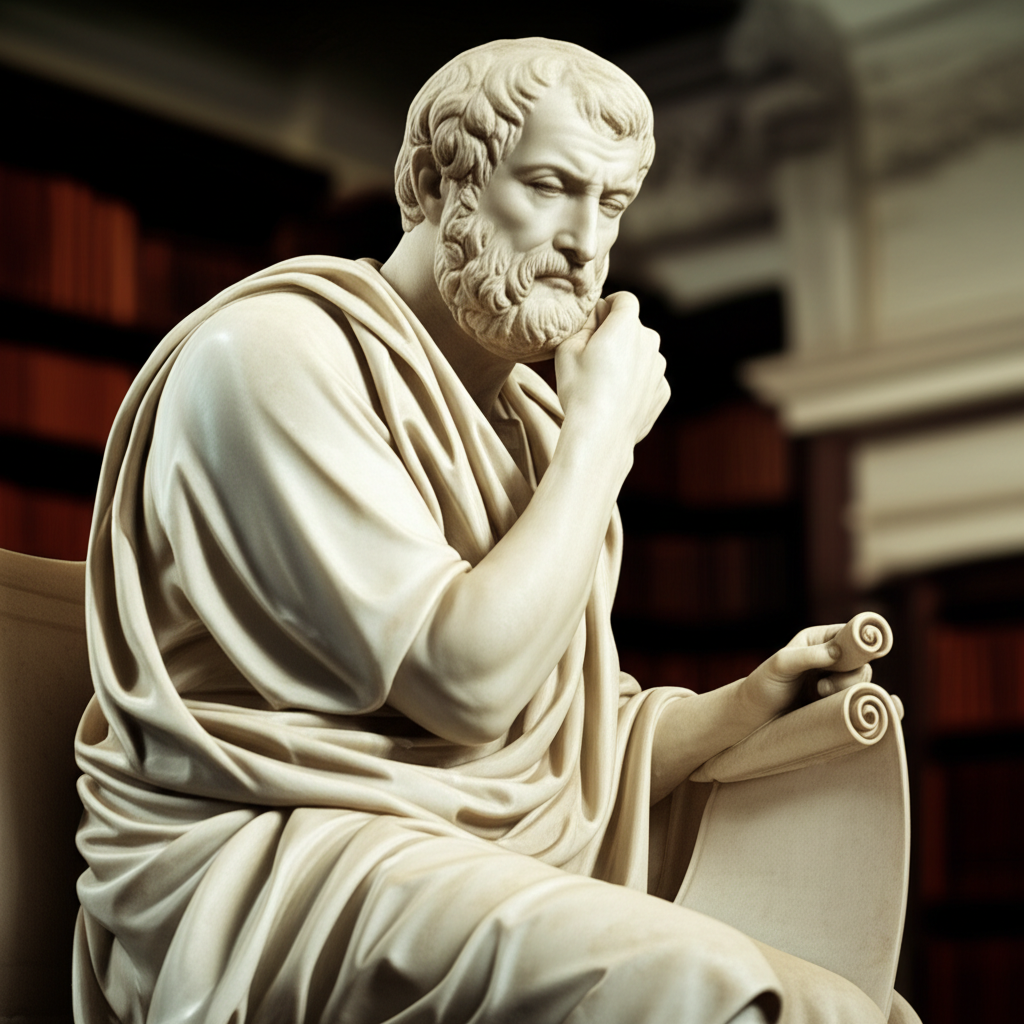
Modernity's Gaze: Consciousness, Self, and the Thinking Being
The dawn of modern philosophy brought a significant shift, placing greater emphasis on individual consciousness and subjectivity. René Descartes' famous dictum, "Cogito, ergo sum" ("I think, therefore I am"), profoundly altered the landscape of the definition of Man.
Descartes argued that the undeniable fact of one's own thought was the bedrock of existence. This led to:
- The Thinking Self: The essence of Man was identified with the thinking substance (res cogitans), distinct from the extended physical body (res extensa). This duality underscored the importance of inner experience and self-awareness.
- Epistemological Foundation: The certainty of one's own existence through thought became the starting point for all knowledge, shifting the focus from external authority to internal reflection.
- Individual Subjectivity: This era paved the way for later explorations of the unique individual experience, the self, and the role of consciousness in shaping reality.
Philosophers like Kant further developed these ideas, emphasizing Man's capacity for self-legislation, moral autonomy, and the construction of his own understanding of the world.
The Contemporary Challenge: Freedom, Existence, and the Unfinished Definition
The 19th and 20th centuries witnessed further radical reinterpretations of the philosophical definition of Man, often challenging previous assumptions about fixed essences or divine purposes.
Key shifts include:
- Existentialism: Thinkers like Jean-Paul Sartre famously declared that "existence precedes essence." This means Man is not born with a pre-defined nature or purpose. Instead, he is condemned to be free, constantly defining himself through his choices and actions. The definition of Man becomes an ongoing project of self-creation, imbued with immense responsibility.
- The Unfinished Being: There is no single, universal definition of Man waiting to be discovered. Instead, Man is a being in constant becoming, shaped by historical, cultural, and individual experiences.
- Beyond the Human: Contemporary philosophy also grapples with questions posed by technology, artificial intelligence, and post-humanism, pushing the boundaries of what it means to be Man in an increasingly complex world.
This contemporary view reinforces the idea that the philosophical definition of Man is not a static target but a dynamic, evolving inquiry, reflecting humanity's continuous self-reflection.
YouTube Video Suggestions:
-
📹 Related Video: KANT ON: What is Enlightenment?
Video by: The School of Life
💡 Want different videos? Search YouTube for: ""What is Human Nature? Philosophical Perspectives Explained""
-
📹 Related Video: EXISTENTIALISM: The Philosophy of Freedom
Video by: The School of Life
💡 Want different videos? Search YouTube for: ""Existentialism: Crash Course Philosophy #16 - What is Man?""
Conclusion: The Enduring Philosophical Pursuit of Man
From Aristotle's rational animal to Sartre's self-creating existent, the philosophical definition of Man has been a rich tapestry woven through centuries of thought. What unites these diverse perspectives is the enduring human impulse to understand ourselves, to grasp the fundamental nature of our being. This quest is not merely academic; it shapes our ethics, our politics, our art, and our very way of life. The definition of Man remains an open question, an invitation to continuous inquiry, reminding us that to philosophize about Man is to philosophize about the very core of our existence.