

The Ever-Shifting Canvas: Deconstructing the Philosophical Definition of Man
To ask "What is Man?" is perhaps the most fundamental question in all of philosophy. It’s a question that echoes through the annals of intellectual history, finding different answers, different emphases, and different anxieties across millennia. Unlike a scientific definition that seeks empirical boundaries, the philosophical inquiry into Man delves into essence, purpose, and existence itself. It's an exploration not just of what we are, but what we could be, what we should be, and how our Being relates to the world around us.
The journey to define Man is less about finding a definitive, universally agreed-upon answer and more about understanding the rich tapestry of perspectives that have shaped human self-understanding. It's a testament to our enduring fascination with ourselves, a perpetual return to the mirror of consciousness to ponder the reflection.
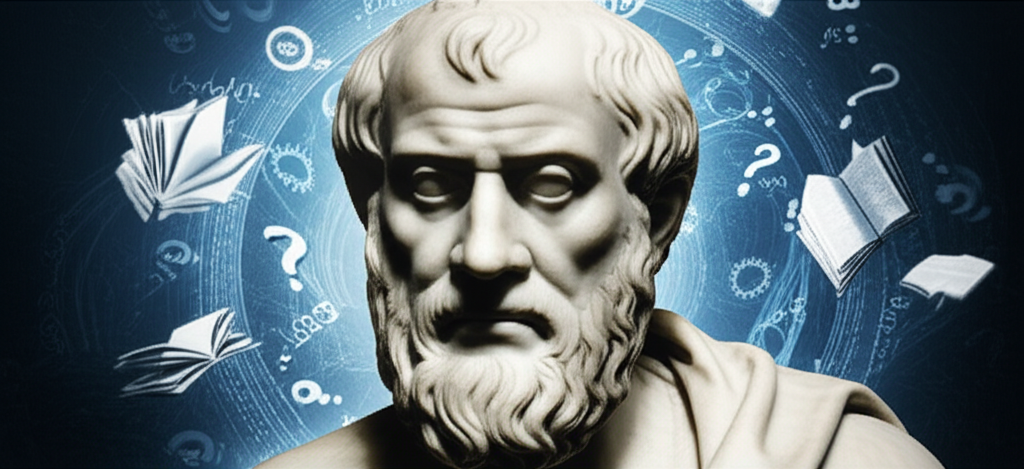
Ancient Roots: Man as a Rational and Political Being
Our quest for a definition often begins with the giants of ancient Greek philosophy, whose foundational texts are cornerstones of the Great Books of the Western World.
- Aristotle: Perhaps the most famous and enduring definition comes from Aristotle, who posited Man as a rational animal (zoon logon echon) and a political animal (zoon politikon). For Aristotle, our capacity for reason—our ability to think, deliberate, and understand—is what fundamentally distinguishes us from other creatures. This rationality isn't merely intellectual; it's practical, guiding our actions and shaping our virtues. Furthermore, our inherent drive to form communities, to live in a polis, highlights our social nature. To be truly human, for Aristotle, was to participate in the life of the city-state, pursuing the good life (eudaimonia) through virtuous action.
- Plato: While less directly defining Man in a single phrase, Plato's philosophy, particularly his theory of Forms and the tripartite soul, offers a profound understanding of human Being. Man is seen as a composite of a rational soul, a spirited element, and an appetitive part, with the rational soul ideally governing the others. The true essence of Man lies in his immortal soul's connection to the eternal Forms, striving for knowledge and virtue beyond the fleeting material world.
These ancient perspectives laid the groundwork, establishing reason and sociality as core components of the human definition.
Medieval Echoes: Man in the Image of God
With the advent of Christian thought, the philosophical definition of Man took on new dimensions, deeply influenced by theological concepts, yet still engaging with classical rationality.
- St. Augustine: Drawing heavily from Platonic ideas, Augustine viewed Man as a soul using a body. His focus was on the internal, spiritual journey, the will, and the relationship between humanity and God. The definition of Man here is inextricably linked to our creation in the image of God (imago Dei), imbued with reason, memory, and will, albeit fallen and in need of redemption.
- St. Thomas Aquinas: Synthesizing Aristotelian philosophy with Christian theology, Aquinas defined Man as a rational animal, much like Aristotle, but further emphasized our composite nature as a substantial union of body and soul. The soul, as the form of the body, gives life and defines our essence, while our ultimate purpose lies in intellectual contemplation of God. Our rationality allows us to discern natural law and strive towards divine truth.
The medieval period, therefore, layered spiritual significance and a teleological purpose onto the classical understanding of human Being.
Modern Interrogations: Consciousness, Freedom, and Self-Creation
The Enlightenment and subsequent philosophical movements radically shifted the focus, often placing consciousness, individual freedom, and the subjective experience at the forefront.
- René Descartes: With his famous dictum, "Cogito, ergo sum" ("I think, therefore I am"), Descartes offered a revolutionary starting point. For him, the essence of Man was primarily a thinking thing (res cogitans), a mind or consciousness distinct from the physical body. This radical dualism emphasized the mental over the material, making self-awareness and introspection central to our definition.
- Immanuel Kant: Kant's philosophy bestowed upon Man a profound moral dignity. He argued that Man is an end in himself, not merely a means to an end. Our capacity for practical reason allows us to act autonomously, to legislate moral laws for ourselves, and to live according to universalizable maxims. This moral agency and inherent worth became a cornerstone of the modern understanding of human Being.
The 19th and 20th centuries continued this trajectory, often challenging previous assumptions:
- Friedrich Nietzsche: Nietzsche questioned traditional morality and the very foundations of human values. For him, Man is a Being driven by the will to power, constantly overcoming himself and creating new values. He saw Man as an uncompleted project, capable of becoming the Übermensch (Overman), transcending conventional limitations.
- Jean-Paul Sartre: A key figure in existentialism, Sartre famously declared that for Man, existence precedes essence. This means we are born into the world without a pre-given nature or purpose; instead, we are condemned to be free, constantly defining ourselves through our choices and actions. Man is responsible for creating his own meaning and essence, a Being who makes himself.
Key Facets of the Philosophical Definition of Man
Across these diverse traditions, several recurring themes emerge as crucial to the philosophical definition of Man:
- Rationality: The capacity for logical thought, abstract reasoning, and problem-solving.
- Consciousness & Self-Awareness: The ability to be aware of oneself as a distinct individual with subjective experiences.
- Morality & Ethics: The capacity for moral judgment, the understanding of right and wrong, and the ability to act according to ethical principles.
- Social & Political Being: The inherent tendency to form communities, establish social structures, and engage in collective life.
- Freedom & Agency: The capacity to make choices, to act autonomously, and to determine one's own path.
- Mortality & Temporality: The awareness of our finite existence and our place within time.
- Meaning-Making: The human drive to seek or create purpose and significance in life.
This multifaceted nature makes any singular definition incomplete. Instead, Man is understood as a dynamic interplay of these elements, often in tension with each other.
The Ongoing Quest: Why the Definition Remains Elusive
The philosophical definition of Man remains elusive precisely because human Being is not a fixed object but a complex, evolving phenomenon. Each era, each philosophy, adds another layer to our understanding, often challenging or reinterpreting what came before.
- No Fixed Essence: Many contemporary philosophies argue against a static, universal essence of Man, emphasizing instead cultural, historical, and individual particularities.
- Interdisciplinary Challenges: Advances in biology, neuroscience, artificial intelligence, and psychology continually feed back into the philosophical discussion, raising new questions about consciousness, free will, and what truly constitutes human intelligence.
- The Problem of "Otherness": Defining Man often implicitly or explicitly involves defining what Man is not, leading to discussions about animals, machines, and even the divine.
The question "What is Man?" is thus an invitation to a lifelong inquiry, a journey through the profound depths of human experience and thought. It's a question that, in its very asking, asserts our unique capacity for self-reflection and our relentless pursuit of understanding our place in the cosmos.
YouTube Video Suggestions:
-
📹 Related Video: ARISTOTLE ON: The Nicomachean Ethics
Video by: The School of Life
💡 Want different videos? Search YouTube for: ""What is Man Philosophy Aristotle Aquinas Kant Sartre""
2. ## 📹 Related Video: EXISTENTIALISM: The Philosophy of Freedom
Video by: The School of Life
💡 Want different videos? Search YouTube for: ""Existentialism Human Nature Freedom Philosophy""