

The Philosophical Concept of Time and Motion: A Journey Through Existence
Summary: For millennia, philosophers have grappled with the fundamental concepts of time and motion, recognizing them not merely as physical phenomena but as the very fabric of existence and change. This article delves into the rich history of these inquiries, tracing how thinkers from ancient Greece to the modern era have sought to understand the elusive nature of Philosophy, Time, and Motion, and their profound implications for our understanding of reality and Change. From the paradoxes of Zeno to Einstein's relativity, we explore the enduring questions that define our experience of a dynamic world.
The Elusive Dance of Existence: An Introduction
In the grand tapestry of philosophical thought, few threads are as interwoven, as foundational, and as bewildering as those of Time and Motion. From the moment humanity began to reflect on its place in the cosmos, the ceaseless flow of moments and the incessant activity of the world around us have presented an intellectual challenge of monumental proportions. What is Time? Is it a container in which events unfold, or merely a measure of those events? What is Motion? Is it a fundamental property of reality, or an illusion? These aren't just questions for physicists; they are the bedrock of Philosophy, shaping our understanding of causality, identity, and the very nature of Change.
Our journey through these concepts, deeply rooted in the traditions of the Great Books of the Western World, reveals a continuous dialogue, a relentless pursuit of clarity in the face of phenomena that are both intimately familiar and profoundly mysterious.
Ancient Insights: From Flux to Form
The earliest Greek philosophers laid the groundwork for much of this enduring debate, setting the stage for centuries of inquiry.
The Challenge to Change: Parmenides and Zeno
The Eleatic school, particularly Parmenides, famously argued that true reality is unchanging, eternal, and singular. For Parmenides, Change and Motion were mere illusions of the senses, contradictions to the logical necessity of being. His student, Zeno of Elea, crafted a series of paradoxes to demonstrate the impossibility of Motion, such as Achilles and the Tortoise, and the Arrow Paradox. These paradoxes force us to confront the logical inconsistencies that arise when we try to conceive of continuous Motion through discrete points in Time and space.
The Embrace of Flux: Heraclitus
In stark contrast, Heraclitus of Ephesus declared that "Panta Rhei" – everything flows. For him, Change was the only constant, the fundamental truth of the cosmos. The world was in a perpetual state of becoming, like a river into which one can never step twice. This radical embrace of flux highlights the dynamic, ever-transforming nature of reality, placing Motion at its very heart.
Aristotle's Synthesis: Defining Time and Motion
Perhaps the most influential ancient voice on these matters was Aristotle. In his Physics, he meticulously analyzed Motion (kinesis) as the actuality of what is potential, a process of Change from one state to another. For Aristotle, Motion wasn't just locomotion but also alteration, growth, and decay. Crucially, he defined Time not as an independent entity, but as "the number of motion with respect to before and after."
Aristotle's Key Concepts:
- Motion (Kinesis): The fulfillment of what exists potentially, insofar as it is potential.
- Time: A measure of Motion, dependent on the existence of moving things. No Motion, no Time.
- Place: The innermost motionless boundary of what contains.
- Continuity: Both Time and Motion are continuous, divisible into infinitely many parts.
Aristotle's framework provided the foundational Mechanics for understanding the physical world for nearly two millennia, shaping how succeeding generations conceptualized Time and Change.
Medieval Musings: The Subjectivity of Time
The advent of monotheistic religions introduced new dimensions to the philosophical debate, particularly concerning the nature of creation and eternity.
St. Augustine and the "Distention of the Soul"
In his Confessions, St. Augustine of Hippo grappled profoundly with the nature of Time. He famously asked, "What then is time? If no one asks me, I know; if I wish to explain it to one who asks, I do not know." Augustine argued that the past exists as memory, the future as expectation, and the present as a fleeting instant. He proposed that Time is a "distention of the soul" (distentio animi), suggesting a deeply subjective and psychological dimension to our experience of it. For Augustine, Time is not an objective container but rather an internal measure of our consciousness, inextricably linked to our perception of Change.
The Scientific Revolution: Newton's Absolute Framework
The scientific revolution ushered in a new era, with Isaac Newton providing a mathematical and physical framework that dominated thought for centuries.
Newton's Absolute Time and Space
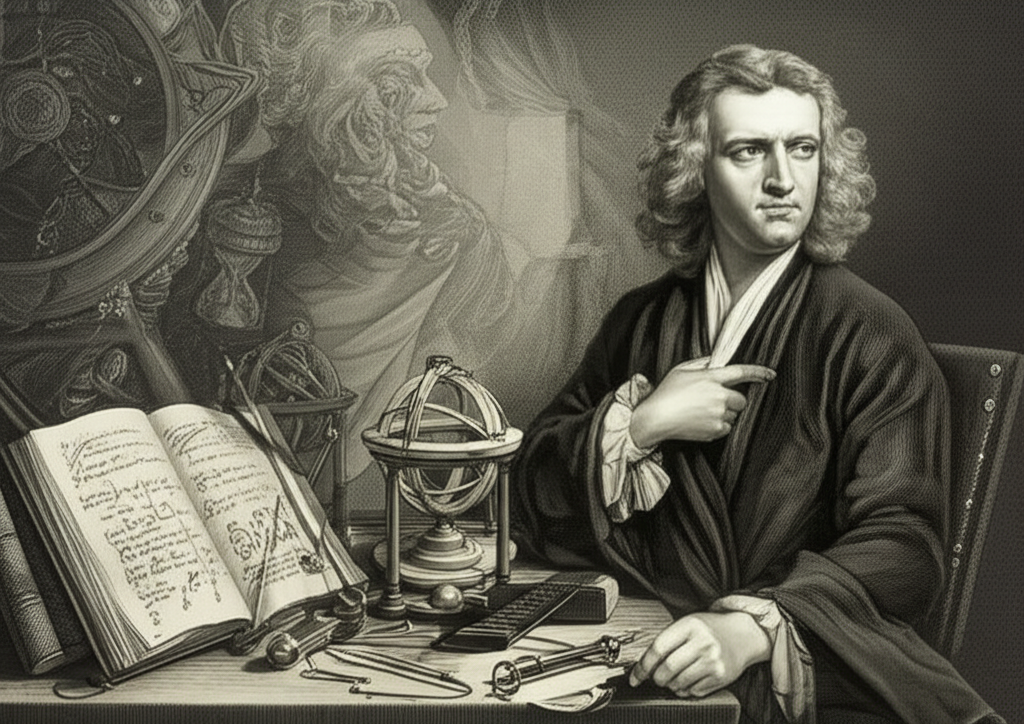
In his Principia Mathematica, Newton posited the existence of absolute, true, and mathematical Time, which "of itself, and from its own nature, flows equably without relation to anything external." Similarly, he conceived of absolute Space, existing independently of any objects within it. Within this absolute framework, Motion was understood as the change in an object's position within absolute space over absolute time. Newton's classical Mechanics provided a powerful, deterministic model of the universe, where Time and Space were the unchanging stage upon which all Change and Motion played out. This deterministic view profoundly influenced later philosophical debates on free will and causality.
Modern Challenges: Relativity and Quantum Reality
The 20th century brought revolutionary insights that shattered Newtonian certainties, particularly from the realm of physics.
Einstein and the Relativistic Universe
Albert Einstein's theories of special and general relativity fundamentally altered our understanding of Time and Space. He demonstrated that Time is not absolute but relative, interwoven with space into a single space-time continuum. Motion and gravity affect the passage of Time, leading to phenomena like time dilation. This relativistic view challenged the very foundations of classical Mechanics and forced philosophers to reconsider the objective reality of Time and its relationship to observers and events. Change became observer-dependent in a profound new way.
Quantum Mechanics and Indeterminacy
At the subatomic level, Quantum Mechanics introduced further complexities. The principles of superposition and uncertainty suggest that particles do not possess definite properties until measured, and their Motion is governed by probabilities rather than strict determinism. This radical indeterminacy at the most fundamental level of reality presents ongoing challenges to our understanding of causality, Change, and the very fabric of existence.
Key Philosophical Debates on Time and Motion
The historical journey reveals several enduring philosophical questions that continue to be debated:
- Substantivalism vs. Relationalism: Does Time exist as a substantive entity (like a dimension or a container), independent of events (Newton)? Or is it merely a system of relations between events (Leibniz, Mach, Einstein)?
- Presentism, Eternalism, and the Growing Block Theory:
- Presentism: Only the present moment is real; past and future do not exist.
- Eternalism: All moments in Time (past, present, and future) are equally real.
- Growing Block Theory: The past and present are real, but the future is not yet determined or real.
- The Arrow of Time: Why does Time seem to flow in only one direction, from past to future? Is this an intrinsic property of Time itself, or an emergent property of the universe (e.g., entropy)?
- Free Will and Determinism: How does the nature of Motion and Change relate to our capacity for agency? If all events are determined by prior causes (as classical Mechanics might suggest), is free will an illusion?
These debates underscore the profound impact that our understanding of Time and Motion has on our metaphysical and ethical outlook.
The Enduring Question: Why Does Anything Change?
From the static being of Parmenides to the dynamic flux of Heraclitus, from Aristotle's potentiality to Newton's absolute flow, and from Einstein's relative continuum to the quantum dance of probabilities, the philosophical concept of Time and Motion remains a vibrant, evolving field. It challenges us to look beyond superficial appearances and question the very nature of our reality. The simple act of observing a leaf falling, a clock ticking, or a star moving across the night sky opens a portal to the deepest inquiries of Philosophy, reminding us that the relentless march of Time and the ceaseless activity of Change are not just phenomena to be measured, but mysteries to be pondered.
**## 📹 Related Video: What is Philosophy?
Video by: The School of Life
💡 Want different videos? Search YouTube for: "Zeno's Paradoxes Explained Philosophy"**
**## 📹 Related Video: ARISTOTLE ON: The Nicomachean Ethics
Video by: The School of Life
💡 Want different videos? Search YouTube for: "Aristotle's Physics Time Motion Metaphysics"**