

The philosophical concept of progress is far more intricate than a simple march forward. It compels us to ask not just if humanity is advancing, but what we mean by advance, how we measure it, and whether it's even inevitable or desirable. From ancient cyclical views to Enlightenment optimism and modern critiques, philosophy has grappled with the very notion of improvement across history, challenging our assumptions about where we've been and where we're headed. This article delves into the rich and often contentious concept of progress, drawing on insights from the Great Books of the Western World to illuminate its multifaceted nature.
Unpacking the Elusive Notion of Progress
When we speak of progress, what immediately springs to mind? For many, it's the relentless march of technology, the wonders of modern medicine, or perhaps the expansion of human rights. Yet, for philosophers, this seemingly straightforward idea unfurls into a complex tapestry woven with threads of ethics, epistemology, politics, and metaphysics. Is progress merely an accumulation of knowledge, or does it signify a moral betterment of humanity? Is it a linear journey towards an ideal state, or a cyclical ebb and flow, perhaps even an illusion? These are the foundational questions that have occupied some of the greatest minds throughout history.
A Brief History of Philosophical Perspectives on Progress
The way we understand progress has evolved dramatically, reflecting the prevailing worldviews of different eras. The Great Books of the Western World offer a fantastic lens through which to observe this intellectual journey.
-
Ancient Greek Views: Cycles and Teleology
- Plato, in his Republic, explored the cyclical nature of political systems, suggesting a natural decline from ideal forms rather than a linear ascent. The concept of progress was often tied to the idea of returning to an ideal, or to the telos (purpose) inherent in a thing, as seen in Aristotle's emphasis on potentiality moving to actuality. For them, history wasn't necessarily a story of endless improvement, but rather of natural cycles or the fulfillment of inherent purposes.
-
Medieval Christian Thought: Linear Divine Providence
- With thinkers like Augustine in his City of God, a profoundly linear view of history emerged. Human history was seen as a purposeful journey from creation to redemption, guided by divine providence. Progress here was primarily spiritual, an unfolding of God's plan, rather than a purely secular, human-driven advancement.
-
The Enlightenment: The Zenith of Human Reason
- The 17th and 18th centuries witnessed the birth of the modern concept of progress. Fueled by scientific discoveries and the power of reason, philosophers like Immanuel Kant (in works like Perpetual Peace) envisioned a future where humanity, through rational thought and moral autonomy, could achieve a state of universal peace and justice. Condorcet, in his Sketch for a Historical Picture of the Progress of the Human Mind, championed the idea of the infinite perfectibility of humankind, believing that reason and science would lead to continuous improvement in all aspects of life. This era saw progress as inevitable, driven by human agency and the spread of knowledge.
-
19th and 20th Century Critiques: The Shadow Side
- The optimism of the Enlightenment faced significant challenges. Friedrich Nietzsche, a profound critic found in Beyond Good and Evil, questioned the very value of modern moral progress, arguing it often led to a weakening of human spirit and a "herd mentality." The horrors of two World Wars and environmental degradation further forced a re-evaluation, highlighting that scientific and technological advancement did not automatically equate to moral or societal betterment.
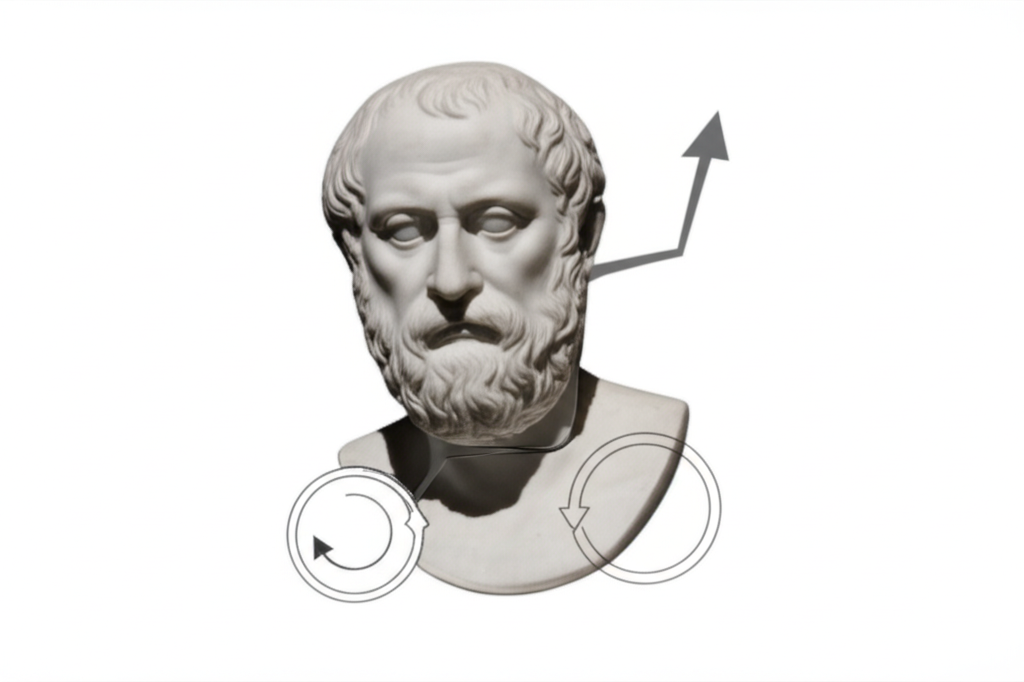
Facets of Philosophical Progress
To truly grasp the concept of progress, we must dissect its various dimensions:
| Type of Progress | Description | Philosophical Questions |
|---|---|---|
| Moral Progress | The advancement towards greater justice, compassion, equality, and ethical behavior in individuals and societies. | Are human beings becoming inherently "better" over time? Does the decline of certain atrocities (e.g., slavery) signify true moral growth, or merely a shift in power dynamics and social norms? What constitutes a "better" moral system? |
| Scientific/Technological Progress | The accumulation of knowledge, understanding, and the development of tools and methods to manipulate the natural world. | Does more knowledge always lead to a better world? Can technological advancement outpace our ethical capacity to manage its consequences? Is there a limit to what we can know or achieve? |
| Social/Political Progress | The evolution of societal structures, governance, and laws towards greater freedom, equality, and well-being for all citizens. | Do democratic systems inherently represent progress over other forms of government? Are we moving towards a more just and equitable global society, or are new forms of oppression merely replacing old ones? |
| Epistemological Progress | The refinement of our methods of inquiry, the accumulation of more accurate and comprehensive knowledge about the world, and a deeper understanding of our own cognitive processes and limitations. | Are our theories getting closer to the "truth"? Is there an ultimate truth to be discovered, or is progress simply about creating more useful models? How do we ensure our methods of knowing are themselves improving? |
The Enduring Debate: Is Progress Inevitable?
One of the most profound questions is whether progress is an inherent force in history or something we must actively strive for, without guarantees. The Enlightenment thinkers largely believed in its inevitability, seeing reason as an unstoppable engine. However, the 20th century, with its unprecedented conflicts and environmental crises, forced a sobering re-evaluation.
Contemporary philosophy often adopts a more cautious stance. While we can observe advancements in specific domains – curing diseases, developing sustainable technologies, or expanding rights – these are not necessarily indicators of an overarching, teleological march towards a perfect future. Indeed, every step forward often brings new challenges and unintended consequences. The concept of progress, then, becomes less about a predetermined destination and more about a continuous, conscious effort to improve, even if the path is winding and fraught with setbacks.
Ultimately, the philosophical engagement with progress is a powerful reminder that our understanding of history and our aspirations for the future are deeply intertwined. It challenges us to define our values, examine our assumptions, and critically assess whether our advancements truly lead to a more flourishing human existence.
📹 Related Video: KANT ON: What is Enlightenment?
Video by: The School of Life
💡 Want different videos? Search YouTube for: ""History of the concept of progress philosophy" or "Critiques of Enlightenment progress philosophy""