

The Philosophical Basis of Liberty
Summary: The concept of Liberty, far from being a simple political ideal, is a profound and multifaceted philosophical construct, deeply rooted in centuries of Western thought. From the ancient Greeks contemplating the just state to Enlightenment thinkers defining natural rights, philosophers have grappled with its meaning, its relationship to Law, and its implications for Man. This article delves into the rich intellectual history found within the Great Books of the Western World, exploring how our understanding of freedom has evolved, revealing liberty as not just an absence of constraint, but a condition for human flourishing, reason, and self-governance.
Unshackling the Mind: A Philosophical Journey Through Liberty
As Daniel Fletcher, one is continually drawn to the fundamental questions that animate human existence. Among these, Liberty stands as a beacon, guiding our aspirations and shaping our societies. Yet, to truly grasp its essence, we must venture beyond its political manifestations and delve into its philosophical foundations. The Great Books of the Western World serve as our compass, revealing how thinkers across millennia have understood this vital concept, inextricably linking it to Philosophy, Law, and the very nature of Man.
I. Ancient Echoes: Liberty in Classical Thought
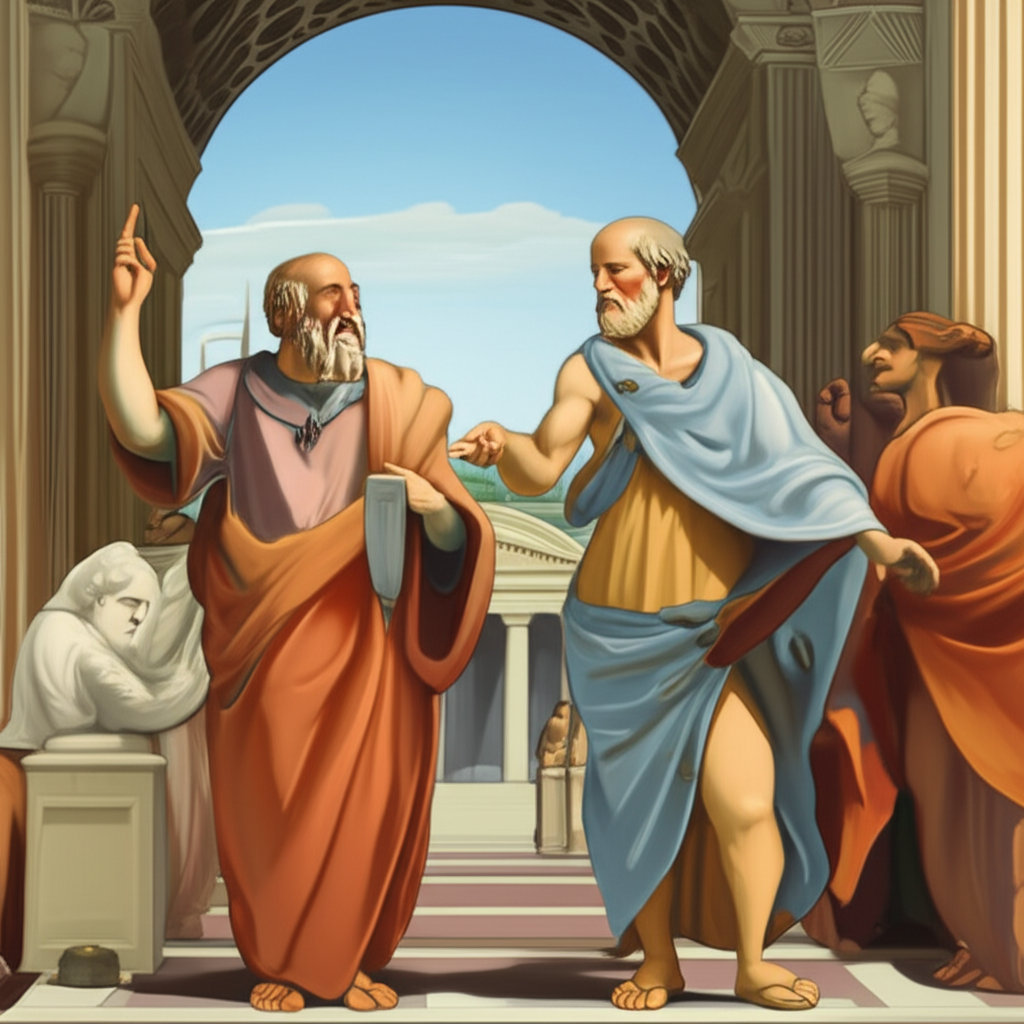
The seeds of liberty were sown in the fertile intellectual soil of ancient Greece and Rome. Here, the focus was often on the Man as a citizen, and Liberty as a condition for the good life within a well-ordered society.
- Plato's Republic and the Soul's Freedom: For Plato, true Liberty wasn't license, but the freedom found in a soul ordered by reason. In The Republic, the ideal state mirrors the just individual, where each part performs its proper function. A Man is truly free when his rational faculty governs his spirited and appetitive parts. Political liberty, then, was often seen as subordinate to the greater good of the polis, where Law ensured harmony.
- Aristotle's Flourishing Man: Aristotle, in works like Politics and Nicomachean Ethics, viewed Man as a "political animal" whose highest good (eudaimonia, or flourishing) is achieved in community. Liberty here is the capacity for rational choice and self-governance, allowing individuals to participate in the civic life of the state. The Law provides the framework for this participation, enabling citizens to live virtuously and freely.
- Cicero and Roman Republicanism: Moving to Rome, Cicero championed Liberty within the framework of a republic governed by natural Law. For him, freedom meant living under a just legal system, not under the arbitrary will of a tyrant. Man's reason allowed him to discern this natural Law, which was universal and eternal, providing the moral basis for legitimate human Law and, consequently, for true Liberty.
- Stoicism: Inner Fortress of Freedom: The Stoics, like Epictetus and Marcus Aurelius, introduced a powerful notion of inner Liberty. While external circumstances might be beyond a Man's control, his reaction to them was not. True freedom lay in mastering one's emotions, accepting what cannot be changed, and aligning one's will with the rational order of the cosmos. This was a Philosophy of profound personal autonomy, irrespective of political conditions.
II. The Medieval Synthesis: Divine Law and Free Will
The medieval period, shaped by Christian Philosophy, introduced new dimensions to Liberty, intertwining it with theological concepts of divine will and human choice.
- Augustine and the Burden of Choice: Saint Augustine, in Confessions and City of God, explored Liberty primarily through the lens of free will (liberum arbitrium). Man's ability to choose good or evil, to obey or disobey divine Law, was central to his understanding of human nature. While acknowledging the fallen nature of humanity, Augustine's Philosophy underscored the profound moral Liberty inherent in each individual's capacity for choice, even if that choice was often misused.
- Aquinas and the Rational Path to Liberty: Thomas Aquinas, synthesizing Aristotelian Philosophy with Christian theology in his Summa Theologica, saw Liberty as the ability to choose the good, guided by reason. He posited a hierarchy of Law: Eternal Law (God's reason), Natural Law (Man's participation in Eternal Law through reason), Human Law (derived from Natural Law), and Divine Law (revealed scripture). For Aquinas, true Liberty was found not in arbitrary choice, but in choosing in accordance with reason and the good, which ultimately meant aligning with divine and natural Law.
Table 1: Conceptions of Liberty in Classical and Medieval Thought
| Philosopher | Era | Key Text(s) | Primary View of Liberty | Relationship to Law | View of Man |
|---|---|---|---|---|---|
| Plato | Ancient | The Republic | Inner harmony, freedom of the rational soul; freedom within the just state. | Law creates the conditions for a just state and individual freedom. | A rational being, part of a polis, striving for virtue. |
| Aristotle | Ancient | Politics, Nicomachean Ethics | Capacity for rational choice and self-governance; flourishing in community. | Law provides the framework for virtuous action and civic participation. | A "political animal" whose purpose is to flourish through reason and community. |
| Cicero | Ancient | On the Republic, On Laws | Living under just law, not arbitrary power; freedom in a republic. | Natural Law is the foundation for human law, ensuring justice and liberty. | A rational being capable of discerning natural law and self-governance. |
| Augustine | Medieval | Confessions, City of God | Free will (liberum arbitrium); capacity to choose good or evil. | Divine Law (God's will) and human law; liberty is often about moral choice. | A fallen but rational being, endowed with free will, seeking salvation. |
| Aquinas | Medieval | Summa Theologica | Ability to choose the good, guided by reason and natural law. | Law (Eternal, Natural, Human, Divine) guides man towards the good and true liberty. | A rational being, created in God's image, capable of discerning the good. |
III. The Enlightenment's Dawn: Reason, Rights, and the Social Contract
The Enlightenment marked a pivotal shift, placing individual Liberty and rights at the forefront of political Philosophy. The concept of Man as an autonomous agent capable of self-governance gained immense traction.
- Hobbes' Leviathan: Order Over Absolute Freedom: Thomas Hobbes, writing in Leviathan, presented a stark view of Liberty in the "state of nature" as the absence of external impediments. However, this absolute freedom led to a "war of all against all." To escape this, Man entered a social contract, surrendering some Liberty to a sovereign power (the Law), ensuring peace and security. For Hobbes, order was the prerequisite for any meaningful freedom.
- Locke's Natural Rights and Limited Government: John Locke, a titan of liberal Philosophy, articulated in his Two Treatises of Government the concept of natural rights: life, Liberty, and property. These rights were inherent to Man, bestowed by God or nature, and existed prior to government. The purpose of government, established through a social contract, was to protect these rights. Liberty for Locke was not license, but freedom under Law – specifically, under a Law that respects natural rights and is accountable to the governed.
- Rousseau's General Will and Civic Freedom: Jean-Jacques Rousseau, in The Social Contract, grappled with the paradox of collective Liberty. He argued that true freedom for Man lay in submitting to the "general will" of the community. In obeying the Law that one has prescribed for oneself as part of the collective, one achieves civic Liberty. This Philosophy suggested that individuals might be "forced to be free" if their particular will diverged from the general will, a concept that has sparked much debate.
- Kant's Autonomy and Moral Law: Immanuel Kant's Philosophy, particularly in Groundwork of the Metaphysics of Morals, defined Liberty as autonomy – the capacity of a rational Man to act according to a Law he gives to himself (the moral law), rather than being determined by external inclinations or forces. Freedom, for Kant, was not about doing whatever one pleased, but about acting out of duty, guided by universalizable moral principles. This was a profound understanding of inner, rational Liberty.
IV. Modern Expansions: Positive and Negative Liberty
The 19th and 20th centuries continued to refine the concept of Liberty, exploring its individual and social dimensions.
- Mill's Harm Principle: John Stuart Mill, in his seminal work On Liberty, championed individual freedom, particularly freedom of thought, expression, and action, as long as it does not harm others. His "harm principle" became a cornerstone of liberal Philosophy, advocating for minimal state interference in a Man's self-regarding actions. Mill argued that society progresses through the free exchange of ideas, and that suppressing individual Liberty stifles human development. Here, Law serves to protect individuals from harm by others, thereby preserving their freedom.
List of Key Concepts in the Philosophical Basis of Liberty:
- Autonomy: Self-governance, acting according to one's own reason or will (Kant).
- Natural Rights: Inherent rights belonging to Man by nature, pre-dating government (Locke).
- Social Contract: An agreement among individuals to form a society and government, giving up some Liberty for protection (Hobbes, Locke, Rousseau).
- General Will: The collective will of the community, aimed at the common good, to which individuals submit for civic Liberty (Rousseau).
- Harm Principle: The idea that Man's Liberty should only be constrained to prevent harm to others (Mill).
- Eudaimonia: Human flourishing, often seen as a goal facilitated by true Liberty (Aristotle).
- Free Will: The capacity of Man to make choices, especially moral ones (Augustine, Aquinas).
- Rule of Law: Governance by established laws, ensuring justice and preventing arbitrary power (Cicero, Locke).
V. The Indispensable Role of Law in Liberty
It becomes unequivocally clear from this philosophical journey that Law is not merely an antagonist to Liberty, but often its very condition. From the ancient Greek nomos to modern constitutionalism, Law provides the essential framework that prevents chaos, protects individual rights, and enables collective flourishing.
Without Law, the "liberty" of the strong would inevitably suppress the "liberty" of the weak. Just Law creates a sphere of protected freedom, defining the boundaries within which a Man can act without arbitrary interference. It is the social contract codified, the expression of collective reason, and the safeguard against tyranny, whether from a ruler or from the mob. The great challenge of political Philosophy has always been to strike the delicate balance: how much Law is necessary to secure Liberty, and where does Law become an instrument of oppression rather than liberation?
VI. Man: The Bearer and Creator of Liberty
Ultimately, Liberty is a concept centered on Man. It is his inherent rationality, his capacity for moral choice, his aspiration for self-realization, and his need for community that drive the philosophical inquiry into freedom. Man is both the subject who desires Liberty and the agent who, through reason and collective action, seeks to establish and maintain it. The responsibility that comes with freedom is immense, for it demands not only the assertion of rights but also the recognition of duties and the commitment to uphold the very systems of Law that make Liberty possible for all.
Conclusion: An Enduring Quest
The philosophical basis of Liberty is a tapestry woven from the threads of reason, morality, social order, and individual aspiration. From the classical pursuit of virtue within the polis to the Enlightenment's emphasis on individual rights and the modern explorations of autonomy, each era has contributed to our evolving understanding. As Daniel Fletcher, I contend that to truly appreciate Liberty is to recognize its complexity, its inherent tensions, and its profound dependence on a robust Philosophy of Man and Law. It remains an enduring quest, a perpetual dialogue within the Great Conversation, reminding us that the work of securing and understanding freedom is never truly finished.
YouTube Video Suggestions:
-
📹 Related Video: What is Philosophy?
Video by: The School of Life
💡 Want different videos? Search YouTube for: ""Great Books of the Western World Liberty Philosophy""
2. ## 📹 Related Video: KANT ON: What is Enlightenment?
Video by: The School of Life
💡 Want different videos? Search YouTube for: ""John Locke Natural Rights Social Contract explained""