

The Unfolding Tapestry of Freedom: A Philosophical Journey into Liberty
Summary: The concept of liberty, often taken for granted in modern discourse, is in fact a deeply contested and evolving idea, meticulously shaped by centuries of philosophical inquiry. From the ancient polis to the Enlightenment's social contracts and beyond, great thinkers have grappled with what it truly means for Man to be free, how Law both enables and constrains this freedom, and the fundamental role Philosophy plays in defining its boundaries and responsibilities. This article delves into the rich historical and conceptual underpinnings of liberty, tracing its development through the lens of the Great Books of the Western World.
The Ancient Foundations: Liberty as Participation and Virtue
To understand liberty, we must first journey back to its earliest philosophical stirrings. In the classical world, particularly as articulated by figures like Plato and Aristotle, liberty was not primarily conceived as unfettered individual choice, but rather as the ability of a citizen to participate meaningfully in the life of the polis—the self-governing city-state. For the ancient Greeks, a free Man was one who could engage in political life, deliberate on common good, and live virtuously within a well-ordered society.
- Aristotle's Perspective on the Good Life: In his Politics, Aristotle posits that Man is by nature a "political animal." True freedom, therefore, was intrinsically linked to citizenship and the pursuit of virtue. Law was not seen as an infringement on liberty, but rather as the essential framework that enabled a virtuous life and a stable society. A just Law was a precondition for genuine freedom, guiding individuals towards their highest potential. The liberty to live outside the Law was, for them, not freedom but license, leading to chaos.
This perspective highlights a crucial point: ancient philosophy saw liberty as intertwined with responsibility and community. It was a freedom for something – for civic duty, for virtue, for the common good – rather than merely freedom from external constraint.
The Medieval Interlude: Divine Order and Free Will
With the advent of Christianity, the philosophical landscape shifted. Thinkers like Augustine and Aquinas, drawing upon classical thought but reinterpreting it through a theological lens, introduced new dimensions to the concept of liberty. The focus moved beyond the earthly polis to the eternal city, and the nature of Man was understood in relation to God.
- Augustine and the Burden of Choice: Augustine, in works like Confessions and City of God, explored the concept of free will as a divine gift, but also as the source of humanity's fall. True liberty, for Augustine, was the freedom to choose the good, which ultimately meant choosing God. Sin, paradoxically, was a form of bondage, limiting one's true freedom.
- Aquinas and Natural Law: Thomas Aquinas synthesized Aristotelian philosophy with Christian theology. He articulated the concept of Natural Law, which he saw as a reflection of Divine Law discoverable through reason. Human Law, to be just, must align with Natural Law. For Aquinas, genuine liberty was found in acting in accordance with reason and the moral order established by God. The Man who understood and followed these natural and divine precepts was truly free.
This era emphasized an internal dimension of liberty – the freedom of the will – and placed it within a universal moral and legal framework dictated by a higher power.
The Enlightenment's Revolution: Natural Rights and the Social Contract
The Enlightenment marked a radical departure, placing the individual and their inherent rights at the center of the discussion. Thinkers like John Locke, Jean-Jacques Rousseau, and Immanuel Kant fundamentally reshaped our understanding of liberty, laying the groundwork for modern democratic thought.
Key Tenets of Enlightenment Liberty:
- Natural Rights (Locke): John Locke, in his Two Treatises of Government, argued that Man possesses inherent, inalienable rights to life, liberty, and property, existing even in a "state of nature." Government is formed through a social contract to protect these pre-existing rights, not to grant them. Law, therefore, derives its legitimacy from the consent of the governed and is primarily a mechanism to safeguard individual liberties. When Law becomes tyrannical, the people have a right to resist.
- Moral Liberty and the General Will (Rousseau): Jean-Jacques Rousseau, in The Social Contract, famously declared that "Man is born free, and everywhere he is in chains." He distinguished between natural liberty (unlimited freedom in the state of nature) and moral liberty (obedience to a Law one prescribes to oneself). True freedom, for Rousseau, lay in submitting to the "general will" of the community, which represents the common good. This paradoxical idea suggests that by obeying the Law of the collective, the individual is, in effect, obeying himself, thus achieving a higher form of liberty.
- Autonomy and Self-Legislation (Kant): Immanuel Kant, in his ethical philosophy, emphasized autonomy as the essence of moral liberty. To be autonomous is to be a law-giver to oneself, to act according to rational principles that one has freely chosen. Freedom is not merely doing what one wants, but acting in accordance with the moral Law (the Categorical Imperative) that reason dictates. For Kant, the free Man is one who acts out of duty, not inclination, thereby demonstrating their rational will.
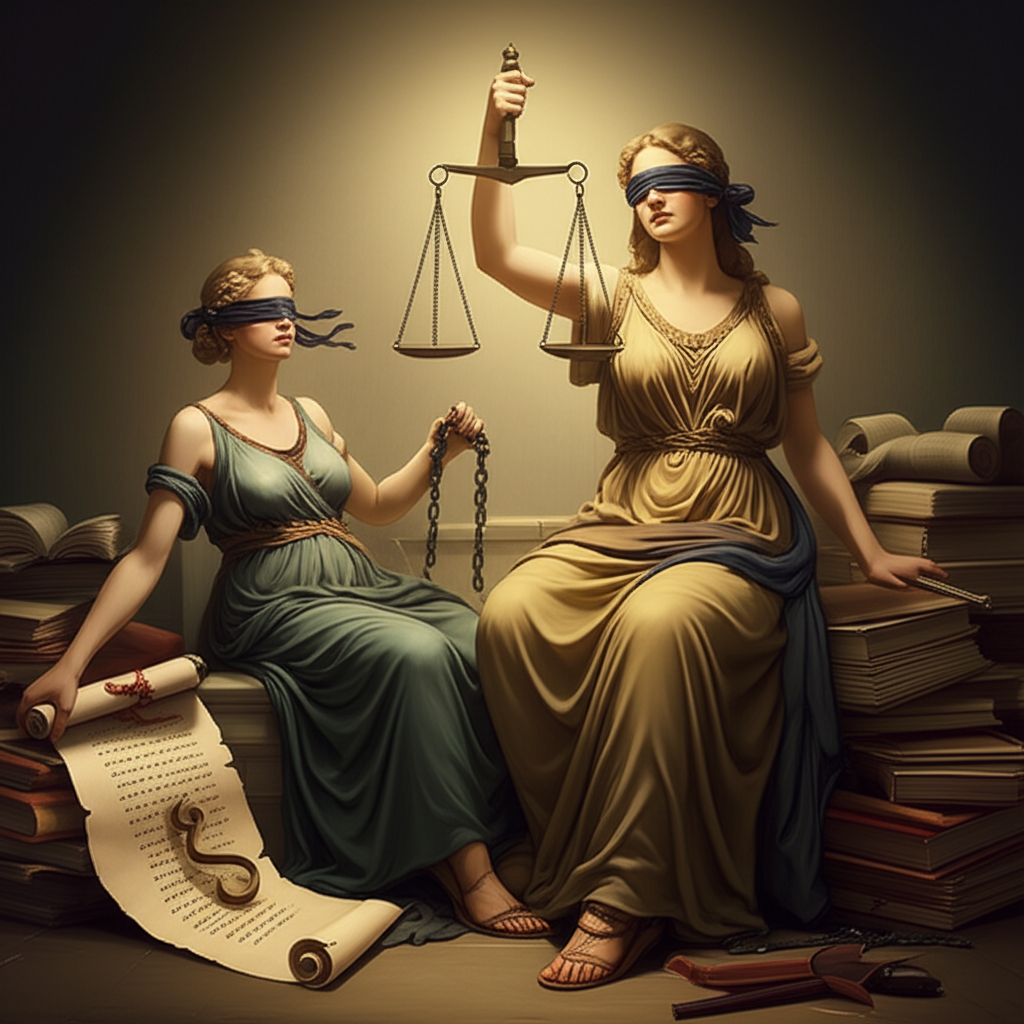
Liberty in the Modern Age: Individual vs. Society
The nineteenth century saw further refinement and challenges to these Enlightenment ideals. John Stuart Mill, a towering figure in liberal philosophy, grappled with the tension between individual liberty and the authority of society and the state.
- The Harm Principle (Mill): In On Liberty, Mill articulated his famous "harm principle," stating that "the only purpose for which power can be rightfully exercised over any member of a civilized community, against his will, is to prevent harm to others." This principle established a clear boundary for the legitimate exercise of societal or governmental Law. For Mill, the greatest threat to liberty was not necessarily state tyranny, but the "tyranny of the majority"—the pressure of social conformity that stifles individuality and independent thought. The free Man must be allowed to pursue his own good in his own way, so long as he does not infringe upon the similar liberty of others. His work highlights the ongoing need for philosophy to defend individual freedoms in an increasingly complex world.
The Enduring Tension: Liberty, Law, and the Nature of Man
From ancient Greece to the modern era, the philosophical basis of liberty reveals a persistent tension: how to reconcile individual freedom with social order, and how Law can serve as both a protector and a potential inhibitor of that freedom.
- Liberty as a Dynamic Concept: Philosophy demonstrates that liberty is not a static ideal, but a dynamic and contested concept, continually re-evaluated in light of changing social, political, and moral landscapes.
- The Role of Law: Whether as a guide to virtue, a divine mandate, a protector of rights, or a necessary constraint, Law remains inextricably linked to the definition and realization of liberty.
- The Nature of Man: Underlying all these discussions is the fundamental question of the nature of Man himself: Are we inherently good, rational, selfish, or communal? The answer profoundly shapes our understanding of what kind of liberty is possible and desirable.
The Great Books of the Western World offer not definitive answers, but rather a profound invitation to engage with these questions ourselves. They teach us that true freedom is not merely the absence of constraint, but a complex interplay of rights, responsibilities, reason, and Law, continuously negotiated and redefined through rigorous philosophical inquiry.
YouTube Video Suggestions:
-
📹 Related Video: What is Philosophy?
Video by: The School of Life
💡 Want different videos? Search YouTube for: ""John Locke's Philosophy of Liberty and Natural Rights Explained""
2. ## 📹 Related Video: KANT ON: What is Enlightenment?
Video by: The School of Life
💡 Want different videos? Search YouTube for: ""Immanuel Kant on Autonomy and Moral Freedom | Philosophy Core Concepts""