

The Enduring Chasm: Exploring the Opposition of Virtue and Vice
The human experience is a perpetual negotiation between choices, intentions, and actions. At the heart of this negotiation lies one of philosophy's most fundamental dichotomies: the opposition of virtue and vice. This isn't merely a spectrum of behavior, but a profound and often stark contrast between what elevates and what diminishes, what builds and what destroys. From ancient Greek thought to modern ethics, philosophers have grappled with the nature of Good and Evil, seeking to understand why some paths lead to flourishing and others to ruin. This article delves into this essential tension, exploring its philosophical roots and its enduring relevance to our understanding of human duty and moral life.
A Fundamental Divide: More Than Just Absence
At first glance, one might assume vice is simply the absence of virtue, a void where goodness should be. However, a deeper look reveals a more active and often aggressive opposition. Vice isn't just a lack; it's often a positive force, a habituated disposition towards actions that are harmful, unjust, or contrary to human flourishing.
Consider the following distinctions:
- Virtue: A moral excellence, a disposition to act in a morally good way, a habit of right action and feeling. It is often seen as a mean between two extremes (Aristotle).
- Vice: A moral flaw or failing, a disposition to act in a morally bad way, a habit of wrong action and feeling. It often represents an excess or deficiency of a particular quality.
The opposition isn't passive; it's a dynamic tension that shapes individual character and societal structures.
Echoes from the Great Books: Ancient Wisdom on Virtue and Vice
The "Great Books of the Western World" offer a rich tapestry of perspectives on this fundamental opposition.
Plato's Ideal Forms and the Soul's Harmony
Plato, in works like The Republic, posited that true virtue is aligned with the eternal Forms of the Good. For him, a virtuous life is one where reason governs the spirited and appetitive parts of the soul, leading to a harmonious and just individual. Vice, conversely, arises from disharmony, where lower desires usurp reason's rightful place, leading to injustice and inner turmoil. The opposition here is between order and chaos within the soul, reflecting the cosmic order of the Forms.
Aristotle's Golden Mean and Habituation
Aristotle, in his Nicomachean Ethics, offers a more practical approach. He defines virtue as a mean between two extremes of vice – an excess and a deficiency. For example, courage is the mean between the vice of foolhardiness (excess) and cowardice (deficiency). Generosity lies between prodigality and stinginess. For Aristotle, virtue is not innate but developed through habituation. The opposition is thus a continuous process of discerning the right action, at the right time, with the right motive, and practicing it until it becomes second nature.
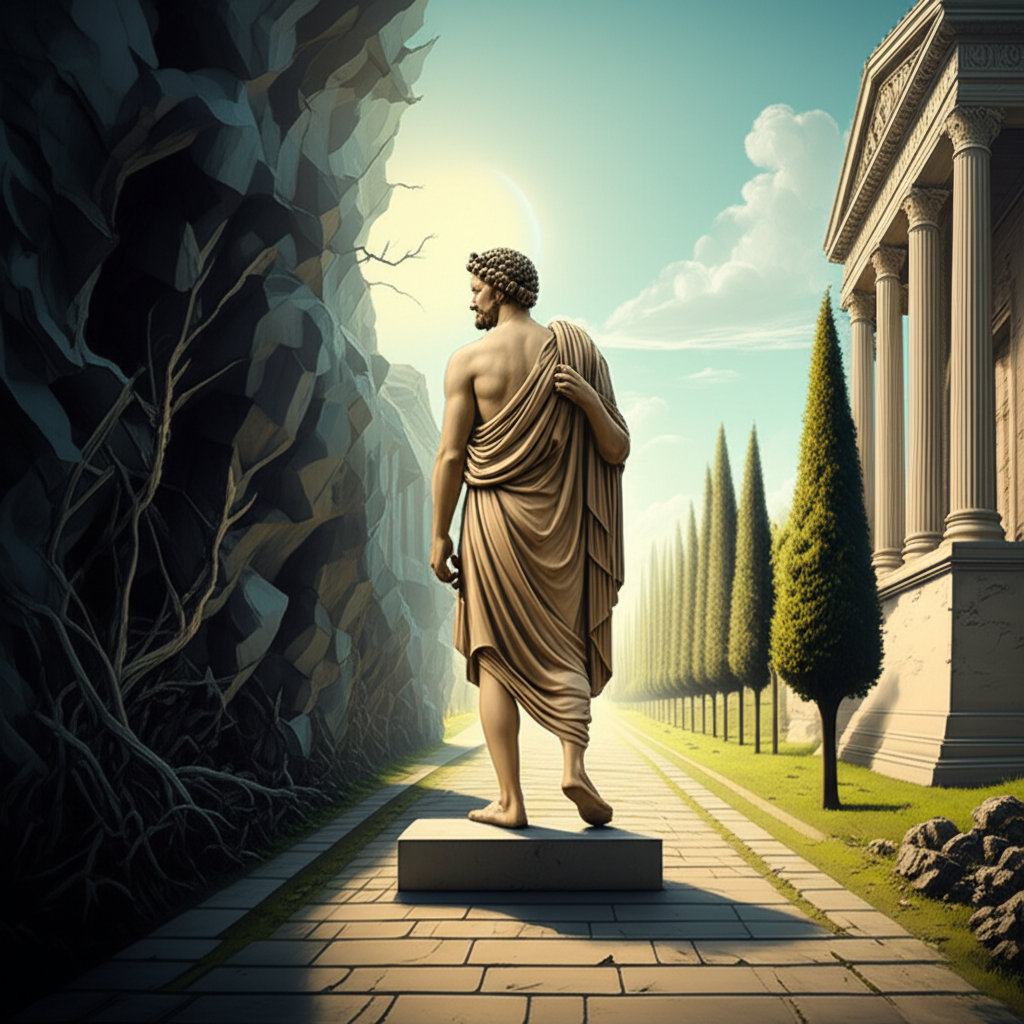
The Moral Imperative: Duty and the Choice Between Good and Evil
The opposition between virtue and vice is not merely an intellectual exercise; it calls us to action. This is where the concept of duty becomes paramount.
Immanuel Kant, a central figure in Enlightenment philosophy, emphasized duty as the foundation of morality. For Kant, an action is truly moral not because of its consequences or a person's inclinations, but because it is done out of duty – a recognition of the moral law. Choosing virtue over vice then becomes a categorical imperative, a universal moral obligation. This perspective highlights the active choice required to align one's will with what is right, even when it is difficult or goes against personal desire.
The Dynamics of Choice:
| Aspect | Virtue | Vice |
|---|---|---|
| Foundation | Reason, moral law, pursuit of the Good | Unchecked desires, ignorance, self-interest |
| Outcome | Flourishing, harmony, justice, inner peace | Suffering, discord, injustice, regret |
| Action | Deliberate, intentional, aligned with duty | Impulsive, self-serving, destructive |
| Habit | Cultivated, strengthens character | Indulged, erodes character |
The Enduring Battle: Virtue, Vice, Good, and Evil in the Modern World
The concepts of Good and Evil are often seen as broader, more encompassing terms for the cosmic or ultimate manifestations of virtue and vice. While virtue and vice describe character traits and habits, good and evil often refer to the ultimate forces or outcomes of these tendencies. The opposition remains stark:
- Good: That which promotes life, truth, beauty, justice, and human dignity.
- Evil: That which causes suffering, destruction, falsehood, injustice, and degradation.
Understanding this opposition is crucial for navigating complex ethical dilemmas, from personal integrity to global challenges. It reminds us that moral choices are not neutral; they tilt the scales towards one side or the other. Our duty, as individuals and as a society, is to cultivate virtue and actively resist vice, thereby striving towards the Good and mitigating Evil.
Key Philosophical Perspectives on Virtue and Vice:
- Platonic Idealism: Virtue as aligning with the Form of the Good, Vice as soul disharmony.
- Aristotelian Ethics: Virtue as the 'golden mean,' cultivated through habit, Vice as excess or deficiency.
- Stoicism: Virtue as living in accordance with nature and reason, Vice as succumbing to passions.
- Christian Theology (Augustine/Aquinas): Virtue as conformity to God's will, Vice (Evil) often seen as a privation of Good.
- Kantian Deontology: Moral action derived from duty and universalizable maxims, prioritizing virtuous intent over outcome.
Ultimately, the opposition of virtue and vice is a timeless framework for understanding the moral landscape of human existence. It's a call to self-reflection, to conscious choice, and to the continuous pursuit of a life well-lived, guided by reason and a sense of duty towards the Good.
**## 📹 Related Video: ARISTOTLE ON: The Nicomachean Ethics
Video by: The School of Life
💡 Want different videos? Search YouTube for: ""Aristotle Nicomachean Ethics virtue vice explained""**
**## 📹 Related Video: ARISTOTLE ON: The Nicomachean Ethics
Video by: The School of Life
💡 Want different videos? Search YouTube for: ""Kant's Ethics of Duty and Categorical Imperatives""**