

The Unyielding Opposition: Liberty's Struggle Against the Specter of Tyranny
The human story, in its grandest sweep and most intimate details, is fundamentally shaped by an enduring conflict: the opposition between liberty and tyranny. This isn't merely a political debate but a profound philosophical struggle, a perpetual tension that defines the very essence of human flourishing and societal structure. From the ancient Greek city-states to the modern global community, thinkers across the ages, whose wisdom is enshrined in the Great Books of the Western World, have grappled with how to secure freedom against the insidious creep of oppressive power. This article explores the core definitions, philosophical underpinnings, and historical manifestations of this vital opposition, emphasizing the critical role of government—an entity designed for protection that often becomes the greatest threat—in mediating or instigating this eternal battle. Understanding this dynamic is not just an academic exercise; it is the bedrock of vigilant citizenship and the preservation of human dignity.
Defining the Poles: What is Liberty?
At its heart, liberty is more than the mere absence of restraint; it is the capacity for self-determination, the freedom to think, speak, and act within a framework that respects the similar rights of others. Philosophers have articulated various facets of this ideal:
- Negative Liberty: Often championed by thinkers like John Locke in his Two Treatises of Government and John Stuart Mill in On Liberty, this refers to freedom from external interference—from arbitrary arrest, censorship, or excessive government control. It is the sphere within which an individual can act without obstruction.
- Positive Liberty: This concept, explored by Rousseau in The Social Contract and later by others, speaks to the freedom to achieve one's potential, often implying the need for certain social and economic conditions, and sometimes requiring government intervention to create those conditions. It is the capacity to be one's own master.
- Civic Liberty: The freedom to participate in the political life of one's community, to have a voice in the laws that govern oneself, a concept deeply rooted in the Athenian ideal discussed by Thucydides.
True liberty, as these great minds suggest, is a delicate balance, a constant negotiation between individual autonomy and the collective good, always wary of the forces that seek to diminish it.
The Shadow of Power: Understanding Tyranny
If liberty is the light of self-determination, tyranny is its suffocating shadow. Tyranny represents the arbitrary and oppressive exercise of power, where the will of a single ruler or a small, unchecked group supersedes the established laws and the rights of the populace. Its characteristics are chillingly consistent across history:
- Arbitrary Rule: Laws are not fixed but subject to the whim of the ruler, creating an environment of fear and unpredictability.
- Suppression of Dissent: Free speech, assembly, and thought are curtailed, often through surveillance, intimidation, and violence.
- Concentration of Power: All significant authority is vested in a few hands, with no effective checks or balances.
- Disregard for Individual Rights: The well-being and dignity of citizens are sacrificed for the supposed stability or ambition of the regime.
Plato, in The Republic, vividly describes the descent from democracy into tyranny, where excessive freedom eventually gives way to a strongman who promises order but delivers servitude. Aristotle, in Politics, meticulously categorizes tyrannical rule as a perversion of monarchy, driven by the ruler's self-interest rather than the common good. Niccolò Machiavelli's The Prince, while often interpreted as a pragmatic guide to acquiring and maintaining power, also serves as a stark blueprint for the methods of a tyrannical ruler, demonstrating how fear and deception can be employed to control a populace.
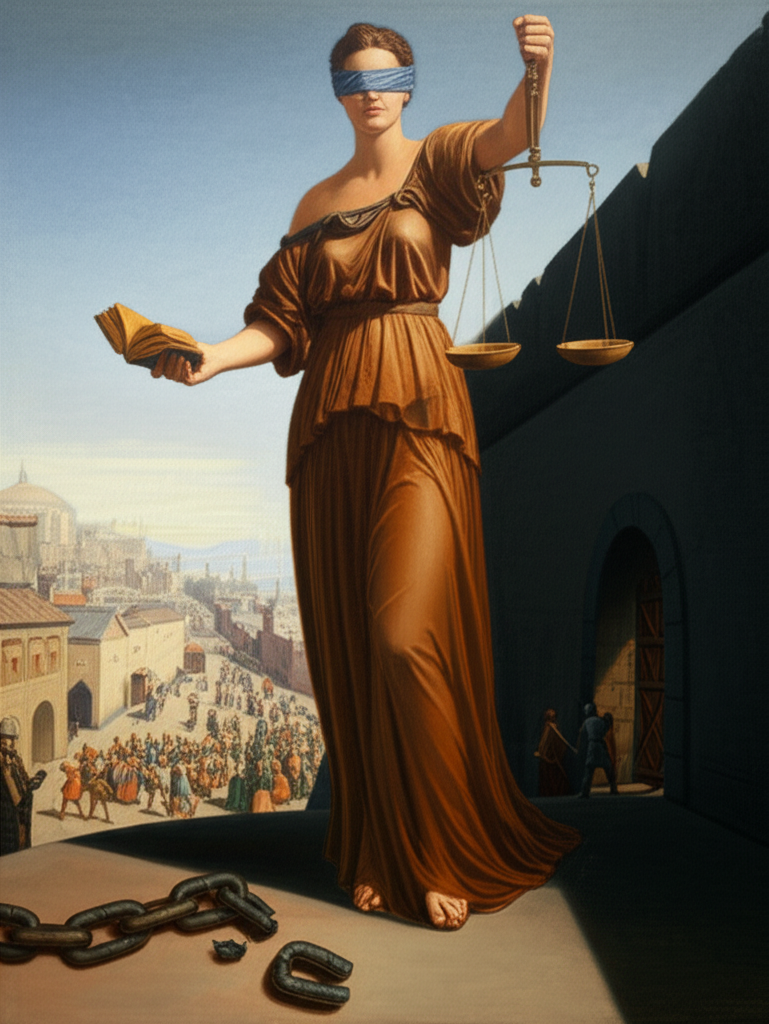
Government: Guardian or Gaoler?
The most profound paradox in the opposition between liberty and tyranny lies in the role of government. We create governments, as social contract theorists like Hobbes, Locke, and Rousseau argued, to escape the "state of nature," to protect our lives, liberties, and property. Yet, this very institution, vested with the power to protect, often becomes the most potent instrument of tyranny.
| Philosophical View | Role of Government | Potential for Tyranny |
|---|---|---|
| Thomas Hobbes | Absolute sovereign to prevent chaos. | Necessary, but can be benevolent or oppressive. |
| John Locke | Protector of natural rights; limited government. | Violation of rights, overreach of power. |
| Jean-Jacques Rousseau | Expresser of the "general will"; direct democracy. | "Tyranny of the majority," forced conformity. |
| Montesquieu | Separation of powers to prevent abuse. | Concentration of legislative, executive, judicial power. |
The crucial insight from these thinkers is that unchecked power, regardless of its origin or initial intent, tends towards corruption. The constant vigilance against government overreach, the demand for accountability, and the establishment of robust systems of checks and balances are not merely political preferences but existential necessities for the preservation of liberty.
The Historical Echoes and Philosophical Frameworks
The Great Books of the Western World are replete with narratives and analyses of this fundamental opposition. From the tragic fall of the Athenian democracy, recounted by Thucydides, to the Roman Republic's transformation into an empire under autocratic rule, history provides a stark testament to the fragility of freedom.
- Plato's Republic: Describes the cycle of political degeneration, culminating in tyranny born from unchecked democracy.
- Aristotle's Politics: Categorizes various forms of government, distinguishing just rule from its tyrannical perversions.
- Cicero's On Duties: Emphasizes the moral obligations of leaders and citizens to uphold justice and resist oppression.
- John Locke's Two Treatises of Government: Lays the groundwork for limited government, natural rights, and the right of revolution against tyranny.
- Jean-Jacques Rousseau's The Social Contract: Explores the tension between individual freedom and the collective will, and the dangers of a government that fails to embody that will.
- John Stuart Mill's On Liberty: Argues for the protection of individual thought and expression against both government and societal tyranny.
These texts, spanning millennia, offer not just historical accounts but a philosophical toolkit for understanding the dynamics of power and the constant struggle to maintain the delicate balance required for a free society.
Connecting the Concepts: The Dynamic Opposition
The opposition between liberty and tyranny is not a static binary but a dynamic continuum. Societies rarely transition abruptly from perfect freedom to absolute oppression. Instead, the erosion of liberty is often a gradual process, a slow creep of authority, often justified by promises of security, efficiency, or order. The lines can blur, as even well-intentioned government interventions, if unchecked, can lead to an overreach that stifles individual freedoms.
The constant tension demands active participation and critical thought from citizens. It requires an understanding that the preservation of liberty is an ongoing project, demanding vigilance against both overt acts of tyranny and the more subtle, insidious forms of control that can emerge from within democratic structures.
Practical Implications and Modern Relevance
In our contemporary world, the lessons embedded in the Great Books remain acutely relevant. We witness the opposition between liberty and tyranny playing out in various forms:
- The rise of authoritarian regimes that suppress dissent and manipulate information.
- The debate over digital surveillance and data privacy versus national security.
- The challenges to democratic institutions from populism and political polarization.
- The struggle for human rights against oppressive states and non-state actors.
The philosophical frameworks bequeathed to us by Plato, Aristotle, Locke, Mill, and others provide the intellectual tools necessary to analyze these complex issues, to discern the subtle encroachments on liberty, and to advocate for a just and free society. The fight for liberty is never truly won; it is a perpetual engagement with the forces of tyranny, demanding constant re-evaluation and commitment.
Conclusion: The Enduring Vigilance
The opposition between liberty and tyranny is arguably the most fundamental and persistent theme in political philosophy. It is a struggle that defines human history, shapes the character of nations, and dictates the quality of individual lives. The insights gleaned from the Great Books of the Western World remind us that liberty is not a given; it is a precious and fragile achievement, constantly under threat from the inherent human tendency towards power and the potential for government overreach. To ignore this opposition is to invite the very tyranny we seek to avoid. Instead, through informed discourse, active participation, and a deep appreciation for the philosophical foundations of freedom, we must remain eternally vigilant, ensuring that the light of liberty continues to shine against the encroaching shadows of oppression.
YouTube Video Suggestions:
-
📹 Related Video: PLATO ON: The Allegory of the Cave
Video by: The School of Life
💡 Want different videos? Search YouTube for: "Plato's Republic: The Cycle of Regimes from Democracy to Tyranny"
2. ## 📹 Related Video: ARISTOTLE ON: The Nicomachean Ethics
Video by: The School of Life
💡 Want different videos? Search YouTube for: "John Locke and the Social Contract: Foundations of Liberty and Limited Government"