

The Indispensable Cornerstone: Why Truth is Necessary for Knowledge
Knowledge, properly understood, is inextricably bound to truth. It is not merely a collection of beliefs, however strongly held, but a justified true belief. This article explores the necessity of truth as a foundational principle for acquiring genuine knowledge, distinguishing it from mere opinion or contingent assertions, drawing insights from the philosophical tradition enshrined in the Great Books of the Western World. Without truth, knowledge collapses, leaving us adrift in a sea of subjective impressions.
The Inescapable Link: Knowledge Beyond Mere Belief
From the earliest philosophical inquiries, thinkers have grappled with the distinction between merely believing something and knowing it. It is one thing to assert that the sun revolves around the Earth, as was once widely believed; it is quite another to know the Earth orbits the sun. The history of philosophy, particularly in the epistemological tradition, reveals a persistent quest for certainty, for a grounding that elevates our understanding beyond mere conjecture. The enduring insights from Plato, Aristotle, and later luminaries confirm that this elevation hinges critically on the presence of truth.
Defining Our Terms: Truth, Knowledge, and Belief
Before delving deeper into the necessity of truth, it is crucial to establish clear definitions for our core concepts:
- Belief: A mental assent to a proposition; a conviction that something is true. Beliefs can be strong or weak, justified or unjustified, and, crucially, they can be true or false. One can sincerely believe something that is demonstrably untrue.
- Truth: In its most common and robust understanding, truth refers to the correspondence of a statement or proposition with reality. A statement is true if things are as it says they are. As Aristotle might suggest, "To say of what is that it is not, or of what is not that it is, is false; while to say of what is that it is, and of what is not that it is not, is true."
- Knowledge: Often defined as justified true belief. This definition, famously explored in Plato's Theaetetus, posits that for a belief to qualify as knowledge, it must satisfy three conditions: it must be believed, it must be true, and it must be adequately justified. The "truth" component is the linchpin.
Let us summarize these distinctions:
| Concept | Definition | Relationship to Truth |
|---|---|---|
| Belief | Mental assent to a proposition | Can be true or false; does not require truth |
| Truth | Correspondence of a statement with reality | The standard by which knowledge is measured |
| Knowledge | Justified True Belief | Requires truth as an indispensable necessary condition |
The Necessity of Truth: More Than Mere Coincidence
The concept of necessity and contingency is vital here. A necessary truth is one that must be true; its denial leads to a contradiction (e.g., "All bachelors are unmarried men"). A contingent truth is one that happens to be true but could have been otherwise (e.g., "It is raining outside right now").
For knowledge, truth is not merely a contingent feature; it is a necessary one. One cannot know what is false. If I claim to know that the Earth is flat, and it turns out the Earth is spherical, then I did not know it was flat; I merely believed it was, and my belief was false. My belief, however strongly held or well-justified by my limited observations, failed the ultimate test of correspondence with reality.
This principle — that knowledge demands truth — is fundamental. It underpins René Descartes' quest for indubitable certainty in his Meditations, where he systematically doubted all beliefs that could possibly be false to arrive at foundational truths. For Descartes, genuine knowledge had to be impervious to doubt, and thus, necessarily true.
Truth's Role in Distinguishing Knowledge from Opinion
Without truth as a necessary condition, the distinction between profound insight and baseless opinion dissolves. If a belief could be considered knowledge even if false, then all beliefs, however absurd, could potentially qualify. This leads inevitably to a debilitating relativism, where all assertions hold equal intellectual weight, and the very idea of progress in understanding becomes meaningless.
Plato, through his allegory of the cave, vividly illustrated this predicament. The prisoners, mistaking shadows for reality, held beliefs that were contingent upon their limited perception and utterly devoid of truth regarding the world outside. True knowledge lay in apprehending the Forms, the ultimate realities, which are inherently true. The pursuit of knowledge, therefore, is the pursuit of what is, not merely what is thought to be or appears to be.
The Perils of Contingency: When Truth is Absent
To build our understanding on beliefs that lack truth is to build on sand. Consider the implications of a society that bases its medical practices on false beliefs about disease, or its legal system on false accounts of events. The consequences are dire. While the objects of knowledge can often be contingent facts (ee.g., "The cat is on the mat"), the proposition that the cat is on the mat, if it is to be known, must be true at the moment of knowing. If the cat is, in fact, under the bed, then my belief that it is on the mat, however justified by a fleeting glimpse, cannot constitute knowledge.
The danger lies in mistaking well-justified but ultimately false beliefs for genuine knowledge. History is replete with examples of such errors, from Ptolemaic astronomy to phlogiston theory. These were not knowledge but sophisticated, yet ultimately untrue, theories. Their eventual falsification underscored the necessity of truth for any claim to knowledge to endure.
Foundational Principles and the Pursuit of Knowledge
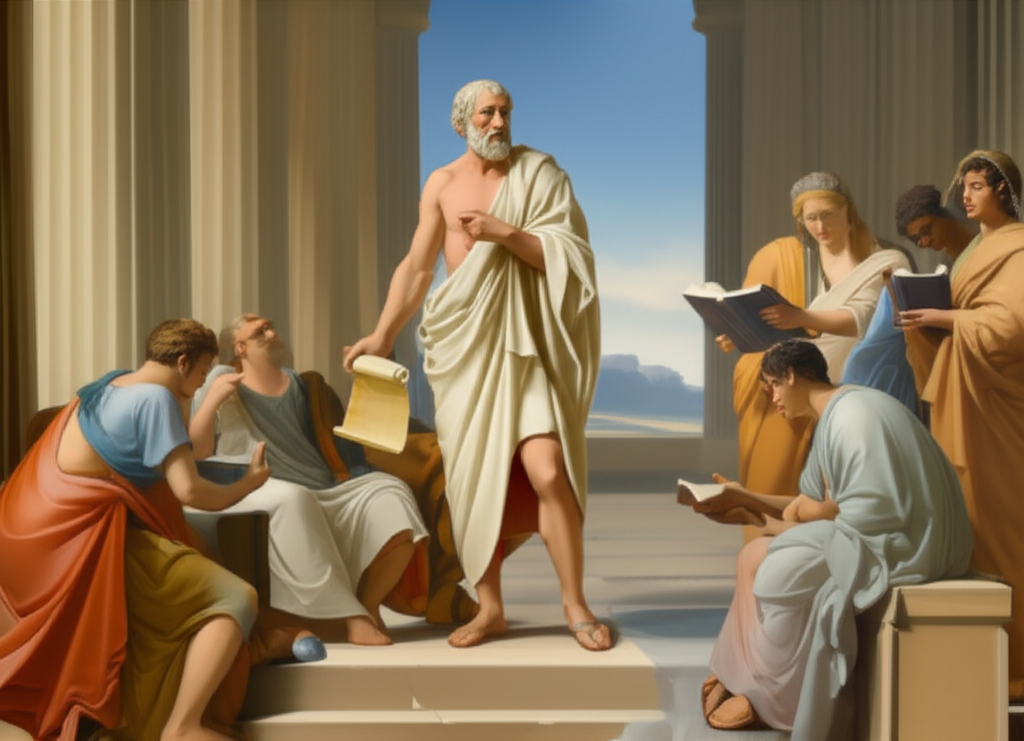
The Great Books of the Western World are a testament to humanity's relentless pursuit of truth. From Aristotle's Principle of Non-Contradiction, which posits that a statement cannot be both true and false at the same time and in the same respect, to the Enlightenment thinkers' emphasis on reason and empirical observation, the underlying assumption is always that truth is discoverable and that genuine knowledge is its apprehension.
The scientific method itself is a structured pursuit of truth, employing observation, hypothesis, experimentation, and verification to arrive at conclusions that correspond to reality. It acknowledges the contingency of many observations but insists on the necessity of truth for any scientific claim to be considered knowledge.
Conclusion: The Indispensable Cornerstone
In conclusion, the relationship between truth and knowledge is not one of mere association but of fundamental necessity. Truth is the indispensable principle upon which all genuine knowledge rests. Without it, our beliefs, however well-justified or sincerely held, remain mere opinions, vulnerable to the shifting sands of contingency and error. The philosophical tradition, from antiquity to modernity, consistently affirms that to know is to grasp what is true, making truth the ultimate standard and the unwavering anchor in our intellectual journey.
📹 Related Video: PLATO ON: The Allegory of the Cave
Video by: The School of Life
💡 Want different videos? Search YouTube for: ""Plato's Theory of Knowledge Explained""
📹 Related Video: ARISTOTLE ON: The Nicomachean Ethics
Video by: The School of Life
💡 Want different videos? Search YouTube for: ""The Problem of Justified True Belief Gettier Cases""