

The Indispensable Foundation: Why Truth is Necessary for Knowledge
Knowledge, in its purest form, stands as one of humanity's most cherished pursuits. Yet, what exactly constitutes knowledge? And what is the role of truth within its very fabric? For Henry Montgomery, the answer is unequivocal: truth is not merely a desirable attribute of knowledge but an absolute, non-negotiable necessity. One cannot, by definition, know that which is false. This article explores the profound and inherent link between truth and knowledge, asserting that truth serves as the fundamental principle upon which all genuine understanding must rest, distinguishing it from mere belief or opinion. We will delve into the necessity of this connection, contrasting it with the contingency of belief, drawing on the enduring wisdom found within the Great Books of the Western World.
The Epistemological Imperative: Defining Knowledge and Truth
To understand the necessity of truth for knowledge, we must first clarify what we mean by these terms. Philosophy, from its earliest inquiries, has grappled with these definitions, seeking to establish a rigorous framework for understanding.
Beyond Mere Belief: The Platonic Legacy
Ancient Greek philosophers, particularly Plato, laid crucial groundwork by distinguishing knowledge from mere opinion or belief. In works like the Theaetetus, Plato famously explored the concept of knowledge as "justified true belief." While the "justified true belief" (JTB) account has faced challenges (e.g., Gettier problems), its core insight — that knowledge requires truth — remains largely uncontested. A belief, however strongly held or well-justified, cannot be considered knowledge if it turns out to be false. One might believe the earth is flat, and even justify that belief with selective observations, but one cannot know it, because it is not true.
Truth as Correspondence: A Foundational Principle
While various theories of truth exist (coherence, pragmatic, constructivist), the most intuitive and enduring principle that underpins the necessity of truth for knowledge is the correspondence theory. This view posits that a statement is true if and only if it corresponds to reality or to the facts. When we claim to "know" something, we are asserting that our understanding accurately reflects an objective state of affairs. This direct relationship between our cognitive state and the world itself is what gives truth its indispensable role. Without this correspondence, our "knowledge" would be nothing more than internal fabrication, detached from reality.
Necessity, Contingency, and the Fabric of Understanding
The philosophical distinction between necessity and contingency is vital in understanding why truth is an essential component of knowledge, rather than an accidental one.
The Role of Necessity in Epistemology
A necessary truth is one that must be true; its negation is impossible. For instance, "all bachelors are unmarried" is a necessary truth. In epistemology, the necessity of truth for knowledge means that the relationship is not arbitrary or optional. It is not contingent upon circumstances or individual perspectives. It is a logical and conceptual necessity: knowledge, by its very definition, cannot accommodate falsehood. If an assertion is false, it simply cannot be known. This is a profound principle that sets knowledge apart from mere assertion or conviction.
When Beliefs Fall Short: The Problem of Contingent "Knowledge"
Consider a scenario where someone believes something that happens to be true, but their justification is flawed or accidental. For example, a clock stopped at 12:00 might lead someone to believe it is 12:00, and if it is 12:00, their belief is true. However, we would hesitate to say they know it is 12:00, because their belief's truth is contingent upon a broken clock coincidentally showing the correct time. The truth of their belief is accidental relative to their justification. Knowledge demands a non-contingent connection between belief and truth, mediated by robust justification.
The Unwavering Principle: Why Falsehood Cannot Be Known
The assertion that one cannot know something that is false is not a mere linguistic convention; it reflects a fundamental principle of rational thought and engagement with reality. To "know" X implies X is true. If X is false, then one does not know X. One may believe X, or think X, or even be convinced of X, but one does not know X.
Here are the key aspects of truth's necessity for knowledge:
- Veridicality: Knowledge inherently demands accuracy. To know is to grasp reality as it is, not as we wish it to be or mistakenly perceive it.
- Justification: Truth grounds genuine justification. While one can have justification for a false belief, that justification is ultimately flawed or insufficient to confer knowledge. The justification for knowledge must reliably lead to truth.
- Reliability: A system or method that consistently produces false "knowledge" is not reliable. The very purpose of seeking knowledge is to acquire accurate information about the world, which inherently presupposes the pursuit of truth.
Philosophical Echoes: From Ancient Principles to Modern Insights
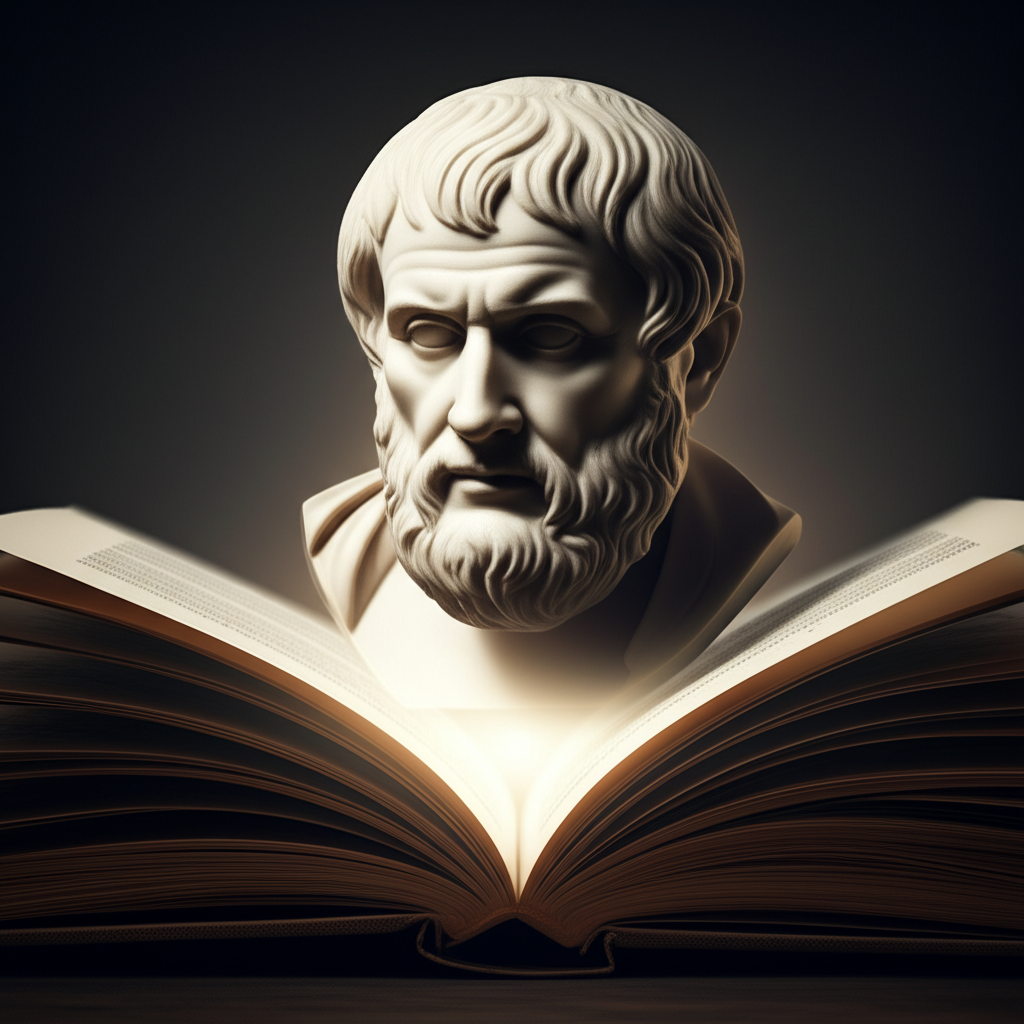
The necessity of truth for knowledge is a recurring theme throughout the Great Books. Aristotle, in his logical treatises, established the foundational laws of thought, including the law of non-contradiction, which implicitly upholds the coherence and truthfulness required for rational discourse and knowledge. Descartes, in his quest for indubitable certainty, sought foundational truths upon which all other knowledge could be built, demonstrating an acute awareness that knowledge must be grounded in what is undeniably true. Even Kant, in his exploration of synthetic a priori judgments, wrestled with how certain universal and necessary truths about the world could be known, further cementing the idea that knowledge is tied to what is genuinely true, not merely what appears to be so. These thinkers, across centuries, underscore the enduring principle that truth is the bedrock, not the ornamentation, of knowledge.
Conclusion: The Unshakeable Bedrock of Cognition
In the grand tapestry of human understanding, truth is not an optional thread but the very warp and weft that gives the fabric of knowledge its strength and integrity. The necessity of truth for knowledge is a foundational principle, distinguishing genuine understanding from mere opinion, speculation, or error. Without truth, knowledge collapses into subjective whim or fortunate coincidence. Our pursuit of knowledge, therefore, is inherently a pursuit of truth – a quest to align our minds with the objective realities of the world. As Henry Montgomery asserts, to truly know is to apprehend what is genuinely true; anything less is simply not knowledge.
📹 Related Video: PLATO ON: The Allegory of the Cave
Video by: The School of Life
💡 Want different videos? Search YouTube for: ""Plato Theaetetus Explained" or "Justified True Belief Philosophy""