

The Indispensable Core: Why Truth is a Non-Negotiable for Knowledge
Summary: At the heart of all genuine inquiry and understanding lies an unshakeable principle: knowledge, by its very definition, demands truth. To "know" something is to apprehend a reality that is; anything less is mere belief, opinion, or error. This article explores why truth is not a contingent add-on but a fundamental necessity for knowledge, drawing from the rich lineage of philosophical thought that underpins the Great Books of the Western World. We dissect the crucial distinction between belief and knowledge, illustrating how the presence of truth transforms our understanding from mere conjecture into solid ground.
The Foundations of Understanding: Differentiating Belief from Knowledge
The journey toward understanding often begins with a simple question: What do we truly know? This query immediately forces us to confront the delicate yet profound distinction between what we believe to be true and what is true. For centuries, philosophers, from Plato onward, have grappled with this very essence. A belief can be held with conviction, it can be widely accepted, and it can even be justified by various reasons, yet still be utterly false.
Consider a person who firmly believes the Earth is flat. They might have justifications – it looks flat, ancient texts suggest it, etc. Yet, their belief, however strong or justified, does not constitute knowledge because it fails the most fundamental test: it is not true.
Key Distinction:
| Feature | Belief | Knowledge |
|---|---|---|
| Core | Mental assent to a proposition | Apprehension of a truth |
| Truth | Can be true or false | Must be true |
| Justification | Can be justified (or not) | Typically requires justification |
| Relation to Reality | May or may not correspond to reality | Must correspond to reality |
| Status | Subjective mental state | Objective grasp of a fact |
This table highlights that while justification is often a component of knowledge (the "justified true belief" model), it is the truth component that is truly non-negotiable. Without truth, all the justification in the world leads only to sophisticated error, not to knowledge.
The Necessity of Truth: A Core Philosophical Principle
The assertion that truth is necessary for knowledge is not merely a semantic quibble; it is a foundational principle upon which much of Western philosophy, science, and rational inquiry is built. When we speak of necessity, we mean something that must be the case for a given outcome to obtain, as opposed to contingency, which refers to something that happens to be the case but could have been otherwise.
For knowledge, truth is a condition of necessity. It is impossible to "know" something that is false. If I claim to know that 2 + 2 = 5, my claim is immediately invalidated by the falsity of the statement. What I possess is a misunderstanding, an error, or a false belief, but certainly not knowledge.
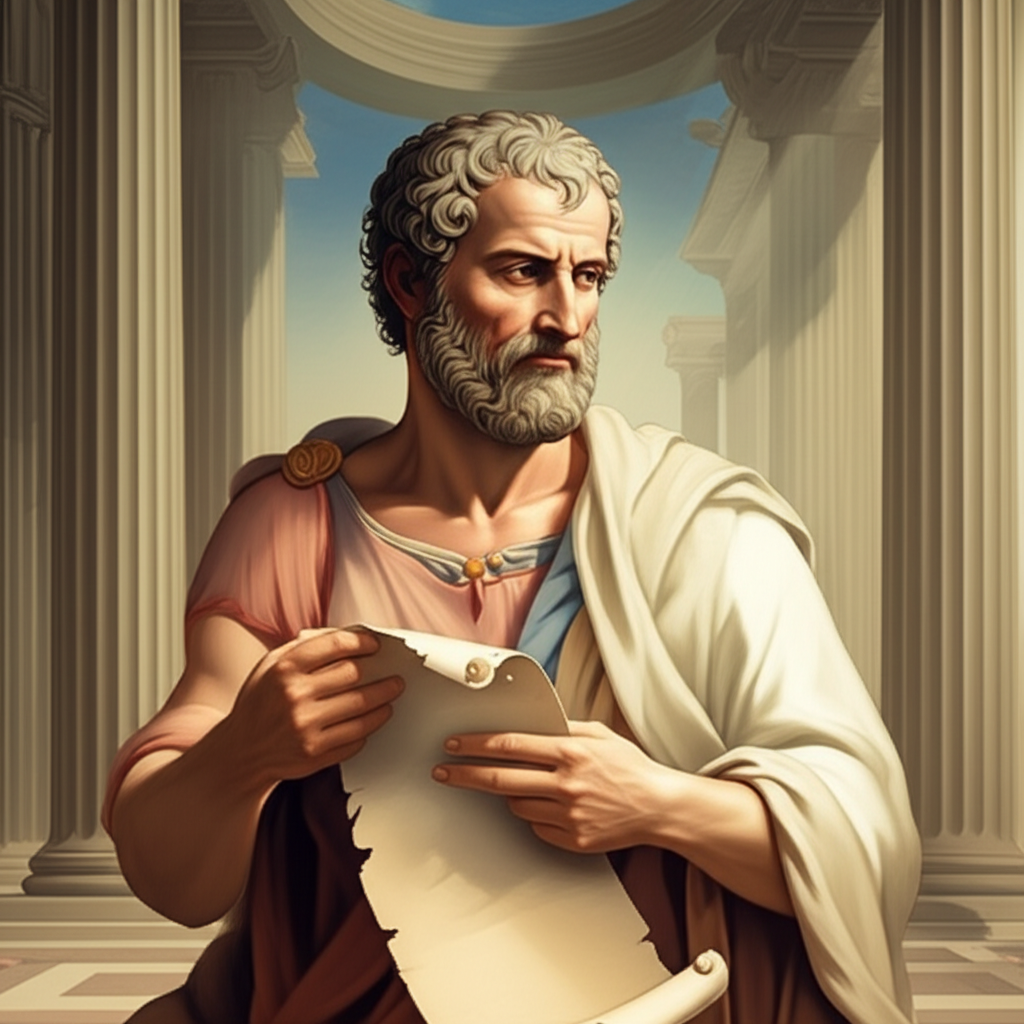
This concept resonates through the works of the Great Books. Plato, in his pursuit of Forms, sought an unchanging, eternal truth as the object of genuine knowledge, contrasting it with the fleeting, often deceptive world of sensory experience and opinion. Aristotle, with his rigorous logical systems, aimed to establish principles that would lead to demonstrably true conclusions, recognizing that the validity of an argument was only as good as the truth of its premises. Descartes, in his quest for indubitable certainty, stripped away all that could be doubted, seeking foundational truths upon which all other knowledge could be securely built.
The pursuit of knowledge is, therefore, inherently the pursuit of truth. To detach knowledge from truth would be to render it meaningless, dissolving it into a sea of subjective opinions where no claim holds more weight than another. Such a scenario would undermine the very fabric of rational discourse, scientific advancement, and moral reasoning.
Implications of Severing Truth from Knowledge
Imagine a world where truth is not a prerequisite for knowledge. What would be the consequences?
- Erosion of Rational Discourse: Arguments could not be evaluated on their merits. If a false statement could be "known," then any assertion would be equally valid, leading to intellectual chaos.
- Paralysis of Scientific Progress: Science is fundamentally about discovering truths about the natural world. If a theory could be considered "knowledge" even if it were false, there would be no impetus for experimentation, falsification, or refinement.
- Moral Relativism and Nihilism: If there is no objective truth about what is good or right, then moral "knowledge" becomes entirely subjective. This can lead to a breakdown of shared ethical frameworks and a sense of meaninglessness.
- Inability to Learn from Experience: Learning involves correcting false beliefs and replacing them with true ones. If truth isn't necessary, then error can persist indefinitely under the guise of "knowledge."
The Depth of Truth's Embrace: Beyond Simple Justification
While the "justified true belief" (JTB) account of knowledge has faced challenges (notably the Gettier problems, which show that one can have a justified true belief without truly having knowledge), these challenges do not undermine the necessity of truth. Rather, they suggest that truth, while necessary, might not be a sufficient condition, and that genuine knowledge requires something more than mere justification to connect the belief robustly to the truth.
Regardless of the nuances of what constitutes "adequate justification" or the "right kind of connection" to truth, the bedrock remains: the object of knowledge must be true. Truth serves as the ultimate arbiter, the final court of appeal against which all claims to knowledge are measured. It is the North Star guiding our intellectual voyages, ensuring that our discoveries lead us to a deeper, more accurate understanding of reality, rather than merely more elaborate fictions.
In the grand tradition of philosophical inquiry, from the Socratic dialogues to contemporary epistemology, the enduring quest has been for understanding that is not merely plausible or convenient, but genuinely true. This pursuit reflects a fundamental human drive to grasp reality as it is, to build a coherent and accurate picture of the world, and to live in accordance with that understanding. The necessity of truth for knowledge is, therefore, not just a philosophical dictum, but a profound affirmation of our capacity for genuine insight and wisdom.
YouTube:
- "What is Knowledge? - Plato's Theaetetus Explained"
- "The Justified True Belief Theory of Knowledge"
📹 Related Video: What is Philosophy?
Video by: The School of Life
💡 Want different videos? Search YouTube for: "The Necessity of Truth for Knowledge philosophy"