

The Necessity of Truth for Knowledge: A Foundational Inquiry
In the vast landscape of philosophical inquiry, few concepts are as fundamental, yet as frequently debated, as the relationship between truth and knowledge. This article asserts a foundational principle: truth is not merely a desirable attribute of knowledge, but an indispensable, intrinsic component without which genuine knowledge cannot exist. To "know" something that is false is a logical impossibility, a contradiction in terms that undermines the very edifice of understanding. We shall explore why truth holds this position of necessity, distinguishing it from mere belief or opinion, and how this understanding is crucial for any meaningful pursuit of wisdom.
Defining Our Terms: Truth, Knowledge, and Belief
Before we can properly grasp the necessity of truth for knowledge, we must first clarify what we mean by these profound terms. The precision of our definitions is paramount.
What is Knowledge?
For centuries, philosophers have grappled with the definition of knowledge. A widely accepted, though not unchallenged, starting point originates with Plato's discussion in Theaetetus, where knowledge is often characterized as justified true belief.
- Belief: To believe something is to hold it as true. One can believe something that is false, or something that is true. Belief is a psychological state.
- Truth: The correspondence of a statement or belief with reality. If I believe the sky is blue, and it genuinely is blue, then my belief is true.
- Justification: The reasons or evidence one has for holding a belief. This is what elevates a mere true belief above lucky guesswork.
Without the "true" component, even a well-justified belief remains, at best, a sophisticated error, not knowledge.
What is Truth?
The nature of truth itself is a sprawling philosophical debate, but for our purposes, we can broadly understand it in terms of:
- Correspondence Theory: A statement is true if it corresponds to a fact or state of affairs in the world. This is the most intuitive understanding.
- Coherence Theory: A statement is true if it coheres with a larger system of beliefs or propositions.
- Pragmatic Theory: A statement is true if it is useful or works in practice.
Regardless of which theory one leans towards, the common thread is that truth represents a correct representation or alignment with reality, or a consistent system that accurately models it. It is the antithesis of falsehood.
The Inescapable Necessity of Truth
The core of our argument rests on the idea that truth is not contingent to knowledge—something that might or might not be present—but rather necessary.
The Logical Impossibility of False Knowledge
Consider the statement: "Henry knows that the Earth is flat." If the Earth is, in fact, spherical (as our current understanding dictates), then Henry cannot know that it is flat. He might believe it is flat, he might be convinced it is flat, he might even have justifications for believing it is flat (e.g., outdated texts, personal observations), but he cannot know it, because the object of his supposed knowledge is false.
This is not a semantic quibble; it is a fundamental logical point. To assert "I know X, but X is false" is to utter a self-contradiction. The very definition of knowledge implicitly contains the truth of its object. If something is false, it cannot be known, only mistakenly believed. This is a direct consequence of foundational philosophical principles, such as Aristotle's Principle of Non-Contradiction from his Metaphysics, which states that a proposition and its negation cannot both be true at the same time and in the same respect. If knowledge requires truth, then false knowledge is an absurdity.
Knowledge vs. Opinion: A Critical Distinction
Ancient Greek philosophers, particularly Plato, were meticulous in distinguishing episteme (knowledge) from doxa (opinion or belief). Opinion, even if true, lacks the certainty and grounding that episteme demands. One might stumble upon a true opinion through sheer luck, but this does not constitute knowledge.
| Feature | Knowledge (Episteme) | Opinion (Doxa) |
|---|---|---|
| Truth | Necessarily true | Can be true or false |
| Justification | Well-reasoned, evidence-based, robust | May be based on hearsay, emotion, or weak evidence |
| Stability | Enduring, resistant to counter-argument with ease | Fickle, easily swayed, prone to change |
| Relation to Reality | Direct apprehension of reality/facts | Indirect, potentially inaccurate representation of reality |
This table underscores that truth is the bedrock. Without it, even the most elaborate justification leads to a well-supported falsehood, which is fundamentally distinct from knowledge.
Beyond Mere Coincidence: Why Truth Isn't Contingent
One might argue that a person could hold a true belief, and that belief could be justified, yet still not constitute knowledge due to some contingent factor. This is the essence of the "Gettier Problem," a modern philosophical puzzle that challenges the "justified true belief" definition. However, even Gettier cases, which involve lucky true beliefs that are justified in unusual ways, do not negate the necessity of truth. Instead, they highlight that truth alone, even when justified, might not be sufficient for knowledge without a proper, non-accidental connection between the justification and the truth.
The truth itself remains the constant, non-negotiable element. What Gettier cases illustrate is the difficulty in establishing the proper relationship between justification and that necessary truth. They push us to refine our understanding of justification, ensuring it genuinely tracks truth, rather than merely coinciding with it.
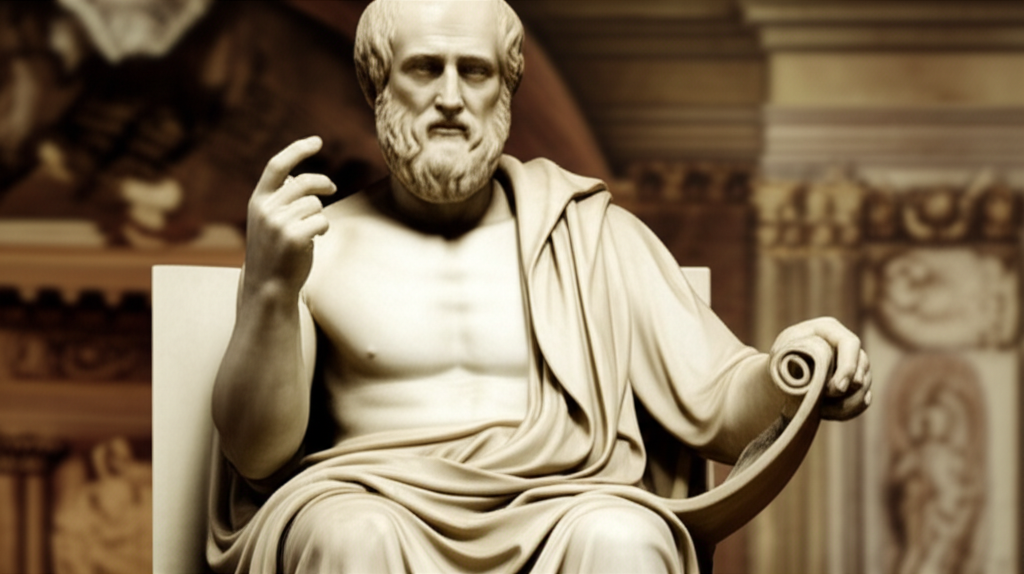
The Principle of Truth as a Foundation for Inquiry
The necessity of truth is not merely an abstract logical point; it is a vital principle that underpins all forms of rational inquiry—from the rigorous proofs of mathematics to the empirical observations of science, and the nuanced arguments of philosophy.
- Scientific Inquiry: Every scientific experiment, every hypothesis tested, every theory proposed, operates on the assumption that there is an objective truth about the natural world to be discovered. If truth were optional, scientific progress would be an illusion, and our models of reality would be arbitrary.
- Philosophical Discourse: The very act of engaging in philosophical debate, of constructing arguments and critiquing positions, presupposes that there are better (truer) and worse (falser) ways of understanding existence, ethics, and knowledge itself. Without truth as a guiding star, philosophy devolves into mere rhetoric or subjective preference.
- Everyday Life: From knowing that the stove is hot to knowing the way to work, our daily lives are built upon a foundation of countless truths. We make decisions based on what we believe to be true, and the consequences often reveal the accuracy (or inaccuracy) of those beliefs.
The pursuit of knowledge is, at its heart, the pursuit of truth. To abandon truth as a necessary component of knowledge would be to abandon the very purpose of intellectual endeavor. It would be to claim that error, if sufficiently well-argued or widely believed, could somehow become knowledge. This is a path to intellectual nihilism, where all assertions hold equal weight, and genuine understanding becomes impossible.
Conclusion
The relationship between truth and knowledge is one of profound necessity. Knowledge, properly understood, is not merely a collection of beliefs, however well-justified, but a secure grasp of what is. The principle that truth is indispensable for knowledge is a cornerstone of rational thought, a bulwark against intellectual chaos, and the very engine of human progress. Without truth, knowledge is an empty vessel, and our quest for understanding, a futile endeavor.
📹 Related Video: PLATO ON: The Allegory of the Cave
Video by: The School of Life
💡 Want different videos? Search YouTube for: ""Plato Theaetetus Knowledge Justified True Belief""
📹 Related Video: ARISTOTLE ON: The Nicomachean Ethics
Video by: The School of Life
💡 Want different videos? Search YouTube for: ""Aristotle Metaphysics Principle of Non-Contradiction""