

The Indispensable Framework: Why Law is Necessary for Civil Liberty
A Summary of Liberty's True Foundation
Many conceive of liberty as an absence of constraint, a boundless freedom to act as one wills. Yet, for civil liberty – the freedom enjoyed within a society – this notion is deeply flawed and ultimately self-defeating. True civil liberty does not thrive in a vacuum of law, but rather emerges from and is protected by a robust legal framework. Without the necessity of law, freedom devolves into arbitrary power, leaving the citizen vulnerable to the whims of others and the chaos of the state of nature. This exploration, drawing from the profound insights of the Great Books of the Western World, argues that law is not merely a restriction upon liberty, but its very precondition, providing the order, justice, and predictability essential for individuals to flourish genuinely free.
The Paradox of Freedom and Constraint
At first glance, the assertion that law is necessary for liberty seems counterintuitive, even paradoxical. How can rules, which by their very nature impose constraints, be the bedrock of freedom? This tension is ancient, echoing through the dialogues of Plato and the treatises of Locke. It challenges us to move beyond a simplistic understanding of liberty as mere license and to embrace a more nuanced view: that within a shared human experience, the freedom to act without consequence for others inevitably curtails the freedom of others. Herein lies the fundamental argument for law: it is the mechanism by which individual liberties are reconciled, protected, and elevated from mere possibility to lived reality for all citizens.
Defining Our Terms: Law, Liberty, and the Citizen
To proceed, clarity in our definitions is paramount.
- Law: More than just a collection of statutes, law, in its most profound sense, represents a set of established principles and rules governing the conduct of individuals within a community. It embodies the collective will towards order, justice, and the common good. As Aristotle argued in Politics, a well-ordered polis is governed by law, not by men, for law is "reason unaffected by desire."
- Liberty: We distinguish between natural liberty and civil liberty. Natural liberty, as conceived by thinkers like Locke, is the freedom to do as one pleases within the bounds of natural law, prior to any social contract. Civil liberty, however, is the freedom experienced within a society governed by law – a freedom that is circumscribed but also secured. It is the ability to act without undue interference, secure in one's rights, and protected from the arbitrary power of others or the state itself. John Stuart Mill, in On Liberty, famously grappled with the limits of this societal constraint.
- Citizen: The individual who is a full member of a political community, subject to its laws and entitled to its protections and privileges. The concept of the citizen is inextricably linked to civil liberty, as it implies both rights and responsibilities within a legal framework.
From Chaos to Order: The State of Nature and the Social Contract
The most compelling argument for the necessity of law stems from contrasting a lawless state with a governed society. Philosophers of the social contract tradition vividly illustrate this point:
- Thomas Hobbes and the "War of All Against All": In Leviathan, Hobbes painted a grim picture of the "state of nature" – a condition without government or law. Here, every individual possesses absolute natural liberty, leading inevitably to a "war of all against all." Life, he famously declared, would be "solitary, poor, nasty, brutish, and short." In such a state, there is no security, no property, and thus no meaningful liberty, only constant fear and struggle. The establishment of law, enforced by a sovereign power, becomes a necessity to escape this intolerable contingency of endless conflict.
- John Locke and the Preservation of Rights: Locke, while not as pessimistic as Hobbes, still recognized the inherent insecurity of the state of nature. Even with natural rights to life, liberty, and property, the absence of an impartial judge and an executive power to enforce justice means these rights are constantly at risk. Individuals enter into a social contract to form a government, establishing laws to protect these pre-existing rights, thereby transforming precarious natural liberty into secure civil liberty. The law, for Locke, is the instrument for preserving and enlarging freedom, not diminishing it.
- Jean-Jacques Rousseau and the General Will: Rousseau, in The Social Contract, argued that true freedom is found not in individual license, but in obedience to laws that one has, in a sense, prescribed for oneself through the "general will." By surrendering individual, selfish wills to the collective, citizens achieve a higher form of moral freedom. The law, reflecting the general will, ensures that no one is subject to another's arbitrary will, but only to the rational dictates of the community.
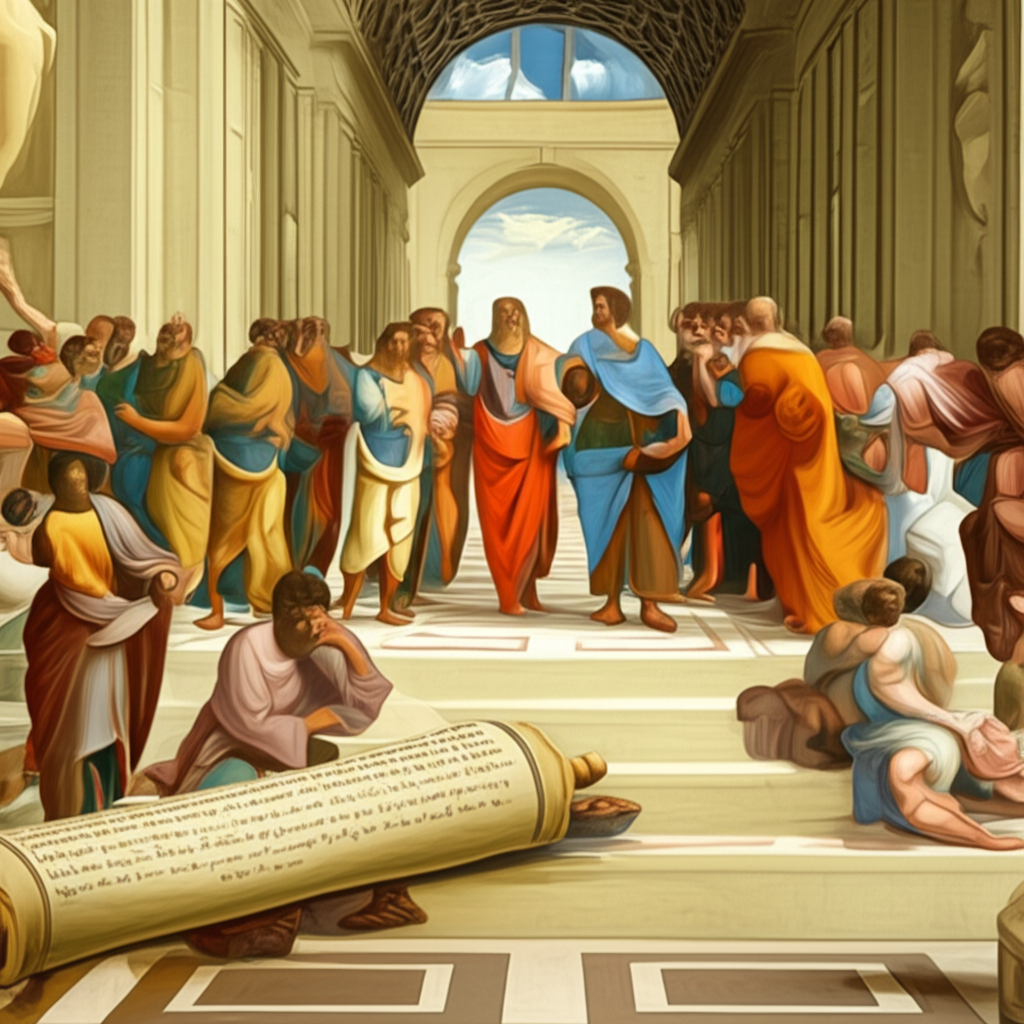
Law as the Guardian of Civil Liberty: Specific Mechanisms
How, precisely, does law safeguard and promote civil liberty?
- Protection from Arbitrary Power: The rule of law means that everyone, from the humblest citizen to the highest official, is subject to the same laws. This prevents despotic rule and ensures that power is exercised according to established, transparent principles, not personal whim. This is the cornerstone of constitutionalism, a concept refined through centuries of Western thought.
- Ensuring Equality and Justice: Laws, when justly applied, ensure that all citizens are treated equally before them. They provide mechanisms for resolving disputes, punishing wrongdoing, and redressing grievances, thereby preventing individuals from taking justice into their own hands, which would inevitably lead back to the state of nature.
- Defining Rights and Responsibilities: Laws clearly delineate what individuals are permitted to do (their rights) and what they are obligated to do (their responsibilities). This clarity fosters a predictable environment where individuals can plan their lives, pursue their interests, and engage in commerce and social interaction without constant fear of infringement or misunderstanding. Without defined rights, liberty is merely an abstract concept, vulnerable to erosion.
- Facilitating Cooperation and Progress: By providing a stable and predictable framework, law enables complex social and economic cooperation. Contracts can be enforced, property rights secured, and public goods managed. This stability is a necessary condition for human flourishing, innovation, and the advancement of civilization.
YouTube: Search for "Social Contract Theory Explained" or "Hobbes Locke Rousseau Comparison"
The Interplay of Necessity and Contingency in Legal Frameworks
The relationship between law and liberty is not static; it is dynamic, shaped by the interplay of necessity and contingency.
- The Necessity of Law: As established, the very existence of some form of governing law is a necessity for any society to move beyond a chaotic state of nature and afford its citizens meaningful civil liberty. Without it, the conditions for freedom simply do not exist. This fundamental need for order, justice, and protection is universal across human societies.
- The Contingency of Specific Laws: While law itself is necessary, the specific content of laws is often contingent – shaped by historical circumstances, cultural values, economic conditions, and the evolving moral compass of a society. What constitutes a just law, or one that optimally balances individual liberty with collective good, is a constant subject of debate and reform. For instance, laws regarding freedom of speech or property ownership have evolved significantly over time, reflecting contingent shifts in philosophical understanding and societal needs. The challenge for citizens and legislators alike is to ensure that these contingent laws continually serve the deeper, necessary purpose of enhancing civil liberty, rather than undermining it.
| Feature | Law (as necessary for Civil Liberty) | Law (as contingent in its specifics) |
|---|---|---|
| Purpose | To establish order, justice, security | To adapt to societal needs, values, and progress |
| Origin | Inherent human need to escape chaos | Historical, cultural, political context |
| Impact on Liberty | Creates the conditions for liberty | Defines the scope and limits of liberty at a given time |
| Nature | Foundational, universal principle | Evolvable, debatable, subject to reform |
The Citizen's Role: Upholding and Shaping the Law
The relationship between law and liberty is not a one-way street; it demands active participation from the citizen. In a truly free society, citizens are not merely subjects of the law but also its authors and guardians. They have a responsibility to:
- Obey Just Laws: Adherence to the legal framework is fundamental to maintaining the order that protects everyone's liberty.
- Critique and Reform Unjust Laws: Drawing inspiration from thinkers like Cicero, who emphasized the moral basis of law, citizens have a right and often a duty to challenge laws that are perceived as unjust, arbitrary, or detrimental to civil liberty. This dynamic engagement ensures that contingent laws remain aligned with the necessary principles of justice and freedom.
- Participate in Governance: Through voting, deliberation, and public discourse, citizens shape the laws that govern them, reinforcing the idea that true liberty involves self-governance.
YouTube: Search for "Rule of Law vs Rule of Men" or "John Stuart Mill On Liberty Summary"
Potential Pitfalls: When Law Undermines Liberty
While law is necessary for liberty, it is crucial to acknowledge that not all laws are just, nor do all legal systems promote freedom. History is replete with examples where law has been perverted into an instrument of oppression.
- Tyranny of the Majority: As Alexis de Tocqueville warned in Democracy in America, even democratically enacted laws can oppress minority groups, demonstrating that the contingency of specific laws must be constantly scrutinized against the necessity of universal justice.
- Authoritarian Regimes: In such systems, laws are merely tools for the powerful, devoid of the principles of equality, due process, and protection of individual rights. Here, law functions as a constraint without offering the reciprocal benefit of civil liberty.
- Over-regulation: Excessive or overly intrusive laws can stifle individual initiative and autonomy, paradoxically diminishing the very liberty they are meant to protect.
These pitfalls underscore the ongoing philosophical and practical challenge: to craft and maintain a legal framework that genuinely serves as the indispensable guardian of civil liberty, rather than its silent assassin.
Conclusion: A Delicate and Enduring Balance
The journey through the philosophical landscape of law and liberty reveals a profound truth: civil liberty is not the absence of law, but its most precious fruit. The necessity of law emerges from the inherent human need for order, security, and justice, offering an escape from the precarious contingency of a lawless existence. For the citizen, law provides the framework within which rights are recognized, responsibilities are understood, and freedom can truly flourish, protected from arbitrary power and the chaos of unbridled self-interest.
The Great Books of the Western World consistently remind us that the crafting of just laws and the vigilant defense of liberty are ongoing endeavors. It is a delicate balance, requiring constant philosophical reflection, civic engagement, and a commitment to the principles that elevate human society above mere survival. In the end, law is not merely a chain that binds us, but the very scaffolding that allows the edifice of civil liberty to stand tall and endure.
📹 Related Video: What is Philosophy?
Video by: The School of Life
💡 Want different videos? Search YouTube for: "The Necessity of Law for Civil Liberty philosophy"