

The Indispensable Framework: Why Law is the Bedrock of Civil Liberty
The relationship between law and liberty often appears paradoxical. Many perceive law as a constraint, an imposition that curtails individual freedom. Yet, a deeper philosophical inquiry reveals an inverse truth: law is not the antithesis of liberty, but its essential precondition. Far from being an optional or contingent feature of a free society, the structured framework of law is a necessary foundation for civil liberty to exist, flourish, and be protected for every citizen. Without the guiding hand of established legal principles, liberty devolves into license, leading not to freedom, but to a precarious state of insecurity and potential tyranny. This exploration, drawing from the enduring insights of the Great Books of the Western World, argues that true freedom is found not in the absence of law, but in its just and equitable application.
Unpacking the Core Concepts: Law, Liberty, and the Citizen
To understand the profound necessity of law for civil liberty, we must first define our terms with precision.
What is Law? More Than Mere Rules
At its most fundamental, law is a system of rules created and enforced by social or governmental institutions to regulate behavior. However, in the context of civil liberty, law transcends simple regulation. It embodies:
- Order and Predictability: Law establishes a predictable framework for social interaction, allowing individuals to anticipate consequences and plan their lives.
- Justice and Fairness: Ideally, law aims to codify principles of justice, ensuring fair treatment and impartial dispute resolution.
- Protection of Rights: Crucially, law defines and protects the rights and responsibilities of individuals, safeguarding them from arbitrary power or the infringement of others.
- The General Will (Rousseau) or Reason (Plato/Aristotle): Philosophers have often viewed law as an expression of collective reason or the general will, aiming for the common good rather than individual whims.
What is Liberty? Beyond Unfettered License
Liberty is frequently misunderstood as absolute freedom from all constraint. This "natural liberty," as John Locke might describe it, is a state where individuals are free to do as they please, limited only by their own power. However, such a state, often termed the "state of nature" by Hobbes, quickly descends into a "war of all against all," where life is "solitary, poor, nasty, brutish, and short."
Instead, our focus is on civil liberty:
- Freedom within a Framework: Civil liberty is the freedom to act within the bounds of established laws, without arbitrary interference from government or other individuals.
- Protected Rights: It entails the enjoyment of rights (e.g., speech, assembly, property) that are guaranteed and enforced by law.
- Positive vs. Negative Liberty: While negative liberty (freedom from interference) is crucial, law also enables positive liberty (freedom to achieve one's potential) by creating conditions for education, economic opportunity, and civic participation.
The Citizen: An Individual within a Community
The citizen is not merely an inhabitant but an active member of a political community, endowed with rights and responsibilities. The concept of the citizen implies:
- Membership and Belonging: Being part of a collective governed by shared laws.
- Rights and Duties: Enjoying protections afforded by law, but also owing obedience to just laws and participating in the civic life.
- Equality under Law: The ideal that all citizens are subject to the same laws and treated equally by the legal system.
The Philosophical Argument: Law as a Necessary Condition for Liberty
The historical trajectory of Western thought, from ancient Greece to the Enlightenment, consistently underscores the necessity of law for any meaningful conception of freedom in a political community.
From Chaos to Order: The State of Nature and the Social Contract
Philosophers like Thomas Hobbes and John Locke, though differing in their conclusions, both posited a "state of nature" to illustrate the pre-legal condition of humanity. In this state:
- Hobbes's Leviathan: Without a sovereign power to enforce laws, liberty is a dangerous illusion. Individuals possess an unlimited right to all things, leading to perpetual conflict. The necessity of law, enforced by a powerful state, becomes paramount to escape this brutal existence.
- Locke's Second Treatise: While less pessimistic, Locke still recognized that even in a state of nature, rights (life, liberty, property) are insecure without a common, impartial judge to enforce the "law of nature." Individuals enter into a social contract to form a government, establishing positive laws to protect these natural rights. This transition highlights law's necessity for the secure enjoyment of liberty.
The social contract theory, therefore, posits that individuals willingly surrender some of their unlimited natural liberty in exchange for the security and defined freedoms of civil liberty, which are guaranteed by law. This is not a contingent trade-off that could be easily reversed; it is a necessary move from a state of peril to one of protected freedom.
Law as the Embodiment of Reason and Justice
Plato, in his Republic and Laws, and Aristotle, in his Politics, both argued for the supremacy of law as an expression of reason and a means to achieve justice and the common good.
- Plato's Ideal State: While Plato initially envisioned rule by philosopher-kings, he later acknowledged the practical necessity of law even for the wisest rulers, to prevent arbitrary decisions and ensure stability. Law provides a stable framework that transcends individual judgment.
- Aristotle's Rule of Law: Aristotle famously stated, "It is more proper that law should govern than any one of the citizens." He saw law as a dispassionate reason, ensuring impartiality and preventing the rule of passion or self-interest. For Aristotle, a just constitution, which is essentially a system of laws, is necessary for citizens to live a virtuous and free life.
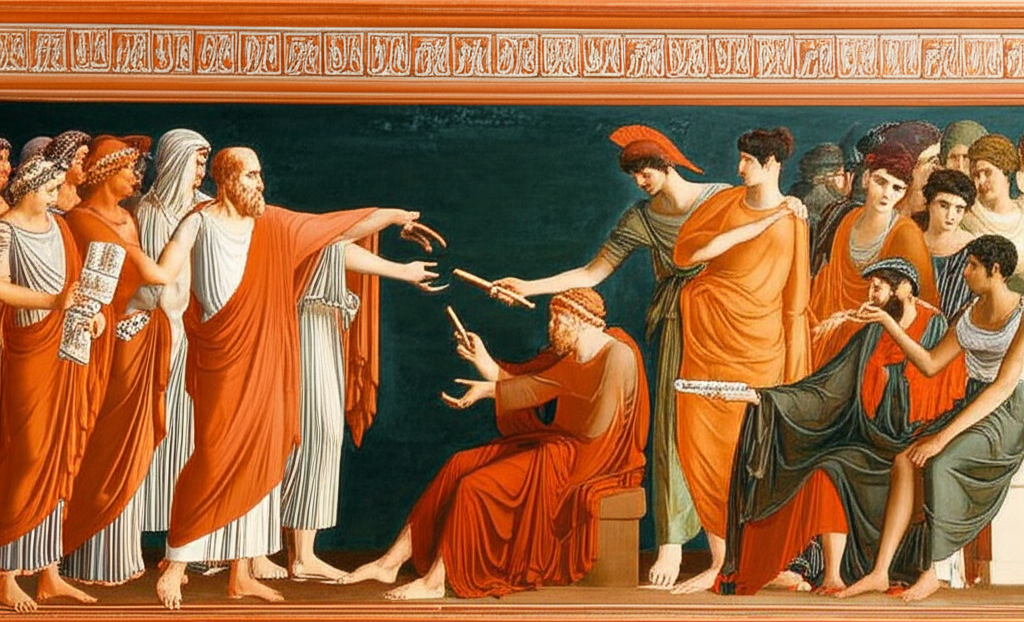
Law as the Guardian of Civil Liberty
Law, therefore, doesn't merely permit liberty; it actively creates and protects it.
How Law Safeguards Freedom:
| Aspect of Liberty | How Law Ensures It |
|---|---|
| Security | Protection from Others: Laws against theft, violence, fraud, and defamation protect individuals from harm and encroachment by fellow citizens. Without these, any "freedom" is constantly under threat. |
| Predictability | Clear Boundaries: Laws define what is permissible and what is not, creating a predictable environment where individuals can pursue their goals without fear of arbitrary punishment. This allows for long-term planning and investment in one's life. |
| Equality | Impartial Application: The principle of "rule of law" dictates that laws apply equally to all citizens, including those in power. This prevents favoritism, discrimination, and the arbitrary exercise of authority, ensuring that no one is above the law. |
| Participation | Defined Rights: Laws establish rights such as freedom of speech, assembly, and the right to vote, empowering citizens to participate in their governance and hold power accountable. These rights are meaningless without legal enforcement. |
| Economic Freedom | Property Rights & Contracts: Laws protecting property, enforcing contracts, and regulating commerce are necessary for a stable economic environment where individuals can create wealth, engage in trade, and pursue their livelihoods freely. |
| Justice | Due Process: Laws ensuring due process, fair trials, and mechanisms for redress are essential for resolving disputes peacefully and ensuring that individuals are not deprived of their liberty or property without just cause. This is a necessary check against governmental overreach. |
Navigating the Tensions: When Law Becomes Oppressive
While law is a necessary condition for civil liberty, it is crucial to acknowledge that not all laws are just, nor do all legal systems promote freedom. The challenge lies in distinguishing between laws that enable liberty and those that suppress it.
- The Problem of Unjust Laws: History is replete with examples of laws designed to oppress, discriminate, or consolidate tyrannical power. In such cases, law becomes an instrument of unfreedom.
- The Role of the Citizen: This is where the active role of the citizen becomes paramount. Citizens, through democratic processes, protest, and civic engagement, have a responsibility to challenge and reform unjust laws. The "right to revolution" articulated by Locke, or the civil disobedience advocated by later thinkers, underscores that the necessity of law does not equate to the necessity of any particular law.
- Constitutionalism and the Rule of Law: To prevent law from becoming tyrannical, societies develop constitutional frameworks that limit governmental power, enshrine fundamental rights, and establish independent judiciaries. These are legal mechanisms designed to ensure that even the law-makers are bound by law, reinforcing the principle of the rule of law.
The ongoing philosophical and political task is to ensure that the laws we create and uphold are those that genuinely serve to expand and protect civil liberty, rather than diminish it. This requires constant vigilance and a commitment to justice, ensuring that the contingent forms of law align with the necessary goal of freedom.
Conclusion: The Enduring Partnership of Law and Liberty
The journey through philosophical thought reveals a profound truth: civil liberty, far from flourishing in a vacuum, is meticulously cultivated and protected by the robust framework of law. The apparent tension between constraint and freedom dissolves when we understand that the necessity of law provides the very structure within which genuine liberty can take root and thrive. Without established legal principles, the rights of the citizen would remain mere aspirations, vulnerable to the caprice of power or the chaos of unchecked desires.
From the ancient Greek polis to the Enlightenment's social contract theorists, the message is consistent: law is the indispensable guardian of our freedoms, transforming precarious existence into a life defined by security, predictability, and the opportunity for self-realization. To advocate for civil liberty is, therefore, to advocate for just and equitable law—for it is within these bounds that our truest freedoms are not only imagined but made real.
📹 Related Video: ARISTOTLE ON: The Nicomachean Ethics
Video by: The School of Life
💡 Want different videos? Search YouTube for: ""John Locke Social Contract Theory Explained""
📹 Related Video: KANT ON: What is Enlightenment?
Video by: The School of Life
💡 Want different videos? Search YouTube for: ""Hobbes Leviathan Summary and Analysis""