

The Indispensable Framework: Why Law is the Bedrock of Civil Liberty
It might seem counter-intuitive, perhaps even paradoxical, to suggest that our freedom is not found in the absence of rules, but rather in their judicious application. Yet, for anyone who has truly grappled with the foundations of a flourishing society, the truth becomes strikingly clear: law is not merely a constraint upon liberty, but its very condition. Civil liberty, that prized state of freedom within a community, does not exist in a vacuum of boundless individual will, but emerges precisely from the carefully constructed framework of shared legal principles. Without the necessity of law, what we often mistake for freedom quickly devolves into chaos, where the strong prey upon the weak, and true individual agency is stifled by pervasive insecurity. This exploration delves into the profound interrelationship between law and liberty, asserting that the former is the indispensable guardian and enabler of the latter for every citizen.
Unpacking the Concepts: Law, Liberty, and the Citizen
Before we can fully appreciate their intricate dance, we must first define our terms with precision, stripping away common misconceptions.
The Nature of Law: More Than Mere Rules
When we speak of law, we are not merely referring to the arbitrary edicts of a ruler or a legislative body. Philosophically, law encompasses:
- Natural Law: Universal moral principles discoverable by reason, often seen as preceding and guiding human-made laws. Thinkers like Aquinas, drawing from Aristotle, posited that human law must align with natural law to be just.
- Positive Law: The statutes, codes, and regulations enacted by a sovereign power. These are the tangible rules governing a society.
- The Social Contract: The implicit or explicit agreement among individuals to surrender certain natural freedoms in exchange for the security and benefits of living under a common legal framework.
Law, in this broad sense, is the structured articulation of societal norms, rights, and responsibilities, designed to order human interaction and secure common goods.
Defining Liberty: Freedom Within a Framework
Liberty is perhaps the most cherished and contested concept. It is crucial to distinguish between:
- Natural Liberty: The unbridled freedom found in a "state of nature," where an individual is limited only by their own physical power. As Hobbes famously depicted, this is a state of "war of all against all," where life is "solitary, poor, nasty, brutish, and short." This is not true freedom, but license.
- Civil Liberty: The freedom enjoyed by individuals within a political society, protected and defined by law. This is freedom from arbitrary interference, to pursue one's legitimate interests, and to participate in the life of the community, all within the bounds of a just legal system.
True civil liberty implies the absence of arbitrary coercion, but not the absence of all constraints. It is freedom under law, not from law.
The Citizen: The Beneficiary and Upholder of Law
The citizen is the individual who belongs to a political community, endowed with rights and bound by duties. It is for the citizen that civil liberty is forged, and it is the citizen who, through participation and adherence, sustains the legal order that makes such liberty possible. The citizen is not merely a subject, but an active participant in the ongoing project of self-governance through law.
The Philosophical Tapestry: Insights from the Great Books
The profound relationship between law and liberty has been a central preoccupation of Western thought since antiquity. The Great Books offer an enduring testament to its necessity.
- Plato and Aristotle: For the ancient Greeks, the polis (city-state) was the highest expression of human community, and law was essential for its flourishing. Aristotle, in his Politics, argued that "the rule of law is preferable to that of any individual," as law embodies reason without passion. A virtuous life, the ultimate goal, was only possible within a well-ordered state governed by just laws.
- John Locke: In his Two Treatises of Government, Locke posited that while individuals possess natural rights (life, liberty, property), these are insecure in the state of nature. People enter into a social contract to form a government, whose primary purpose is to protect these rights through established laws. "Where there is no law, there is no freedom," Locke famously declared, emphasizing that true liberty is not license but "freedom from restraint and violence from others."
- Jean-Jacques Rousseau: In The Social Contract, Rousseau presented a more complex view, arguing that individuals achieve true freedom by submitting to the "general will," which is expressed through laws. To be "forced to be free" meant being compelled to obey laws that one, as a part of the collective sovereign, has prescribed for oneself. This highlights the idea that legitimate laws are those we collectively impose upon ourselves for the common good, thereby enhancing, not diminishing, our freedom.
- Baron de Montesquieu: His The Spirit of the Laws meticulously explored how different types of government require different legal frameworks. He argued for the separation of powers as a means to prevent tyranny and preserve political liberty, demonstrating that the structure of law itself is crucial for maintaining freedom.
These thinkers, among many others, illuminate the consistent thread: a stable, just, and free society is utterly dependent on a robust legal system. The necessity of law for civil liberty is not a modern invention but a foundational insight of Western civilization.
The Interdependence: Why Law is Not a Barrier, but a Pathway to Liberty
The argument that law is essential for liberty rests on several critical pillars, transforming perceived constraints into actual enablers.
Protection from Arbitrary Power and Violence
Without law, liberty is precarious. Individuals are vulnerable to the arbitrary will of others, whether private citizens or those in positions of power. Laws provide:
- Security of Person: Laws against assault, murder, and slavery ensure physical safety.
- Security of Property: Laws defining ownership and contracts allow individuals to accumulate and manage resources without fear of arbitrary seizure.
- Protection from the State: Constitutions and bills of rights (which are laws themselves) limit governmental power, preventing tyranny and safeguarding individual freedoms from state overreach.
The Foundation of Order and Predictability
Civil liberty thrives in an environment of order and predictability. When citizens know the rules, they can plan their lives, pursue their ambitions, and engage in commerce and social interaction with confidence.
| Aspect of Society | Without Law (Chaos/License) | With Law (Civil Liberty) |
|---|---|---|
| Personal Safety | Constant threat, self-defense only | State protection, justice system |
| Economic Activity | Barter, theft, no contracts | Property rights, contracts, stable markets |
| Social Interaction | Mistrust, fear, tribalism | Shared norms, dispute resolution, community |
| Political Participation | Rule by force, no dissent | Elections, free speech, representation |
This predictability is not a restriction; it is the very ground upon which freedom can stand and flourish.
Ensuring Justice and Equality
Laws aim to treat like cases alike, establishing a measure of equality before the law. This is crucial for liberty because:
- Prevents Discrimination: Laws can be crafted to ensure equal opportunities and protect marginalized groups from prejudice and systemic disadvantage.
- Provides Recourse: When rights are violated, the law offers mechanisms for redress and justice, ensuring that individuals are not powerless.
- Limits Privilege: Just laws challenge inherited or acquired privilege, ensuring that liberty is not merely the prerogative of a select few but a right accessible to all citizens.
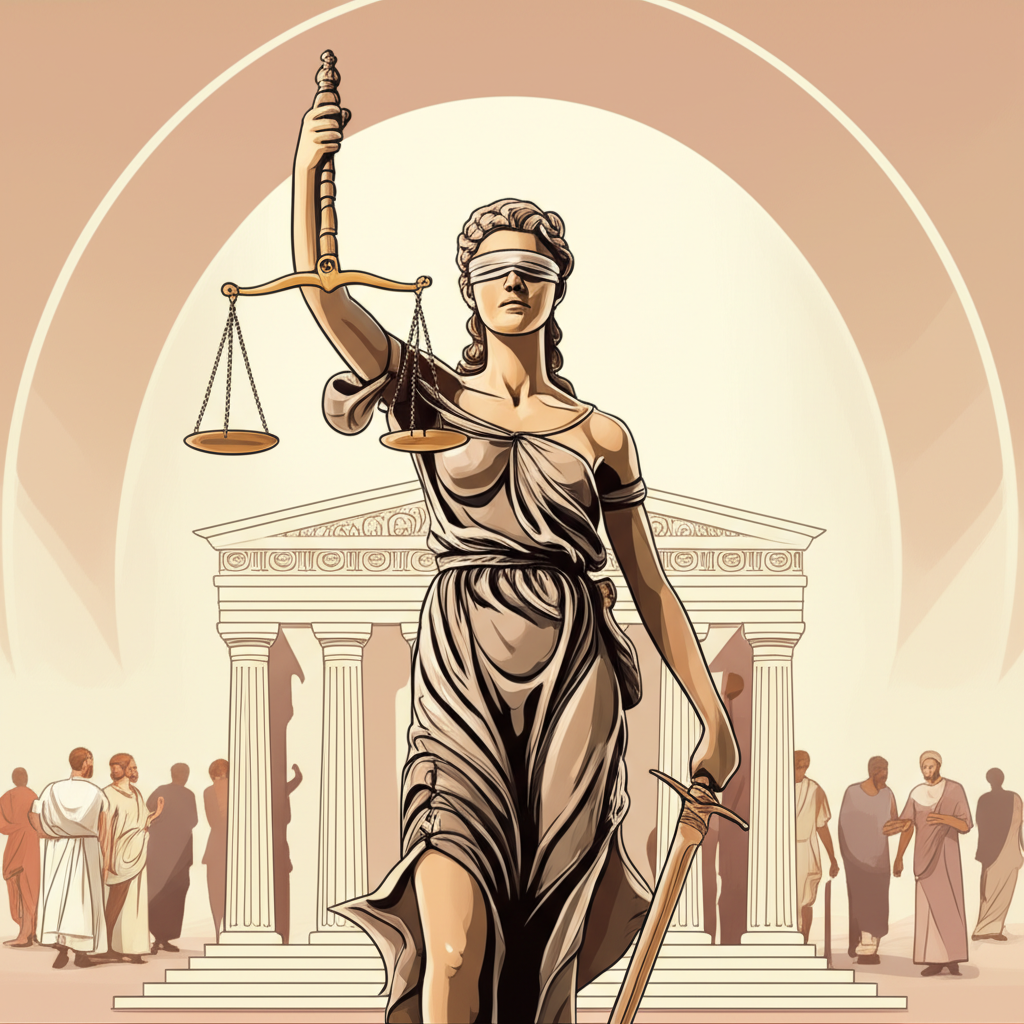
Addressing the Dissenting Voice: When Law Becomes Oppression
It is a fair and important critique to acknowledge that laws can, and often do, become instruments of oppression. History is replete with examples of unjust laws that have curtailed liberty rather than enhanced it. This highlights the crucial distinction between the necessity of law itself and the contingency of particular laws.
The problem lies not with the existence of law, but with the specific content and application of certain laws. When laws are:
- Arbitrary or Capricious: Lacking rational basis or applied inconsistently.
- Discriminatory: Targeting specific groups for disadvantage.
- Unjust: Violating fundamental human rights or moral principles.
- Undemocratic: Imposed without the consent or participation of the governed.
...then they cease to serve civil liberty and instead become its enemy. The ongoing struggle for justice and freedom is precisely the struggle to ensure that the laws we live under are indeed just, equitable, and reflective of the common good. It requires constant vigilance and the active participation of the citizen to reform, challenge, and shape the legal landscape.
Conclusion: The Enduring Paradox and Our Collective Responsibility
The relationship between law and civil liberty is an enduring paradox: to be truly free, we must submit to rules. But this submission is not to an external master; it is to the collective reason of the community, articulated through law, which in turn secures the space for individual flourishing. The necessity of law is not merely theoretical; it is a practical, lived reality for any society aspiring to offer its citizens genuine freedom.
From the ancient polis to the modern democratic state, the lesson remains constant: without a robust, just, and predictable legal framework, civil liberty remains an elusive dream. Our task, as inheritors of this profound philosophical legacy, is not to dismantle law in the name of an imagined, unbounded freedom, but rather to continually strive for laws that truly serve as the guardians and enablers of liberty for all.
YouTube:
- "John Locke's Social Contract Theory Explained"
- "The Philosophy of Law: Justice, Rights, and Society"
📹 Related Video: What is Philosophy?
Video by: The School of Life
💡 Want different videos? Search YouTube for: "The Necessity of Law for Civil Liberty philosophy"