

The Paradox of Freedom: Why Law is the Bedrock of Civil Liberty
True civil liberty, often misunderstood as the absence of any constraint, is in fact deeply, even necessarily, intertwined with the presence of law. Far from being an antithesis to freedom, a just legal framework is the very condition that makes genuine liberty possible, protecting individuals from the arbitrary whims of others and establishing the predictable order essential for human flourishing. Without law, we are not truly free; we are merely adrift in a chaotic state where the strong prey upon the weak, and no rights, no matter how inherent, can be secured. This pillar page explores the philosophical arguments for why law is not merely beneficial, but essential, for the maintenance and flourishing of civil liberty, examining the interplay between necessity and contingency, the role of the citizen, and the profound insights from the Great Books of the Western World.
Unpacking the Concepts: Law, Liberty, and the Citizen
Before delving into the arguments, it's crucial to define our terms with philosophical precision. The common understanding of these words often falls short of their full meaning in the context of political philosophy.
What is Civil Liberty?
Civil liberty is distinct from both natural liberty and license.
- Natural Liberty: The absolute freedom to do whatever one is able, unrestrained by any human law. As thinkers like Hobbes and Locke observed, this state, while seemingly "free," quickly devolves into a "war of all against all," where life is "solitary, poor, nasty, brutish, and short," and no one is truly secure. It is freedom without security, and thus, ultimately, no freedom at all.
- License: The ability to act without regard for others or for moral/legal constraints, often confused with liberty. License is self-serving and destructive, leading to anarchy.
- Civil Liberty: This is the freedom enjoyed by individuals within a society governed by laws. It is not the freedom from law, but the freedom through law. It is the liberty to do all that the law permits, knowing that one's rights are protected, and that others are similarly constrained. It is a freedom that acknowledges interdependence and mutual respect.
What is Law? More Than Mere Rules
Law, in the context of civil liberty, is more than a mere collection of rules or commands. It is:
- A System of Order: It provides predictability and stability, allowing individuals to plan their lives, make contracts, and pursue their goals without constant fear of arbitrary interference.
- A Framework for Justice: Ideally, law embodies principles of fairness, equality, and equity, ensuring that disputes are resolved impartially and that power is not abused. As Aristotle posited in Politics, "The rule of law… is preferable to that of any individual."
- An Expression of the General Will (or Reason): For thinkers like Rousseau, true law represents the collective will of the people, aiming at the common good. Obedience to such self-imposed law is therefore an act of freedom.
The Citizen: An Active Participant, Not a Mere Subject
The concept of the citizen is central to understanding civil liberty. A citizen is not merely an inhabitant or a subject, but an individual endowed with rights and responsibilities within the political community. Their liberty is tied to their capacity to participate, directly or indirectly, in the creation and upholding of the laws that govern them. This participation transforms law from an external imposition into an internal commitment.
The State of Nature: A Glimpse into Lawless Liberty (or its Absence)
Philosophers of the social contract tradition vividly illustrated the terrifying reality of a world without law, thereby laying the groundwork for understanding its necessity.
- Thomas Hobbes's Leviathan: Hobbes painted a grim picture of humanity's "natural condition" – a state of perpetual war where every individual is driven by self-preservation and fear. In this state, there are no rights, no justice, and certainly no liberty worth having. Life is a constant struggle for survival. The only escape, for Hobbes, is the absolute authority of a sovereign whose laws, however strict, provide the security necessary for any semblance of order.
- John Locke's Two Treatises of Government: While more optimistic than Hobbes, Locke still recognized the inherent problems of the state of nature. Even with natural rights (life, liberty, property), there's no impartial judge to enforce these rights, no established law to define them precisely, and no power to execute judgments. Without these, rights are precarious and constantly under threat. Thus, individuals consent to form a political society, entrusting the community with the power to make and enforce laws to protect their natural rights, transforming them into civil liberties.
Both thinkers, despite their differences, converged on a critical point: some form of law is absolutely necessary to move beyond a chaotic, insecure existence to a state where individual liberty can actually be realized and protected.
Law as the Architect of Freedom: Protection, Predictability, Progress
The necessity of law for civil liberty stems from its multifaceted role in structuring society.
1. Protection of Rights and Persons
The most fundamental contribution of law is the protection it offers. It establishes clear boundaries, defining what individuals can and cannot do, and provides mechanisms for redress when those boundaries are crossed.
- Against Arbitrary Power: Law protects citizens from the arbitrary power of rulers, ensuring that governmental authority is exercised according to established rules, not personal whims. This is the essence of the "rule of law."
- Against Fellow Citizens: Law protects individuals from harm, theft, and fraud perpetrated by others. Without laws against violence or property infringement, the "freedom" to act would be constantly overshadowed by the "freedom" of others to inflict harm.
- Due Process: A cornerstone of civil liberty, due process ensures that individuals are treated fairly by the legal system, with rights to a fair trial, legal representation, and protection against unjust punishment.
2. Predictability and Stability for Flourishing
Law creates a stable and predictable social environment, which is crucial for individual and collective flourishing.
- Economic Activity: Contracts, property rights, and commercial regulations, all products of law, provide the certainty necessary for economic exchange, investment, and prosperity.
- Social Cohesion: Shared laws foster a sense of common purpose and identity, allowing diverse individuals to coexist and cooperate. They provide a common language for justice and dispute resolution.
- Personal Planning: Knowing the legal framework allows individuals to make informed decisions about their lives, careers, and relationships, confident that the rules of engagement will not arbitrarily change.
3. Enabling Collective Action and Progress
Law is the mechanism through which societies can organize themselves to achieve common goals that would be impossible for individuals alone.
- Public Goods: Infrastructure, education systems, public health initiatives – these require collective resources and legal frameworks for their establishment and maintenance.
- Social Justice: Laws can be instruments for addressing historical injustices, promoting equality, and ensuring a basic standard of living for all citizens, thereby expanding the scope of liberty for the disadvantaged.
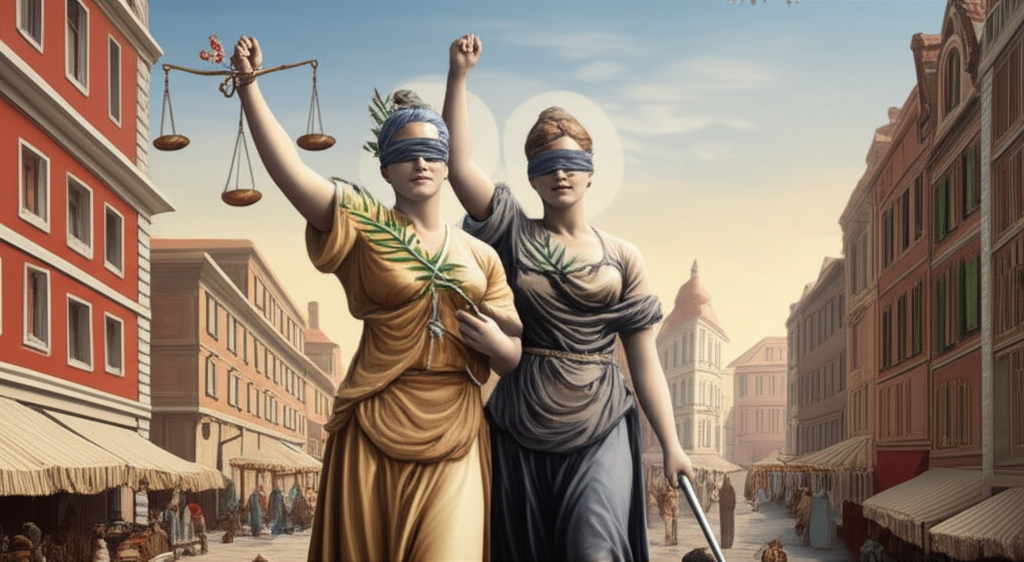 is the foundation upon which societal harmony and individual liberty (Peace) can flourish.)
Navigating Necessity and Contingency: The Quality of Law
While the necessity of law for civil liberty is a robust philosophical claim, the contingency of particular laws introduces a critical nuance. Not all laws are good, and indeed, some laws can be deeply oppressive.
The Absolute Necessity of Some Legal Framework
The argument for necessity posits that a society must have some form of legal or normative structure to avoid chaos and secure liberty. This is the fundamental insight from the social contract theorists. The very concept of rights, property, or indeed, civil liberty, is meaningless without an agreed-upon framework to define and protect them.
The Contingency of Specific Laws: The Challenge of Unjust Law
However, the specific content and application of laws are highly contingent. They are products of human will, historical circumstances, cultural values, and power dynamics.
- Tyranny of Law: History is replete with examples of legal systems used to oppress, discriminate, and deny liberty – from the laws of apartheid to the edicts of totalitarian regimes. In such cases, law becomes an instrument of tyranny, not liberty.
- The Rule of Law vs. The Rule of Men: Montesquieu, in The Spirit of the Laws, emphasized the importance of the separation of powers to prevent the concentration of arbitrary authority. The goal is not just to have laws, but to have laws that are just, consistently applied, and subject to oversight.
- The Citizen's Right to Dissent: As John Stuart Mill argued in On Liberty, a healthy society must allow for dissent and the questioning of existing laws, especially when they infringe upon individual freedoms or fail to serve the common good. The ongoing struggle for civil rights is a testament to the fact that while law is necessary, its continuous refinement and moral alignment are contingent upon active citizenship.
This distinction highlights that the necessity is for a framework of law, but the quality and justice of that law are contingent upon a society's values, its institutions, and the vigilance of its citizens.
The Citizen's Role: Guardians of Liberty Through Law
The relationship between law and liberty is not static; it is a dynamic interplay maintained by the active engagement of the citizen.
- Obedience to Just Laws: A fundamental duty of the citizen is to obey the laws, as this underpins the stability and predictability that secure everyone's liberty.
- Participation in Law-Making: In democratic societies, citizens participate, directly or indirectly, in the creation of laws, thus making them self-imposed rules rather than external dictates. This is Rousseau's idea of true freedom: obedience to a law one has prescribed for oneself.
- Advocacy and Reform: Citizens have a crucial role in advocating for the reform of unjust laws and ensuring that the legal system evolves to better serve the principles of justice and liberty. This is where the necessity of law meets its contingent nature head-on, in the ongoing effort to create a more perfect union.
- Upholding the Rule of Law: Beyond mere obedience, citizens must also uphold the principle of the rule of law, demanding that all, including those in power, are subject to the same legal standards.
Reaffirming the Indispensable Bond
The philosophical journey through the concepts of law, liberty, and citizenship reveals a profound truth: civil liberty is not found in the absence of law, but in its just and judicious presence. The necessity of law stems from humanity's inherent need for security, order, and the protection of rights, transforming a potentially chaotic existence into a realm where individuals can truly exercise their freedoms. While the specific forms and contents of laws are contingent and require constant scrutiny and reform, the fundamental principle that law is the bedrock of civil liberty remains an enduring insight from the Great Books of the Western World. It is through the wise construction and vigilant maintenance of a legal framework that we, as citizens, can truly claim and live out our freedom.
Further Engagement
YouTube:
-
📹 Related Video: KANT ON: What is Enlightenment?
Video by: The School of Life
💡 Want different videos? Search YouTube for: ""Hobbes Locke Rousseau Social Contract Explained""
2. ## 📹 Related Video: What is Philosophy?
Video by: The School of Life
💡 Want different videos? Search YouTube for: ""Rule of Law vs Rule of Men Philosophy""