

The Unyielding Foundation: Why Law is Indispensable for Civil Liberty
Civil liberty, often romanticized as an unbridled freedom, is in truth a delicate construct, not born of absence but forged in the presence of order. This pillar page argues for the profound and often counter-intuitive necessity of law as the very scaffolding upon which civil liberty is built and maintained. Far from being an antagonist, law provides the essential framework that protects individuals from arbitrary power, defines rights, and enables the flourishing of a free society. Without a robust and just legal system, liberty devolves into chaos, leaving the citizen vulnerable to the whims of the powerful or the caprice of the many. We will explore how philosophical thought, from antiquity to the modern era, consistently reveals that true freedom is not found in the vacuum of lawlessness, but within its carefully delineated boundaries.
I. Deconstructing the Core Concepts: Law, Liberty, and Their Inherent Link
To understand the necessity of law for civil liberty, we must first precisely define these often-misunderstood terms. Their interplay is not one of opposition, but of profound interdependence, embodying a philosophical concept of necessity and contingency.
A. What is Law? More Than Mere Rules
At its most fundamental, law is a system of rules created and enforced by social or governmental institutions to regulate behavior. However, from a philosophical perspective, law transcends mere regulation. As explored in the Great Books of the Western World, law embodies:
- Divine Law: As understood by Aquinas, a reflection of God's eternal reason, guiding all creation.
- Natural Law: Universal moral principles discoverable by human reason, inherent in the nature of things. Thinkers like Cicero and Locke posited that positive laws derive their legitimacy from their congruence with natural law.
- Positive Law: The specific statutes, codes, and regulations enacted by human societies. This is the practical manifestation of law we interact with daily.
Law, therefore, is not merely a constraint but a structured expression of communal will, aiming to establish justice, order, and the common good. It defines the permissible and the impermissible, thereby creating a predictable environment.
B. Defining Civil Liberty: Beyond Unfettered Freedom
Liberty is frequently equated with the absence of restraint, but civil liberty is a more nuanced concept. It is not the freedom from all rules, but the freedom within a just framework of rules.
- Negative Liberty: Often defined as freedom from external interference – a classic liberal view championed by thinkers like John Stuart Mill, who argued for the individual's sphere of non-interference.
- Positive Liberty: The freedom to act, to realize one's potential, often requiring certain social and economic conditions, and sometimes state intervention, to enable it.
For the citizen, civil liberty entails specific rights and freedoms guaranteed by the state and protected by law, such as freedom of speech, assembly, religion, and protection from arbitrary arrest. These are not inherent in a state of nature, but are secured by the very legal structures that define society. Without law, these "freedoms" would be mere aspirations, vulnerable to any stronger will.
C. The Principle of Necessity and Contingency
The relationship between law and liberty can be understood through the philosophical lens of necessity and contingency. Law is necessary for civil liberty in the sense that without it, civil liberty cannot exist in any meaningful, stable form. Liberty, in its civil manifestation, is contingent upon the existence and enforcement of just laws. It is not an accidental byproduct, but a deliberate creation, sustained by legal structures.
II. Echoes Through Time: Historical and Philosophical Perspectives
The dialogue concerning law and liberty has permeated Western thought for millennia, with philosophers consistently returning to the idea that order precedes true freedom. The Great Books of the Western World offer a rich tapestry of these insights.
A. Ancient Greece: The Polis and the Rule of Law
In ancient Greece, the concept of the polis (city-state) was inseparable from the idea of law.
- Plato: In The Republic and Laws, Plato grappled with the ideal state. While his ideal state might seem authoritarian, he understood that even a philosopher-king's rule must eventually be codified into law to prevent tyranny and ensure stability. He recognized that unchecked power, even of the wise, could corrupt.
- Aristotle: In Politics, Aristotle famously stated, "The rule of law, then, is preferable to that of any individual." He argued that law embodies reason free from passion, providing a stable and impartial guide for governance. For Aristotle, a citizen could only truly flourish within a community governed by just laws, which allow for the development of virtue and the pursuit of the good life.
B. Roman Jurisprudence: The Foundation of Western Legal Thought
Roman law, particularly as codified in the Corpus Juris Civilis, profoundly influenced subsequent Western legal systems.
- Cicero: A prominent Roman orator and philosopher, Cicero articulated the concept of natural law, asserting that true law is "right reason in agreement with nature." In De Re Publica, he argued that a state founded on law, rather than on the arbitrary will of rulers, is essential for securing the rights and liberties of its citizens. The very idea of jus civile (civil law) was to provide order and predictability, protecting individuals from capricious power.
C. The Enlightenment: Social Contract and the Protection of Rights
The Enlightenment saw a renewed focus on individual rights and the role of government, but always within a legal framework.
- John Locke: In his Two Treatises of Government, Locke posited that individuals possess natural rights (life, liberty, property) even in a state of nature. However, the inconveniences of the state of nature (lack of impartial judgment, enforcement) lead people to form a social contract, surrendering some individual power to a government whose primary purpose is to protect these very rights through established laws. For Locke, "wherever law ends, tyranny begins."
- Jean-Jacques Rousseau: In The Social Contract, Rousseau argued that true freedom comes from obeying laws that one has, in a sense, prescribed for oneself through the "general will." This is not an abandonment of liberty, but its transformation from natural impulse to civil freedom, secured by mutual agreement and legal enforcement.
- Baron de Montesquieu: In The Spirit of the Laws, Montesquieu emphasized the importance of the separation of powers as a mechanism to prevent tyranny and preserve liberty. This separation is itself a legal and constitutional arrangement, ensuring that no single branch of government can accumulate unchecked power, thereby safeguarding the citizen's freedoms.
Table 1: Key Thinkers on Law, Liberty, and the Citizen
| Philosopher | Era | Key Contribution to Law & Liberty |
|---|---|---|
| Plato | Ancient Greece | Law as a necessary structure to prevent tyranny; foundation for an ideal, just society. |
| Aristotle | Ancient Greece | Rule of law superior to rule of man; law as impartial reason, essential for citizen flourishing. |
| Cicero | Roman Republic | Natural law as the basis for legitimate positive law; law protects individual rights and state stability. |
| John Locke | Enlightenment | Government's purpose is to protect natural rights through law; "wherever law ends, tyranny begins." |
| J.J. Rousseau | Enlightenment | Civil liberty achieved by obeying laws derived from the "general will"; transformation from natural to civil freedom. |
| Montesquieu | Enlightenment | Separation of powers (legal framework) as crucial for preventing despotism and preserving citizen liberties. |
III. The Indispensable Link: Why Law is Necessary for Liberty
The historical record and philosophical inquiry converge on a singular truth: law is not merely beneficial for civil liberty; it is its very precondition. The necessity is absolute.
A. Protection from Arbitrary Power
Without law, liberty is a fragile illusion. Individuals are exposed to the arbitrary power of others—be it a tyrannical ruler, a dominant faction, or even a stronger individual. Law, by defining permissible actions and establishing due process, creates a shield. It ensures that power is exercised according to established rules, not personal whims. This protection extends to both the state and other private actors, safeguarding the citizen from both governmental overreach and private coercion.
B. Establishing a Framework for Rights and Duties
Civil liberties are not abstract ideals floating in the ether; they are concrete rights that must be defined, recognized, and protected. Law provides this definition. It delineates the boundaries of one person's freedom where it meets another's, preventing conflicts and ensuring mutual respect. Simultaneously, law imposes duties—the obligation to respect the rights of others—which is the reciprocal side of liberty. A right without a corresponding duty is meaningless; a duty without a corresponding right is oppression.
C. Facilitating Social Cooperation and Order
A society without law is a society in perpetual conflict. As Thomas Hobbes famously argued in Leviathan, without a common power to enforce laws, life would be "solitary, poor, nasty, brutish, and short." Law provides the predictability and stability necessary for individuals to cooperate, engage in commerce, form communities, and pursue their goals without constant fear. This ordered environment is the sine qua non for the exercise of any meaningful liberty.
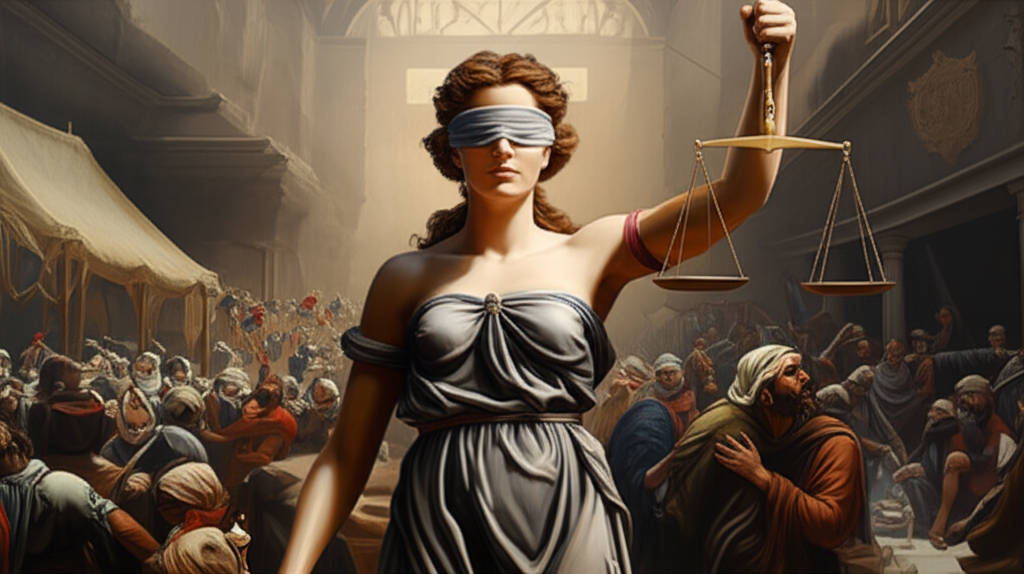
D. Preventing Chaos and the "State of Nature"
The philosophical concept of the "state of nature" serves as a powerful thought experiment illustrating the necessity of law. Whether viewed as inherently violent (Hobbes) or merely inconvenient (Locke), all agree that a state without governing laws is one where true civil liberty cannot exist. There is only raw power, where the strong prey on the weak, and no rights are secure. Law transitions humanity from this precarious state to one where individual freedoms are not only possible but protected.
IV. Navigating the Tensions: Law's Limits and the Citizen's Role
While law is necessary for liberty, it is not without its own potential for tyranny. The balance is delicate, and the citizen's vigilance is paramount.
A. When Law Can Infringe Upon Liberty
The very instrument designed to protect liberty can, when corrupted or misapplied, become its greatest threat. Unjust laws, oppressive regimes, or the arbitrary enforcement of even good laws can curtail freedoms, leading to authoritarianism. This highlights the distinction between the necessity of law in general and the contingency of just law. Not all laws are good laws, and some can be profoundly antithetical to liberty.
B. The Concept of Legitimate Authority
The crucial distinction lies in legitimate authority. Law derives its power not merely from force, but from consent and its alignment with justice. When laws are perceived as illegitimate—either because they are unjust, or because they were imposed without the consent of the governed—they lose their moral force and can indeed become instruments of oppression rather than guardians of liberty.
C. The Citizen's Role in Shaping and Upholding Just Laws
This is where the citizen becomes critical. True civil liberty demands active participation in the legal and political process. Citizens have a responsibility to:
- Question and Challenge: To scrutinize laws, advocate for reform, and protest against injustice.
- Participate: To vote, engage in public discourse, and hold elected officials accountable.
- Uphold: To abide by just laws, recognizing that their collective adherence strengthens the legal framework that protects everyone's liberty.
This dynamic interplay between the governed and the government, mediated by law, ensures that the legal system remains a servant of liberty, not its master.
V. Contemporary Relevance: The Enduring Philosophical Necessity
In our complex modern world, the debate surrounding law and liberty continues to evolve. From issues of digital privacy to global governance, the fundamental necessity of law for civil liberty remains a guiding principle.
The rise of new technologies, global challenges, and shifting social norms constantly tests the boundaries of law and liberty. Yet, the core philosophical insight persists: without established rules, enforced impartially, and subject to the scrutiny of an engaged citizenry, individual freedoms become precarious. The ongoing discussions about balancing security with privacy, or individual rights with collective well-being, are all variations on this ancient theme, reaffirming the enduring necessity of a well-ordered legal system for the preservation and expansion of civil liberty.
Conclusion: Liberty Forged in Law
The journey through philosophical thought reveals a consistent and compelling argument: civil liberty is not a natural state of affairs but a deliberate achievement, meticulously constructed and perpetually maintained by law. Far from being a hindrance, law is the very condition for liberty's existence, transforming a potentially chaotic state of nature into an ordered society where individual rights are recognized, protected, and allowed to flourish. The necessity of law for civil liberty is not merely practical but philosophical, forming the bedrock of any just and free society. The challenge for every citizen is not to dismantle law in pursuit of an imagined absolute freedom, but to tirelessly work towards the creation and upholding of just laws that truly serve as the guardians of human liberty.
YouTube Video Suggestions:
-
📹 Related Video: ARISTOTLE ON: The Nicomachean Ethics
Video by: The School of Life
💡 Want different videos? Search YouTube for: "John Locke Social Contract Theory Explained"
2. ## 📹 Related Video: What is Philosophy?
Video by: The School of Life
💡 Want different videos? Search YouTube for: "Rule of Law vs Rule of Man Philosophy"