

The Indispensable Link: Labor, Wealth, and the Philosophical Foundations of Prosperity
From the dawn of civilization, humanity has grappled with the fundamental question of how societies generate and distribute resources. This inquiry inevitably leads us to the concept of labor, which, when viewed through a philosophical lens, reveals itself not merely as a means to an end, but as a necessity for the creation of wealth. This pillar page delves into the profound philosophical arguments that establish labor as the bedrock of prosperity, exploring how various thinkers from the Great Books of the Western World have understood its role, the contingent factors that shape its impact, and the ever-present influence of the State in mediating this essential relationship. We will argue that while the forms and rewards of labor are contingent upon social and political structures, the act of human effort itself remains the necessary precursor to any meaningful accumulation of wealth, broadly defined.
The Primacy of Toil: Defining Labor and Wealth
To understand the necessity of labor for wealth, we must first establish clear definitions.
- Labor: More than just physical exertion, labor encompasses any purposeful human activity directed towards transforming nature or ideas into something useful or valuable. This includes the farmer tilling the soil, the artisan crafting goods, the philosopher shaping thought, or the scientist discovering new knowledge. It is the application of human will and ingenuity.
- Wealth: Beyond mere monetary accumulation, wealth can be understood as the abundance of valuable resources or valuable possessions. Philosophically, it extends to the well-being of a society, including its intellectual, cultural, and social capital, alongside material goods. It signifies a state of flourishing and security.
The necessity of labor becomes apparent when we consider that raw resources, no matter how abundant, remain inert without human intervention. A tree is not timber, a field is not food, and an idea is not innovation until labor transforms them. This transformative power of labor is the initial, undeniable link to wealth creation.
Philosophical Roots: From Ancient Polis to Modern Markets
The relationship between labor and wealth has been a central theme in philosophical discourse for millennia.
Ancient Insights: The Polis and the Pursuit of the Good Life
In ancient Greece, thinkers like Plato and Aristotle recognized the foundational role of labor, albeit within a hierarchical social structure.
- Plato's Republic: Envisioned a society built on the division of labor, where individuals perform tasks suited to their natural abilities. Farmers, artisans, and guardians all contribute their labor, creating the goods and services necessary for the functioning of the ideal polis. Wealth, in this context, was understood collectively as the self-sufficiency and stability of the state, not individual accumulation.
- Aristotle's Politics and Nicomachean Ethics: Distinguished between oikonomia (household management, focused on satisfying natural needs) and chrematistike (wealth-getting for its own sake, which he viewed as unnatural). For Aristotle, labor was necessary for the household to provide for its members, allowing citizens to pursue higher virtues. The State (polis) existed to facilitate the good life, which included the provision of material necessities through labor.
For the ancients, the necessity of labor was tied to the very survival and flourishing of the community, though its social standing was contingent upon one's position in the social hierarchy.
Early Modern Conceptions: Property, Rights, and the Social Contract
The Enlightenment ushered in new perspectives on labor, particularly regarding individual rights and the role of the State.
- John Locke's Second Treatise of Government: Famously articulated the labor theory of property. Locke argued that when an individual "mixes his labor" with natural resources, those resources become his property, provided "enough, and as good, is left in common for others." This established a powerful necessary link between individual effort (labor) and rightful ownership (wealth), predating the formal State. The State then arises to protect these pre-existing natural rights, including the right to one's labor and its fruits.
- Thomas Hobbes's Leviathan: While not directly a theory of labor, Hobbes's concept of the "state of nature" highlights the necessity of a strong State for any productive activity to occur. In a state of "war of all against all," there is "no place for industry; because the fruit thereof is uncertain." Without the security provided by the sovereign, labor cannot generate wealth, as it would be constantly under threat.
The Enlightenment and the Genesis of National Wealth
The 18th century saw a profound shift towards understanding labor as the engine of national prosperity.
- Adam Smith's The Wealth of Nations: This seminal work laid the groundwork for modern economics, asserting that the true source of a nation's wealth is the labor of its people. Smith famously detailed how the division of labor dramatically increases productivity, making goods cheaper and more abundant. This specialization, driven by individual self-interest, creates a necessary pathway to collective prosperity. The "invisible hand" is a contingent mechanism that guides individual efforts towards societal benefit within a free market, where the State plays a limited, but crucial, role in enforcing contracts and providing public goods.
- Jean-Jacques Rousseau's Discourse on the Origin and Basis of Inequality Among Men: While recognizing the role of labor in transforming the natural world, Rousseau critiqued the contingent social structures that arise with the establishment of private property. He argued that the first person to enclose land and claim it as their own, thereby compelling others to labor for them, initiated the inequalities that undermine true freedom and well-being, even as it generated material wealth. This highlights how the necessity of labor for wealth can be distorted by contingent social contracts and the State's enforcement of property rights.
Labor as the Measure: Value, Alienation, and the State's Hand
The 19th century brought radical critiques of the capitalist system and its relationship to labor and wealth.
- Karl Marx's Das Kapital: Marx posited that labor is the sole source of all value. He developed the labor theory of value, arguing that the value of a commodity is determined by the "socially necessary labor-time" required for its production. For Marx, capitalism, while generating immense wealth, does so through the exploitation of labor. Workers are alienated from the products of their labor, the process of labor itself, their species-being, and other human beings. The State, in Marx's view, is not a neutral arbiter but an instrument of the ruling class, designed to maintain the contingent capitalist system that perpetuates the unequal distribution of wealth derived from labor. The necessity of labor for wealth is undeniable, but the contingent capitalist mode of production dictates who benefits.
The Dynamics of Necessity and Contingency
| Aspect | Necessity (Inherent Truth) | Contingency (Variable Factors) |
|---|---|---|
| Labor's Role | Human effort is required to transform resources into wealth. | The form of labor (manual, intellectual, creative) |
| Wealth Generation | Material and immaterial value originates from human activity. | The amount of wealth generated; its distribution. |
| State's Function | To provide a stable framework for productive activity. | The type of state (democratic, authoritarian, socialist); its policies on property, taxation, welfare. |
| Individual Reward | Effort contributes to personal and societal well-being. | The level of reward; its fairness relative to effort. |
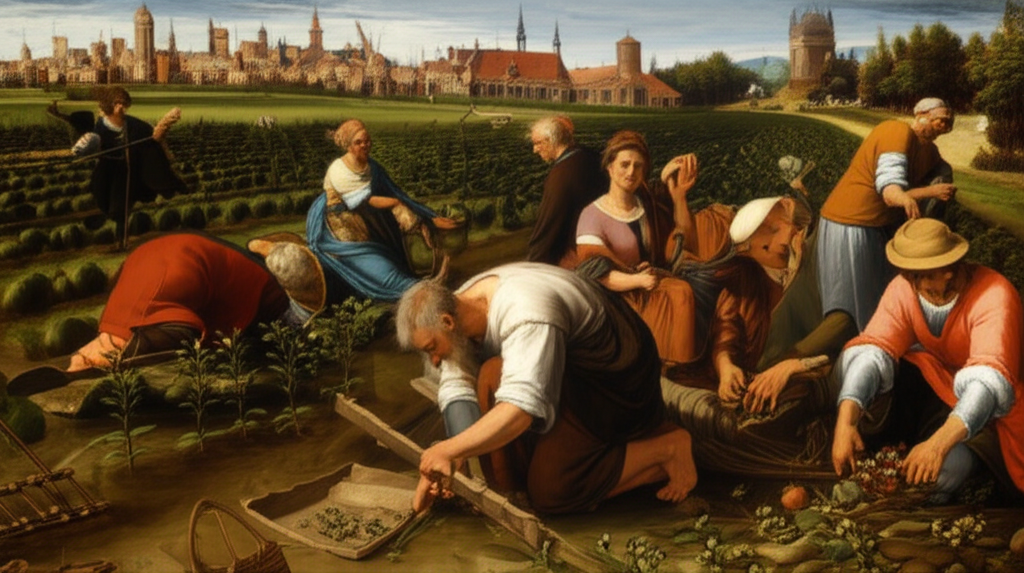
The Modern Predicament: Reconciling Necessity with Contingency
Today, the philosophical debate on the necessity of labor for wealth continues, complicated by automation, globalization, and evolving social contracts. While the fundamental truth that human effort drives value creation remains, the contingent factors have grown immensely complex. How does the State balance the need to incentivize labor and innovation with the imperative to ensure equitable distribution of wealth, especially when technology reduces the demand for certain types of human labor? The necessity of human contribution to wealth is evolving, but not diminishing. We are forced to reconsider what constitutes "valuable" labor in an age of artificial intelligence.
Beyond Material Accumulation: The Broader Definition of Wealth
It's crucial to reiterate that wealth extends beyond mere material possessions. Labor, in its broadest sense, also generates:
- Intellectual Wealth: The creation of knowledge, art, and philosophical insights.
- Social Wealth: The establishment of robust institutions, strong communities, and ethical frameworks.
- Human Capital: The development of skills, education, and health within individuals.
These forms of wealth are equally necessary for a flourishing society and are, without exception, products of human labor and ingenuity. The State plays a vital role in nurturing these forms of wealth through education, cultural funding, and public health initiatives.
Conclusion: An Enduring Truth
The philosophical journey through the history of ideas consistently reaffirms the necessity of labor for the creation of wealth. From ancient Greek city-states to modern global economies, human effort—in its myriad forms—is the indispensable engine of prosperity. While the contingent social, economic, and political systems (often shaped and enforced by the State) determine how that labor is organized, valued, and distributed, the fundamental truth remains: without purposeful human activity, resources lie dormant and potential remains unrealized. The ongoing challenge for philosophy and society is to continually examine these contingent structures to ensure that the necessity of labor for wealth translates into equitable flourishing for all, rather than concentrated prosperity for a few.
Further Exploration
-
📹 Related Video: KANT ON: What is Enlightenment?
Video by: The School of Life
💡 Want different videos? Search YouTube for: "Adam Smith Division of Labor Explained"
-
📹 Related Video: What is Philosophy?
Video by: The School of Life
💡 Want different videos? Search YouTube for: "Karl Marx Alienation of Labor Philosophy"