

The Indispensable Engine: Labor's Necessity for the State
The very fabric of any organized society, from the nascent community to the complex modern state, is woven with the threads of labor. It is not merely a desirable attribute or a contingent factor in a state's prosperity, but a fundamental, necessary condition for its existence, maintenance, and flourishing. Without the ceaseless exertion of human effort, the state, in all its forms, would collapse into an unsustainable abstraction, devoid of substance, security, or common wealth. This article explores the profound philosophical underpinnings of labor's essential role, drawing insights from the vast reservoir of Western thought to illuminate its indispensable connection to the State.
The Primal Foundation: Labor as a Condition of Existence
Before any intricate political theory or economic system can take root, humanity must confront the basic realities of survival. Food must be cultivated or gathered, shelter constructed, and safety ensured. These primary activities are, at their core, acts of labor. From the earliest communal endeavors to secure sustenance, to the sophisticated division of tasks that characterizes advanced civilizations, labor has been the bedrock upon which collective life is built.
The Great Books of the Western World consistently reveal this foundational truth. Thinkers from Plato, who outlined a state built upon the specialized labor of its citizens, to Aristotle, who considered the polis as a natural outgrowth of human needs met through cooperation, understood that the very existence of a community—the precursor to any state—is predicated on productive effort. It is through labor that the raw materials of nature are transformed into the necessities of life, creating the material conditions for any form of social organization to emerge and endure.
Labor, Wealth, and the State's Capacity
Beyond mere subsistence, organized labor is the engine that generates wealth. This wealth, in its myriad forms, is not simply a marker of individual prosperity but the lifeblood of the State itself.
- Funding Public Services: Taxes levied on the products and profits of labor provide the revenue for public infrastructure (roads, bridges), education, healthcare, and justice systems. Without a productive labor force, the state lacks the resources to provide these essential services, leading to decay and instability.
- Defense and Security: The ability to defend its borders, maintain internal order, and project influence is directly tied to the state's economic capacity, which is, in turn, a product of its labor. A state with a strong economy can afford a robust military, maintain law enforcement, and invest in security technologies.
- Innovation and Progress: Labor, particularly skilled and specialized labor, drives innovation. Scientific discovery, technological advancement, and artistic creation—all forms of labor—contribute to the state's overall strength, prestige, and ability to adapt to changing circumstances.
Adam Smith, a pivotal figure in economic thought found in the Great Books, meticulously detailed how the division of labor dramatically increases productivity and, consequently, the wealth of nations. This accumulated wealth, though often distributed unevenly, ultimately underpins the state's capacity to act, govern, and persist.
The Interplay of Necessity and Contingency
The relationship between Labor and the State is best understood through the philosophical concepts of Necessity and Contingency.
| Aspect | Necessity | Contingency |
|---|---|---|
| Material Basis | The absolute need for human effort to transform nature for survival (food, shelter, security). | The specific forms of production (agrarian, industrial, post-industrial), economic systems (capitalism, socialism), and technologies used to meet these needs. |
| Wealth Creation | The inherent process by which labor adds value and generates surplus beyond immediate consumption. | The distribution of wealth, the ownership of the means of production, and the regulatory frameworks governing economic activity. |
| State Function | The state's reliance on a productive populace to fund its operations, maintain order, and ensure collective well-being. | The specific political ideologies (liberal democracy, authoritarianism), governance structures, and social policies adopted to manage and utilize labor and wealth. |
It is necessary that labor occurs for the state to exist, but the manner in which that labor is organized, compensated, and regulated is contingent upon historical, cultural, and philosophical choices. Philosophers like John Locke posited that labor creates property and thus a moral claim, while others like Karl Marx critiqued the contingent structures of capital that he argued alienated labor. Regardless of these differing perspectives on how labor should be organized, none deny its fundamental necessity.
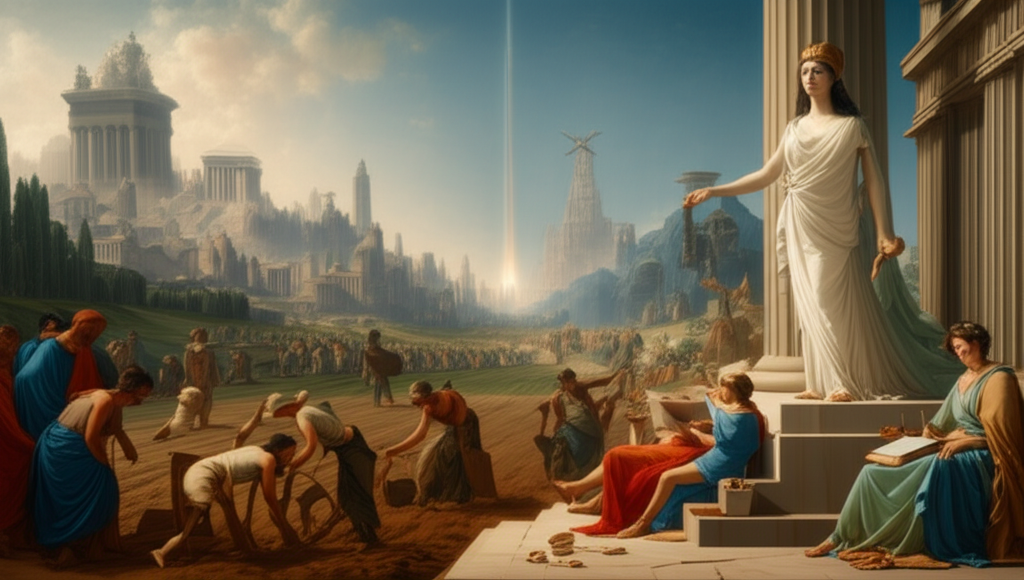
Labor, Identity, and Social Cohesion
Beyond its material contributions, labor plays a crucial role in fostering social cohesion and individual identity within the State. Engaging in productive work gives individuals a sense of purpose, contributes to their self-worth, and integrates them into the broader social fabric. A state where citizens feel their labor is valued and contributes to the common good is often more stable and harmonious.
Conversely, widespread unemployment or underemployment can lead to social unrest, disillusionment, and a weakening of the state's legitimacy. The shared experience of contributing to the collective wealth and well-being, even if through diverse tasks, reinforces the bonds between citizens and their connection to the State.
Conclusion: An Unbreakable Bond
The relationship between Labor and the State is not one of mere convenience but of profound, existential necessity. From the foundational acts of survival to the generation of complex wealth and the maintenance of social order, labor is the indispensable force that animates and sustains any political entity. While the specific forms and philosophies surrounding labor may be contingent upon societal choices, the fundamental requirement for human effort to build, maintain, and enrich the state remains an immutable truth. To neglect the centrality of labor is to misunderstand the very essence of collective human endeavor and the enduring power of the state.
YouTube Video Suggestions:
-
📹 Related Video: KANT ON: What is Enlightenment?
Video by: The School of Life
💡 Want different videos? Search YouTube for: ""Adam Smith Division of Labor explained""
2. ## 📹 Related Video: PLATO ON: The Allegory of the Cave
Video by: The School of Life
💡 Want different videos? Search YouTube for: ""Plato's Republic and the ideal state division of labor""