

The Indispensable Engine: Why Labor is the Lifeblood of the State
The notion that a state can exist independently of the labor of its citizens is a philosophical fallacy, a utopian fantasy divorced from the gritty reality of human existence. From the foundational texts of political philosophy, it becomes strikingly clear: labor is not merely a beneficial contribution to the state; it is a fundamental necessity, the very engine that powers its creation, sustains its functions, and ensures its longevity. Without the concerted effort of individuals engaging in diverse forms of work, the intricate machinery of government would grind to a halt, and the collective enterprise we call the state would simply cease to be. This article explores how classical thought consistently underscores the indispensable, rather than merely contingent, role of labor in the life of any organized society.
The Genesis of the Polis: Needs, Specialization, and Necessity
Ancient philosophers, in their profound analyses of human society, recognized that the state (or polis) arises from fundamental human needs that no individual can satisfy alone. Plato, in his Republic, posits that the ideal city begins with the division of labor, where individuals specialize in tasks – farming, building, weaving – because "each man is not self-sufficient, but has many needs." This specialization, inherently a form of labor, is the bedrock upon which the entire social and political structure is built. Aristotle, in his Politics, similarly observes that the state exists for the sake of a "good life," a life that requires a multitude of services and goods produced through collective effort.
This isn't a matter of contingency – a happy accident that people happen to work. Rather, it is a matter of necessity. The very concept of a state, as an organized entity providing security, justice, and a framework for flourishing, is necessarily predicated on its members producing the resources required to sustain it. Food must be grown, homes built, defenses maintained, and laws administered. Each of these requires specific forms of labor.
Labor: The Multifaceted Pillars of Governance
The necessity of labor extends far beyond basic sustenance. It encompasses every aspect of societal function, forming the very sinews of the government and the state. We can categorize these essential forms of labor:
| Type of Labor | Description | Impact on State/Government |
|---|---|---|
| Productive Labor | Agriculture, manufacturing, resource extraction. | Provides food, goods, and wealth; forms the economic base for taxation and public services. |
| Service Labor | Healthcare, education, transport, infrastructure maintenance. | Maintains citizen well-being, develops human capital, ensures societal functionality. |
| Defensive Labor | Military, law enforcement, intelligence. | Protects the state's borders, maintains internal order, ensures security. |
| Administrative Labor | Bureaucracy, legal system, public administration. | Implements laws, manages resources, provides essential public services, ensures governance. |
| Intellectual Labor | Research, philosophy, artistic creation, policy development. | Generates knowledge, fosters innovation, shapes cultural identity, guides policy decisions. |
As Adam Smith articulated in The Wealth of Nations, the division of labor increases productivity and enriches the nation, thereby strengthening the state. The efficiency gained through specialization allows for a surplus, which can then be directed by the government towards public works, defense, and the general welfare, thereby fulfilling the state's mandate.
The Social Contract and the Fruits of Toil
Enlightenment thinkers further solidified the link between labor, property, and the state. John Locke, in his Two Treatises of Government, famously argued that property originates in labor. When an individual "mixes his labour" with natural resources, those resources become his property. The state is then established, through a social contract, primarily to protect these natural rights, including the right to property acquired through labor.
From this perspective, the government derives its legitimacy, in part, from its ability to secure the conditions under which individuals can labor productively and enjoy the fruits of their efforts. If the state fails in this fundamental duty, its very purpose is undermined. The protection of property, therefore, is not a luxury but a necessity for a flourishing society where labor can thrive, and thus, where the state itself can thrive.
Necessity and Contingency: Underscoring Labor's Inescapable Role
The distinction between necessity and contingency is crucial here. A contingent factor is something that might or might not be present without fundamentally altering the core nature of a thing. The presence of a particular artistic movement might be contingent to a state's existence. However, labor is not contingent; it is necessary. A state cannot exist without the ongoing, organized effort of its people.
If citizens cease to produce food, the population starves. If they cease to build and maintain infrastructure, society collapses. If they cease to defend, the state is conquered. If they cease to administer justice, chaos ensues. These are not mere inconveniences; they are existential threats. The very ability of the government to legislate, enforce, and provide services is entirely dependent on the underlying economic and social structures built and maintained by labor.
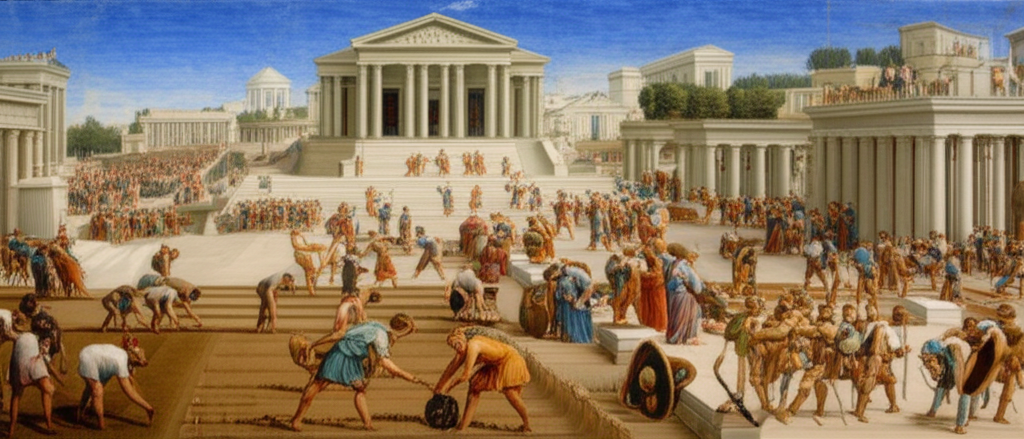
Conclusion: An Enduring Truth for Modern Governance
From the classical philosophers who first theorized the origins of the polis to the Enlightenment thinkers who shaped our understanding of rights and governance, the message remains consistent: labor is the indispensable foundation of the state. It is not a peripheral activity but a core necessity that fuels every aspect of collective life, making the concept of a state viable.
For any government striving for stability, prosperity, and justice, understanding and valuing the diverse forms of labor performed by its citizens is paramount. Policies that support, protect, and empower laborers are not just ethical considerations; they are strategic imperatives for the survival and flourishing of the state itself. The intricate dance between individual effort and collective organization, orchestrated by the state, reveals an enduring truth: without the toil of its people, the grandeur of any nation is but a fleeting illusion.
YouTube Video Suggestions:
-
📹 Related Video: PLATO ON: The Allegory of the Cave
Video by: The School of Life
💡 Want different videos? Search YouTube for: "Plato Republic Division of Labor"
2. ## 📹 Related Video: KANT ON: What is Enlightenment?
Video by: The School of Life
💡 Want different videos? Search YouTube for: "John Locke Labor Theory of Property"