

The Indispensable Engine: Why Labor is a Necessity for the State
The existence and flourishing of any organized State are not accidents of nature but the direct result of human effort. This article argues that labor is not merely a beneficial contribution to a society, but an absolute necessity for the formation, maintenance, and prosperity of the State. Drawing upon the timeless insights found within the Great Books of the Western World, we will explore how human productive activity moves from a contingent act of individual survival to a necessary foundation for collective life, organized by Government, and how this interplay defines the very essence of political philosophy.
The Genesis of the State: From Individual Needs to Collective Endeavor
Before delving into the intricate relationship between labor and the State, it's crucial to understand the very premise of political organization. Philosophers from Plato to Locke have grappled with why humans form communities at all. The answer, consistently, points to our inherent needs and vulnerabilities. No individual is self-sufficient. We require food, shelter, protection, and companionship. These fundamental requirements are the initial drivers of labor.
- Basic Sustenance: The most primal form of labor is that which secures food, water, and basic shelter. Without this, no individual can survive, let alone form a coherent group.
- Specialization and Efficiency: As communities grow, the necessity of labor quickly evolves. Plato, in his Republic, famously illustrates how the ideal State arises from the principle of specialization. One person is better at farming, another at building, another at weaving. This division of labor is not a luxury but a fundamental economic principle that enhances efficiency and allows for a surplus.
The State thus emerges as an organized structure to facilitate and protect these interdependencies, transforming individual acts of labor into a collective enterprise.
Labor as the Lifeblood: Sustaining the State's Infrastructure and Culture
Beyond mere survival, the ongoing function of a State hinges entirely on the continuous output of its citizens' labor. This isn't just about food; it encompasses every aspect of societal existence, from physical infrastructure to intellectual development.
- Physical Infrastructure: Roads, bridges, public buildings, defense fortifications—all require the physical labor of many. Without builders, engineers, and workers, the physical fabric of the State would crumble.
- Economic Activity: From trade and commerce to manufacturing and services, the economic engine of any State is fueled by labor. This creates wealth, provides goods and services, and enables the Government to collect taxes and fund public services.
- Social Services: Healthcare, education, justice systems – these vital components of a stable State are staffed and run by professionals whose labor serves the collective good.
- Cultural Production: Art, literature, philosophy, scientific discovery – these higher expressions of human endeavor also require dedicated labor. They enrich the State and contribute to its identity and progress.
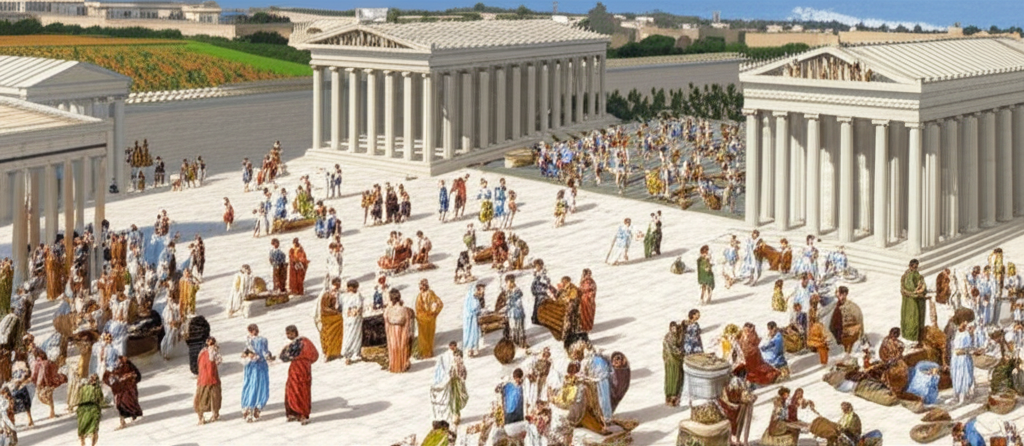
The Philosophical Nexus: Necessity and Contingency in Labor and the State
The concepts of Necessity and Contingency are critical here. While the specific forms of labor might be contingent on a particular era or technological advancement (e.g., farming vs. software development), the necessity of productive human effort itself for the State's existence is absolute.
Consider the following distinctions:
| Aspect | Necessity (Absolute Requirement) | Contingency (Variable, Dependent) |
|---|---|---|
| Existence of Labor | Human effort to produce goods/services | Specific types of labor (e.g., agricultural, industrial, digital) |
| For the State | Organized production to sustain the community | The specific political system or form of Government |
| Individual Needs | Food, shelter, security | The specific luxuries or non-essential goods an individual desires |
| State's Function | Maintenance of order, provision of public goods | The level of welfare provision, specific cultural endeavors |
Aristotle, in his Politics, discusses the household (oikos) as the fundamental unit of the State, where the labor of slaves and women provided the material basis for the free citizens to engage in political life. While his views on slavery are anachronistic, the underlying principle remains: the State depends on someone performing the necessary productive tasks. John Locke, later, would argue that labor is the source of all value and the basis of property rights, thereby intrinsically linking individual effort to the wealth and stability that the Government is instituted to protect.
The Role of Government: Organizing, Protecting, and Benefiting from Labor
The Government, as the executive arm of the State, plays a pivotal role in organizing and regulating labor. It is the mechanism through which the collective necessity of labor is managed for the common good.
- Establishing Order and Justice: A stable environment, free from chaos, is essential for productive labor. The Government provides the legal framework and enforcement necessary to protect property and ensure fair dealings.
- Public Works and Infrastructure: As noted, the Government often initiates and oversees large-scale projects that require significant labor, benefiting all citizens.
- Education and Training: Investing in the education and skill development of its populace ensures a continuous supply of capable labor for future generations.
- Economic Regulation: Through policies and laws, the Government can influence the direction and nature of labor, promoting certain industries or protecting workers' rights.
Without effective Government, the collective labor of individuals would likely devolve into uncoordinated efforts, unable to meet the complex demands of a modern State.
Conclusion: An Enduring Truth
From the earliest philosophical inquiries into the nature of society, the indispensable role of labor has been a constant theme. It is not a peripheral concern but a fundamental necessity that underpins every aspect of the State's existence. The transition from individual, contingent acts of survival to the organized, necessary productive efforts of a collective defines the very essence of civilization. As we continue to navigate complex socio-economic landscapes, the wisdom gleaned from the Great Books reminds us that the health and vitality of any State—and the effectiveness of its Government—will always be inextricably linked to the value and organization of its people's labor.
📹 Related Video: PLATO ON: The Allegory of the Cave
Video by: The School of Life
💡 Want different videos? Search YouTube for: ""Plato Republic division of labor explained""
📹 Related Video: PLATO ON: The Allegory of the Cave
Video by: The School of Life
💡 Want different videos? Search YouTube for: ""Locke labor theory of property summary""