

The Unseen Pillars: Why Labor is the Indispensable Foundation of the State
By Chloe Fitzgerald
Summary: From the earliest city-states to complex modern nations, the necessity of human labor has been the bedrock upon which all States are built and sustained. This article explores how philosophical thought, particularly from the Great Books of the Western World, reveals that labor is not merely an economic activity but a fundamental prerequisite for the existence, function, and flourishing of any State, with the Government playing a crucial role in its organization and protection. Without the collective effort of its citizens, no political entity, however grand its ideals, can endure.
The Fabric of Society: Labor as Lifeblood
When we contemplate the State, our minds often conjure images of grand institutions: parliaments, courthouses, armies, and bustling cities. Yet, beneath these visible structures lies an often-unacknowledged, yet profoundly necessary, foundation: labor. It is the ceaseless, varied effort of individuals – tilling fields, crafting goods, teaching minds, defending borders, innovating technologies – that breathes life into the abstract concept of a nation. Philosophical inquiry, stretching back to antiquity, consistently reveals that the very existence and stability of any organized Government or State are inextricably linked to the productive capacity and collective work of its people.
The Philosophical Roots of Labor's Indispensability
The idea that labor is fundamental to the State is not a modern innovation but a recurring theme in classical thought. The great thinkers of the Western tradition grappled with how societies are organized and what makes them viable, invariably arriving at the central role of human effort.
Plato's Ideal State and the Division of Labor
In Plato's Republic, the construction of the ideal State begins not with abstract laws but with the basic necessities of human life. He argues that individuals are not self-sufficient; they require others to provide food, shelter, and clothing. This immediately leads to the concept of specialization – the division of labor. A farmer produces food, a builder constructs homes, a weaver makes clothes. Each person performs a specific task, not because it's convenient, but because it's necessary for the community's survival and efficiency. The State emerges as the organized entity that facilitates this interdependence, allowing each citizen's labor to contribute to the collective good. Without this specialized labor, the State cannot even begin to exist, let alone thrive.
Aristotle on the Polis and Collective Action
Aristotle, in his Politics, views the State (or polis) as a natural outgrowth of human social instincts, designed to achieve the "good life." He emphasizes that the polis is not merely a collection of individuals but a partnership in living well. This partnership inherently requires diverse contributions – various forms of labor – from its citizens. From those who provide for material needs (farmers, artisans) to those who engage in deliberation and governance, every role, every form of labor, is a part of the organic whole that is the State. For Aristotle, the State exists for the sake of a good life, and that good life is only achievable through collective action and the productive labor of its members.
Locke's Labor Theory of Property and Government
Centuries later, John Locke, in his Second Treatise of Government, posited that property rights are fundamentally derived from labor. When an individual mixes their labor with something from nature, they make it their own. This act of labor is what creates value and establishes ownership. The Government, in Locke's view, is primarily established to protect these natural rights, including the right to property acquired through labor. Therefore, labor is not just essential for sustenance but also for the very justification of political authority and the framework of law that the State upholds. The Government's core function is to safeguard the fruits of labor, making labor foundational to its legitimacy.
Labor as the Engine: From Subsistence to Sophistication
The necessity of labor for the State manifests across all levels of societal development, underpinning everything from basic survival to advanced civilization.
- Subsistence Labor: The most fundamental form of labor involves producing food, water, and basic shelter. Without farmers, hunters, gatherers, and builders, no population can sustain itself, and thus, no State can form or persist. This is a primary, undeniable necessity.
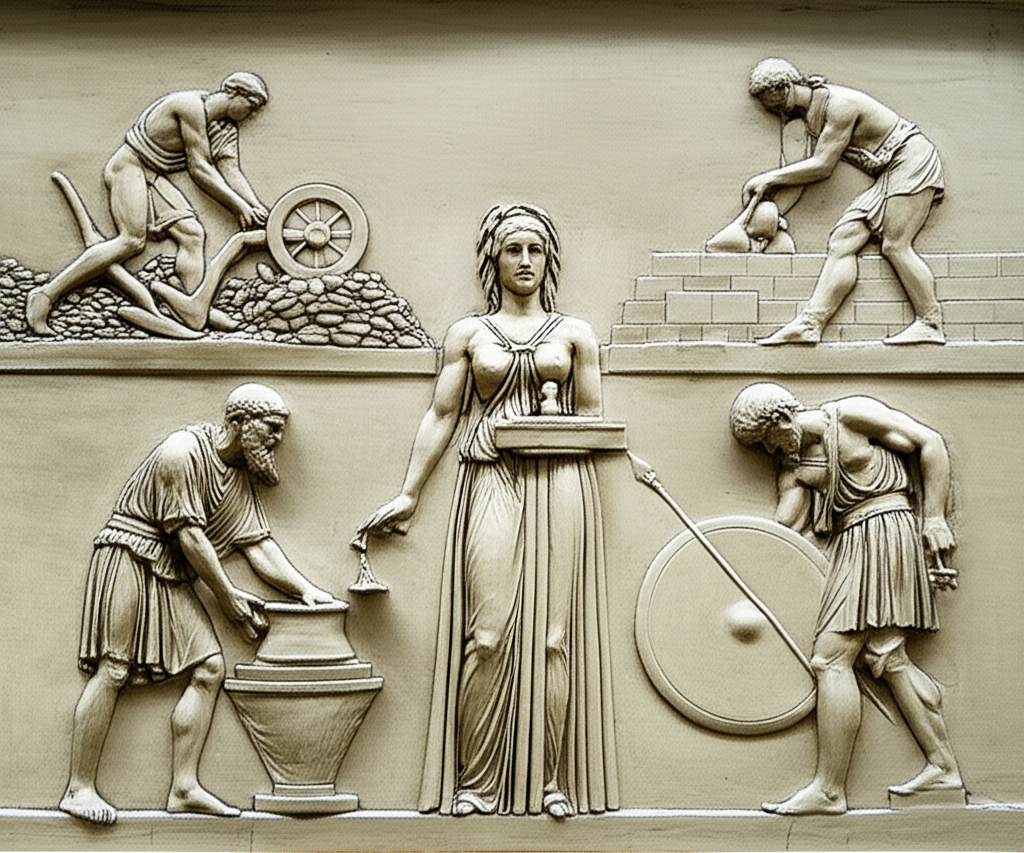
- Infrastructure Labor: Constructing roads, bridges, irrigation systems, and public buildings requires immense collective labor. These infrastructures are vital for trade, communication, and defense, enabling the State to function efficiently and connect its disparate parts.
- Defense and Security Labor: Soldiers, guards, and law enforcement officers perform the labor of protecting the State from external threats and maintaining internal order. Their efforts ensure the peace and stability necessary for other forms of labor to flourish.
- Economic Labor: Manufacturing, trade, and service industries generate wealth, create employment, and provide goods and services that improve the quality of life within the State. This economic labor fuels the State's ability to fund public services and pursue its objectives.
- Intellectual and Cultural Labor: Teachers, scholars, artists, and innovators contribute to the State's cultural richness, intellectual advancement, and social cohesion. Their labor shapes the values, knowledge, and identity of the citizenry, fostering a more sophisticated and resilient society.
Necessity and Contingency: A Philosophical Distinction
It is crucial to distinguish between the necessity of labor itself and the contingency of its forms or organization.
- Necessity: The absolute requirement for human effort to transform resources, maintain order, and sustain life within a community. Without labor in some form, the State simply cannot exist. This is a universal truth derived from the material conditions of human existence.
- Contingency: The specific ways in which labor is organized, incentivized, or regulated are contingent. Whether a State operates under a feudal system, a capitalist market, a socialist planned economy, or any other model, these are specific arrangements that can change over time and vary between different Governments. While the Government might choose contingent policies for managing labor, the underlying requirement for labor itself remains an immutable necessity.
For instance, ancient States relied heavily on agricultural labor and often slave labor, while modern States depend on industrial and informational labor. The form of labor changes, but the fundamental need for productive human activity does not.
The Government's Role in Orchestrating Labor
The Government, as the institutionalized apparatus of the State, plays a pivotal role in managing and directing labor. Its functions often include:
- Resource Allocation: Directing labor towards public works, defense, or essential services.
- Regulation: Establishing laws concerning wages, working conditions, and labor rights to ensure fairness and efficiency.
- Education and Training: Investing in the development of human capital to ensure a skilled workforce.
- Economic Policy: Implementing policies that encourage employment, innovation, and economic growth, thereby maximizing the productive output of labor.
- Social Safety Nets: Providing support for those unable to labor, ensuring a baseline of welfare that contributes to overall societal stability.
Conclusion: The Enduring Truth
The insights from the Great Books of the Western World provide a timeless understanding: labor is not merely an economic input but a profound philosophical necessity for the State. From Plato's division of labor to Locke's theory of property, the fundamental role of human effort in creating, sustaining, and defining political communities is undeniable. While the contingent forms of labor and the Government's approach to managing it may evolve, the core truth remains: without the collective labor of its people, no State can stand. It is the unseen, continuous exertion of its citizens that truly forms the indispensable foundation of any nation.
YouTube Video Suggestions:
-
📹 Related Video: PLATO ON: The Allegory of the Cave
Video by: The School of Life
💡 Want different videos? Search YouTube for: ""Plato's Republic division of labor explained""
2. ## 📹 Related Video: ARISTOTLE ON: The Nicomachean Ethics
Video by: The School of Life
💡 Want different videos? Search YouTube for: ""John Locke labor theory of property explained""